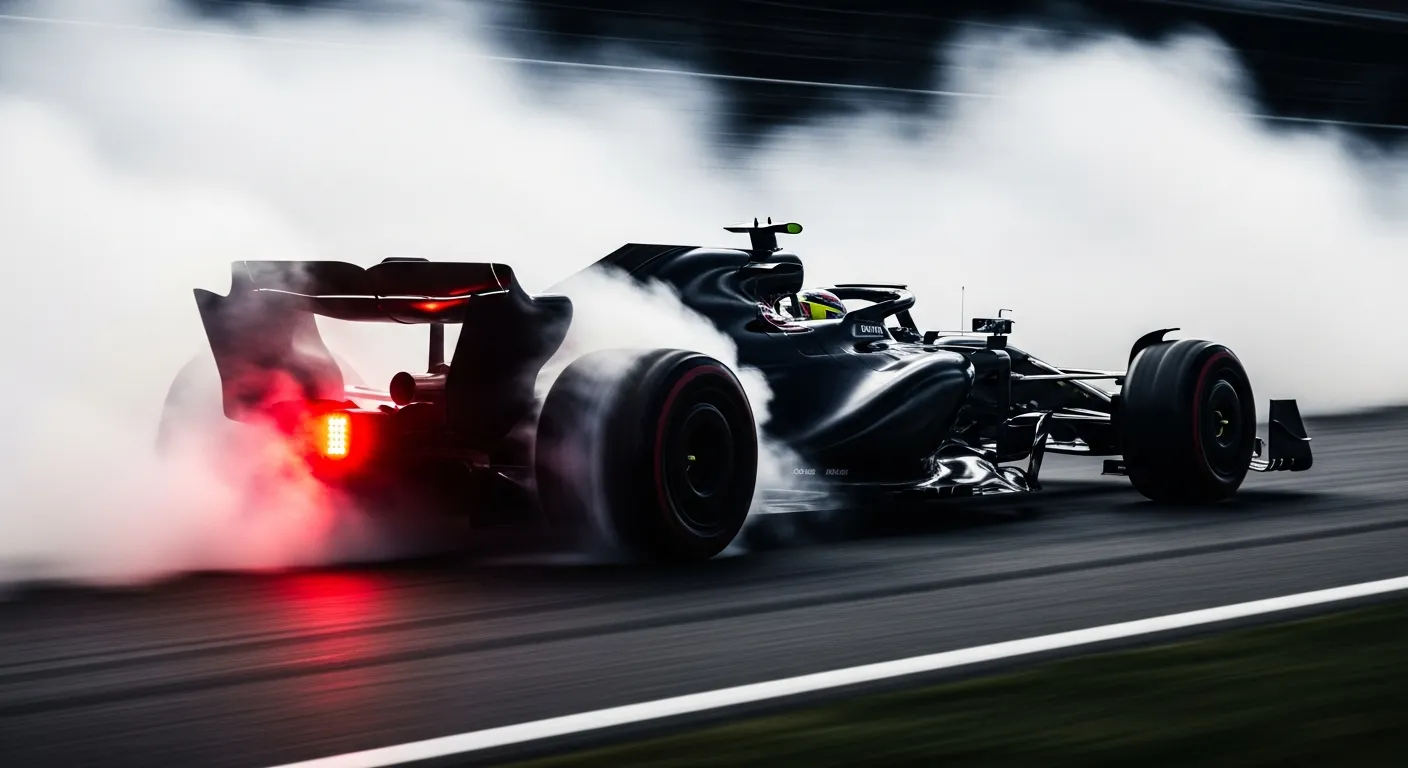
Circuit snapshot
Source: Jolpica F1 API- Location
- Sakhir, Bahrain
- First F1 race
- 2004 · Bahrain Grand Prix
- Most recent race
- 2025 · Bahrain Grand Prix
- Seasons hosted
- 21
- Eras hosted
- 2000s · 2010s · 2020s
The Bahrain International Circuit, a permanent fixture nestled in the Sakhir desert, stands as a modern testament to Formula 1's global reach, consistently challenging teams and drivers with its unique blend of high-speed sections and technical corners.
Layout & Character
Opened in 2004, the Bahrain International Circuit quickly established itself on the Formula 1 calendar. Located in Sakhir, Bahrain, this 5.412 km track features 15 corners and is renowned for its expansive run-off areas, a characteristic of many contemporary circuit designs. Its layout is a thoughtful compromise, balancing long straights that encourage overtaking with tighter, more technical sections. The circuit's desert environment means sand can occasionally become a factor, influencing grip levels, particularly early in a race weekend. The circuit has hosted a remarkable 22 Formula 1 Grand Prix events, spanning the 2000s, 2010s, and 2020s, with its inaugural race taking place in 2004 and its most recent scheduled for 2025, according to the Jolpica F1 circuit dataset. This consistent presence underscores its importance to the sport.
Driving challenge
Drivers at the Bahrain International Circuit face a multifaceted challenge. The track's abrasive asphalt is a significant factor, leading to high tyre degradation, particularly for the rear tyres. This demands a delicate balance between pushing for lap time and preserving rubber, making tyre management a critical skill. High-speed braking zones, notably into Turn 1 and Turn 11, offer prime overtaking opportunities but require precise judgment and robust braking systems. The circuit's middle sector, with its flowing sequence of turns, demands a stable front end and excellent traction control to maintain momentum. Furthermore, with many races held under floodlights, especially as the season opener, drivers must adapt to the significant temperature drop between practice sessions held in daylight and the cooler evening race conditions. This shift can dramatically alter car balance and tyre performance, adding another layer of complexity.
How the venue shapes a race weekend
The Bahrain International Circuit often kicks off the Formula 1 season, making it a crucial proving ground for new cars and driver pairings. Its position early in the Formula 1 race calendar means teams arrive with newly developed machinery, eager to assess their competitive standing. The desert climate, while generally stable, presents unique challenges, particularly concerning dust and sand, which can affect track evolution. The transition from day to night for the main race introduces a dynamic element, with cooler track temperatures altering grip and tyre performance. This necessitates a flexible setup approach, as teams must optimize their cars for conditions that evolve throughout the weekend. The extensive run-off areas, while enhancing safety, also allow drivers to push limits without immediate severe penalty, though track limits are still rigorously enforced. The venue's modern facilities and consistent scheduling contribute to a smooth operational start to the F1 year.
Strategic importance in the season
As one of the earliest races, and frequently the season opener, the Bahrain Grand Prix holds immense strategic importance. It provides the first real-world data on car performance relative to competitors, offering crucial insights into strengths and weaknesses that will inform development directions for the rest of the year. Unlike circuits later in the season, where teams have refined their packages, Bahrain is often where initial championship narratives begin to form. The demands on tyre management and the blend of high-speed and technical sections mean that a car performing well here often indicates a strong all-around package. Its characteristics are distinct from other early-season tracks like the Albert Park Circuit in Australia or the Shanghai International Circuit, offering a different set of challenges. Success here can build early momentum, while struggles can highlight areas for urgent improvement. The strategic decisions made regarding tyre compounds and pit stop windows are amplified by the abrasive surface and the potential for safety cars, making it a chess match from the outset. Its role as a season-starter is akin to the season-ending significance of a circuit like Yas Marina Circuit, where championships are often decided.
Explore Bahrain International Circuit
- By eraBahrain Grand Prix in the 2026 regulations
- Driver recordGabriel Bortoleto at the Bahrain Grand Prix
- Team recordKick Sauber at the Bahrain Grand Prix
- Driver recordIsack Hadjar at the Bahrain Grand Prix
- Team recordRacing Bulls at the Bahrain Grand Prix
- Driver recordCarlos Sainz at the Bahrain Grand Prix
- Team recordHaas at the Bahrain Grand Prix
- Driver recordAlexander Albon at the Bahrain Grand Prix
Common questions
- What makes the Bahrain International Circuit unique?
- Its desert location often leads to sand on track, and its night race format under floodlights creates a distinct visual spectacle and temperature challenge. It's also known for its abrasive surface, which tests tyre management.
- Has Bahrain always hosted the first race of the F1 season?
- While it has frequently opened the F1 season, it hasn't always. For instance, in its debut year of 2004, it was not the first race. However, in recent years, it has become a staple for the season opener.