Reference · Glossary
Plain-English explanations of every Formula 1 term you hear during a broadcast — DRS, ERS, undercut, porpoising, and dozens more, written for the curious viewer.
87 terms — start typing to jump to one.
Bouncing in F1 refers to the vertical oscillation of a car, primarily caused by aerodynamic forces interacting with the suspension and ride height.
Brake bias in Formula 1 refers to the adjustable front-to-rear distribution of braking force, crucial for optimizing car stability and stopping power.
The differential in an F1 car is a mechanical component that allows driven wheels to rotate at different speeds, crucial for cornering performance and tire management.
The diffuser is a crucial aerodynamic component at the rear of an F1 car, designed to accelerate airflow from beneath the car, creating powerful downforce.
Downforce is the aerodynamic force pushing a Formula 1 car into the track, increasing grip and enabling higher cornering speeds.
Drag in Formula 1 is the aerodynamic resistance a car experiences when moving through air, directly impacting top speed and fuel efficiency.
The F1 floor is a critical aerodynamic component beneath the car, generating significant downforce through ground effect to push the car onto the track.
The Formula 1 front wing is a crucial aerodynamic component at the car's front, generating downforce and managing airflow to the rest of the vehicle.
Ground effect is an aerodynamic principle in Formula 1 where a car's underbody shape generates significant downforce by accelerating airflow beneath it.
The Halo is a mandatory, three-pronged titanium cockpit protection device designed to shield a Formula 1 driver's head from impact with debris or other cars.
The MGU-H (Motor Generator Unit – Heat) is a vital component of Formula 1's hybrid power units, recovering heat energy from the exhaust turbocharger to generate electrical power and eliminate turbo lag.
The MGU-K, or Motor Generator Unit–Kinetic, is a crucial hybrid component in F1 power units that recovers and deploys kinetic energy.
The monocoque is the central, single-piece structural core of a Formula 1 car, forming the driver's safety cell and primary chassis component.
Paddle shift refers to the steering wheel-mounted levers F1 drivers use to manually change gears, enabling rapid, precise control over their car's immense power.
Porpoising is an aerodynamic phenomenon in Formula 1 where cars bounce violently at high speeds due to rapid changes in downforce, significantly impacting driver comfort and performance.
The Power Unit (PU) is the complex hybrid powertrain in a Formula 1 car, combining an internal combustion engine with multiple energy recovery systems.
The rear wing on a Formula 1 car is a critical aerodynamic device that generates downforce, enhancing grip and stability, especially through corners.
Ride height in Formula 1 refers to the vertical distance between the car's reference plane and the ground, crucial for aerodynamic performance.
Sidepods are the aerodynamic structures on either side of an F1 car, crucial for cooling internal components and managing airflow to the rear.
Turbo lag is the delay between a driver pressing the accelerator and the turbocharger delivering full power to the engine.
Venturi tunnels are shaped channels beneath an F1 car's floor, crucial for generating downforce by accelerating airflow and creating a low-pressure zone.
"Delta" in Formula 1 refers to the time difference between two laps, sectors, or a driver's current performance against a target time.
Gap in Formula 1 refers to the time or distance separating two cars on track, a critical metric for race strategy and on-track battles.
Telemetry in F1 is the real-time transmission of vast amounts of data from the car to the pit wall, crucial for performance analysis and strategic decisions.
The Constructors’ Championship is Formula 1's team-based title, awarded annually to the manufacturer whose two cars accumulate the most points over a season.
The Drivers' Championship is Formula 1's ultimate individual accolade, awarded annually to the driver who accumulates the most points across a season.
The FIA is the global governing body for motorsport, including Formula 1, responsible for its regulations, safety, and sporting integrity.
The Race Director is the primary official responsible for the safe and fair conduct of a Formula 1 Grand Prix weekend, making critical real-time decisions.
The race engineer is the primary communication link and strategic partner for a Formula 1 driver, optimizing car performance and race strategy.
A reserve driver is a contracted backup ready to step into a Formula 1 race seat if one of the primary drivers is unable to compete.
A "rookie" in Formula 1 refers to a driver competing in their inaugural full season, bringing fresh talent and a steep learning curve to the grid.
Stewards are independent officials appointed by the FIA to enforce Formula 1 regulations, investigate incidents, and apply penalties during race weekends.
The Team Principal is the senior manager responsible for the overall operations, strategy, and performance of a Formula 1 racing team.
The apex is the innermost point of a corner on a race track, crucial for drivers to maximize speed and minimize lap times.
Dirty air is the turbulent, disrupted airflow behind a Formula 1 car, significantly reducing the aerodynamic performance and grip of a following car.
The "Fastest Lap" in Formula 1 is the single quickest lap time recorded by any driver during a Grand Prix, earning an extra championship point.
A flat spot occurs when a Formula 1 tire locks up under braking, creating a worn, flat section that severely impacts performance and driver comfort.
The Formation Lap, also known as the Warm-Up Lap, is a crucial pre-race procedure where F1 cars circuit the track to prepare tires and brakes before the standing start.
A lap time measures the duration it takes for a Formula 1 car to complete one full circuit of a race track, from start/finish line to start/finish line.
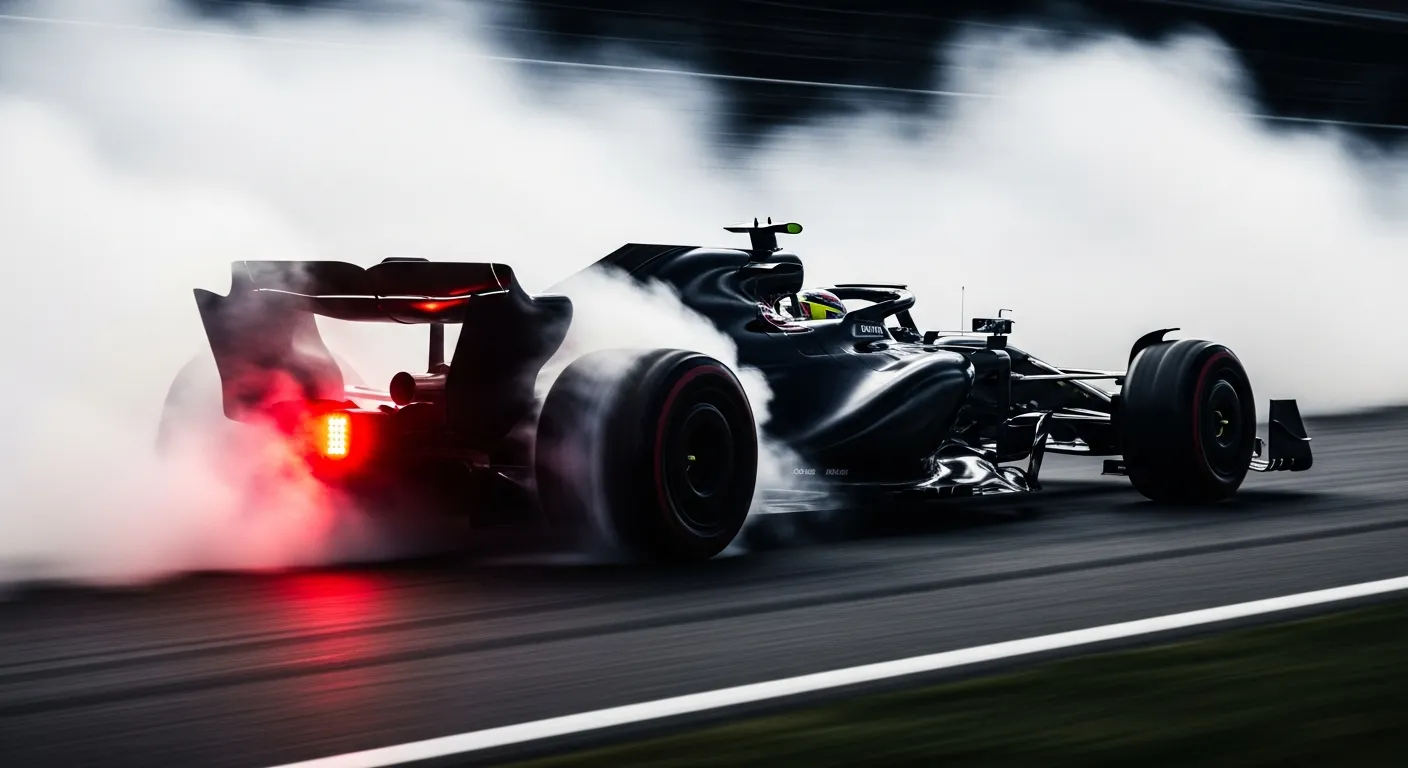
A lock-up in Formula 1 occurs when a driver applies the brakes so hard that one or more wheels stop rotating while the car is still moving, often resulting in smoke and tire damage.
The overcut is an F1 pit strategy where a driver stays on track longer than a rival, using their existing tires to set faster laps before pitting and emerging ahead.
Oversteer occurs when a Formula 1 car's rear tires lose grip before the front, causing the rear to slide wide through a corner.
The pit lane is a designated area adjacent to the main straight of an F1 circuit where teams service cars during practice, qualifying, and races.
A pit stop is a rapid, synchronized operation during a Formula 1 race where a car briefly enters its pit box for essential services, primarily tire changes.
The pit wall is the strategic nerve center for a Formula 1 team during a race, where key personnel monitor data and make critical real-time decisions.
The pit window is the optimal strategic period in a Formula 1 race for a team to make a mandatory tire change without losing significant track position.
Pole position is the first starting spot on the grid, awarded to the driver who sets the fastest lap time in the final qualifying session.
A 'purple sector' in Formula 1 signifies the fastest time recorded by any driver in a specific segment of the circuit during a session.
The racing line is the optimal path around a circuit that allows a Formula 1 driver to achieve the fastest possible lap time.
A rolling start in Formula 1 occurs when cars begin a race or restart after a safety car period from a moving formation, rather than a stationary grid.
A sector is one of three distinct segments a Formula 1 circuit is divided into for precise timing and performance analysis throughout a race weekend.
A standing start in Formula 1 involves all cars beginning a race or restart from a stationary position on the grid, launching simultaneously.
A 'tow' or 'slipstream' occurs when a car closely follows another, reducing aerodynamic drag and increasing speed, particularly crucial for overtaking.
The undercut is a strategic pit stop maneuver in Formula 1 where a trailing car pits early to gain track position on a competitor.
Understeer is when a Formula 1 car's front tires lose grip, causing it to turn less sharply than intended and run wide through a corner.
The black flag in Formula 1 is the most severe penalty, signaling a driver's immediate disqualification and removal from the race.
The blue flag in Formula 1 signals to a driver that a faster car is approaching from behind and they must allow it to pass safely.
The Budget Cap in Formula 1 is a financial regulation limiting team spending to promote fairness and sustainability across the grid.
A Drive-Through Penalty in Formula 1 requires a driver to enter the pit lane, drive through it at a regulated speed, and exit without stopping.
The Drag Reduction System (DRS) is an adjustable rear wing flap in Formula 1 cars designed to reduce aerodynamic drag and aid overtaking.
The Energy Recovery System (ERS) in Formula 1 captures and stores waste energy from braking and exhaust heat, deploying it for a temporary power boost.
A grid penalty in Formula 1 forces a driver to start a race lower than their qualifying position, typically for exceeding component limits or other rule infringements.
Parc Fermé is a strict set of regulations limiting setup changes on Formula 1 cars between qualifying and the Grand Prix race.
Penalty points are accumulated by Formula 1 drivers for various on-track infractions, leading to a race ban if a threshold is reached within a 12-month period.
A red flag in Formula 1 signals an immediate halt to a session or race due to a significant safety risk or track blockage.
The Safety Car is a specialized vehicle deployed during a Formula 1 race to neutralize the field and ensure driver safety during incidents or adverse conditions.
The F1 Sprint Race is a shorter, points-scoring race held on select Grand Prix weekends, designed to add more competitive action and drama.
The Sprint Shootout is a condensed qualifying session held on Formula 1 Sprint weekends, determining the starting grid for the standalone Sprint race.
A Stop-Go Penalty in Formula 1 requires a driver to enter their pit box, stop for a specified duration, and then rejoin the race.
A time penalty in Formula 1 is a sanction applied by race stewards, adding seconds to a driver's race time or requiring a stop-and-go in the pit lane.
Track limits define the permissible boundaries of the racing surface, ensuring drivers maintain control and do not gain an unfair advantage by exceeding them.
The Virtual Safety Car (VSC) is a system in Formula 1 designed to neutralize a race by forcing drivers to maintain a specific delta time, ensuring safety without deploying the physical Safety Car.
The yellow flag in Formula 1 signals a hazard on track, requiring drivers to reduce speed and be prepared to change direction or stop, prohibiting overtaking.
Blistering in Formula 1 describes the formation of small, raised bubbles on a tire's surface, signaling internal overheating and rubber layer separation.
The loss of tire performance and grip caused by heat and chemical changes in the rubber, rather than physical tread loss.
Graining is a form of F1 tire degradation where rubber tears from the surface and re-attaches, reducing grip and impacting race strategy.
Hard tires in Formula 1 are the most durable compound available, designed for long stints and high-wear circuits, offering less peak grip but greater longevity.
Intermediate tires are a crucial Formula 1 compound designed for damp or lightly wet tracks, offering a balance between grip and water dispersion.
The Medium tire compound in Formula 1 offers a balanced compromise between grip and durability, making it a versatile choice for race strategies.
Soft tires in Formula 1 are the fastest, grippiest compound available, designed for maximum performance over shorter stints but with rapid degradation.
Thermal degradation in Formula 1 refers to the loss of tire performance due to overheating, reducing grip and increasing wear over a race stint.
Wet Tires, also known as Full Wets, are the most aggressive rain tires in Formula 1, designed to evacuate significant volumes of standing water from the track.
Banking in Formula 1 refers to the transverse slope or incline of a racetrack's corner, designed to allow cars to carry higher speeds through the turn.
A chicane is a sequence of tight, alternating turns designed to slow cars, enhance safety, and create technical challenges on a Formula 1 circuit.
A kerb is a raised section at the edge of a Formula 1 circuit, strategically designed to define track limits and influence a car's line through corners.
A permanent circuit is a purpose-built motorsport facility, distinct from temporary street circuits, featuring dedicated infrastructure for racing.
A street circuit is a temporary race track utilizing public roads, characterized by tight corners, close barriers, and often challenging surfaces, demanding precision and unique car setups.