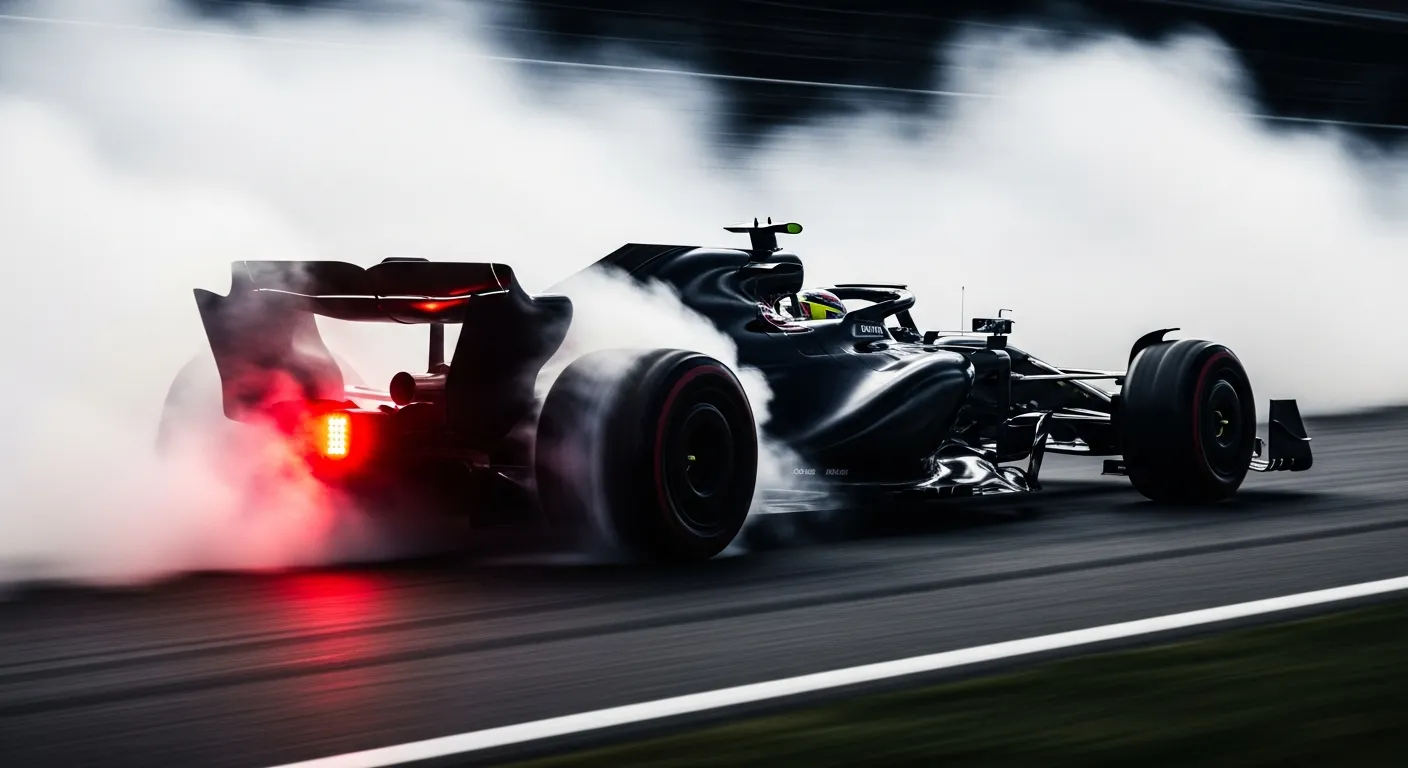
Circuit snapshot
Source: Jolpica F1 API- Location
- Baku, Azerbaijan
- First F1 race
- 2016 · European Grand Prix
- Most recent race
- 2026 · Azerbaijan Grand Prix
- Seasons hosted
- 10
- Eras hosted
- 2010s · 2020s
The Baku City Circuit stands as a distinctive challenge on the Formula 1 calendar, uniquely blending the demands of ultra-high-speed straights with the intricate, unforgiving confines of a medieval walled city.
Layout & Character
Stretching 6.003 kilometers with 20 corners, the Baku City Circuit is a formidable street track carved through the heart of Azerbaijan's capital. Its design is a study in contrasts, featuring one of the longest flat-out sections in Formula 1, including a 2.2-kilometer main straight where cars routinely exceed 340 km/h. This high-speed expanse is abruptly juxtaposed with the circuit's most iconic and challenging section: a remarkably narrow uphill climb through the ancient walls of Baku's Old City, particularly around Turns 8 to 11. This section is barely wide enough for a single car, demanding pinpoint precision and bravery. The circuit first joined the F1 calendar in 2016 as the European Grand Prix, before becoming the Azerbaijan Grand Prix. Since its debut, it has hosted a total of 10 races, spanning both the 2010s and 2020s, firmly establishing its place in modern F1 history. For more on the city itself, a deeper dive into Baku's history and geography reveals the rich cultural tapestry that frames this modern motorsport spectacle.
Driving challenge
Drivers at Baku face a multifaceted test of skill and nerve. The extreme speed differentials between sectors demand a versatile car setup and a driver capable of adapting their style on the fly. Braking stability is paramount, particularly into the tight corners that follow the long, flat-out sections. The unforgiving proximity of concrete barriers, characteristic of street circuits like the Las Vegas Strip Circuit, means there is zero margin for error; even a slight misjudgment can end a race. Furthermore, managing tyre temperatures is a constant battle, as the high-speed sections cool the tyres while the slow, technical Old City demands immediate grip. Unlike purpose-built tracks such as the Circuit of the Americas with its generous run-off areas, Baku punishes every mistake.
How the venue shapes a race weekend
Baku's unique layout fundamentally shapes the dynamics of a Grand Prix weekend. Practice sessions are critical for teams to dial in a compromise setup that balances straight-line speed with downforce for the technical sections. Qualifying is often a high-stakes affair, with drivers pushing the limits inches from the walls, making for dramatic sessions. The race itself is frequently punctuated by Safety Car periods, which are almost an expected feature given the circuit's unforgiving nature and the high likelihood of incidents. These interruptions can completely reshuffle race strategies, turning a seemingly straightforward event into a tactical lottery. Overtaking is certainly possible, primarily on the long main straight aided by DRS, but executing a pass cleanly requires careful timing and commitment, making every move a calculated risk. The official Formula 1 race calendar provides further context on how circuits like Baku contribute to the season's narrative.
Strategic importance in the season
Often positioned in the early-to-mid stages of the Formula 1 calendar, the Azerbaijan Grand Prix frequently serves as a pivotal moment in the championship battle. Its unpredictable nature means that even dominant teams can face unexpected challenges, and a strong performance here can provide a significant psychological boost, or conversely, a costly setback. The circuit rewards a robust power unit for its lengthy straights and a chassis capable of precise handling in its tightest sections. The high potential for Safety Cars and even Red Flags means that strategic flexibility is key, with teams needing to react swiftly to changing circumstances. Unlike a season-ending race like the Yas Marina Circuit, Baku’s role is to inject drama and uncertainty into the championship narrative at a crucial juncture, often creating memorable moments that resonate throughout the year. Data on circuits, including Baku, can be explored further via resources like the Jolpica F1 circuit dataset.
Explore Baku City Circuit
- By eraAzerbaijan Grand Prix in the 2026 regulations
- Driver recordGabriel Bortoleto at the Azerbaijan Grand Prix
- Team recordKick Sauber at the Azerbaijan Grand Prix
- Driver recordIsack Hadjar at the Azerbaijan Grand Prix
- Team recordRacing Bulls at the Azerbaijan Grand Prix
- Driver recordCarlos Sainz at the Azerbaijan Grand Prix
- Team recordHaas at the Azerbaijan Grand Prix
- Driver recordAlexander Albon at the Azerbaijan Grand Prix
Common questions
- What makes Baku City Circuit unique?
- Baku stands out for its dramatic contrast between the high-speed, wide-open sections along the waterfront and the incredibly narrow, technical turns winding through the historic Old City walls. This duality demands a versatile car setup and driver skill.
- Is Baku a street circuit?
- Yes, the Baku City Circuit is a street circuit, utilizing the public roads of Azerbaijan's capital city. This means drivers contend with unforgiving concrete barriers and a rapidly evolving track surface as grip improves over the weekend.
- When was the first F1 race in Baku?
- The first Formula 1 Grand Prix held at the Baku City Circuit was in 2016, under the name "European Grand Prix." It has since become a staple on the calendar as the Azerbaijan Grand Prix.