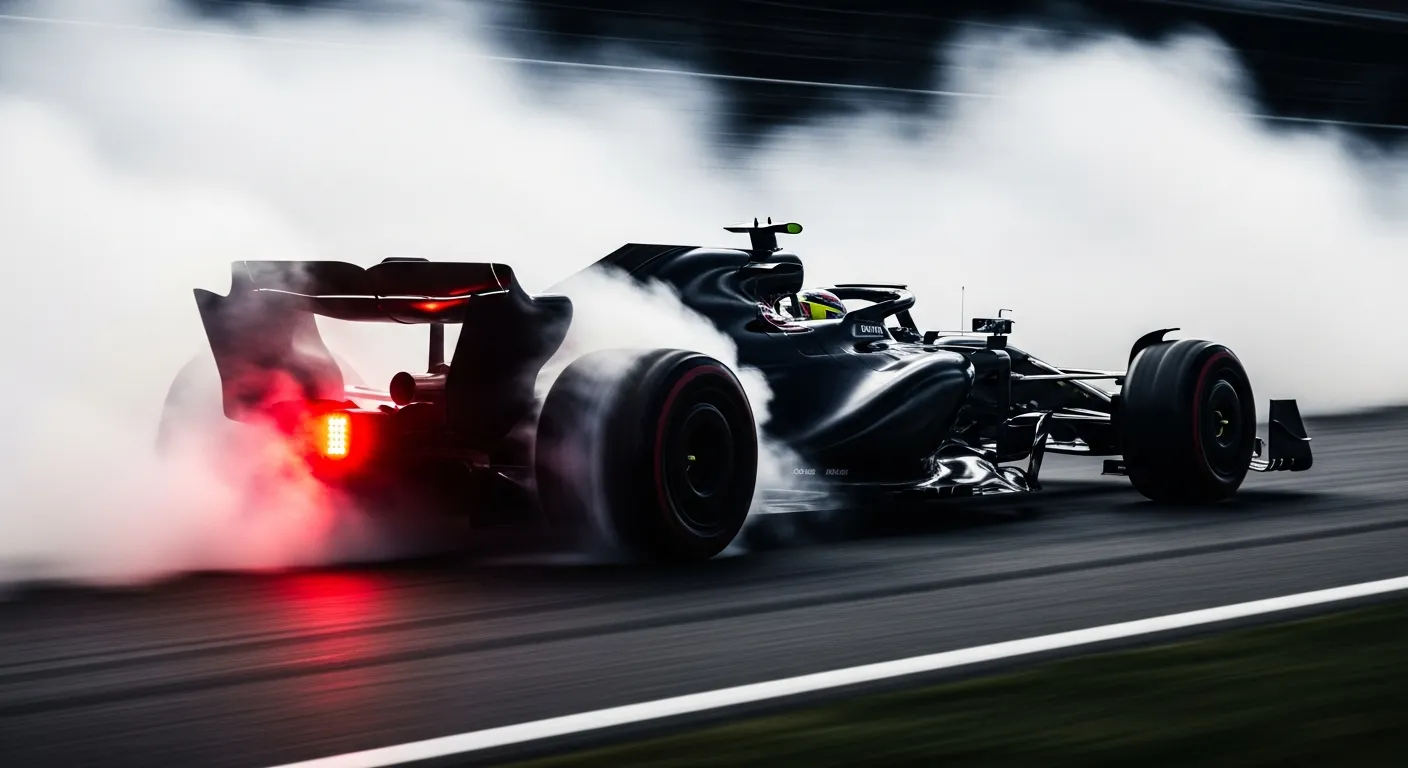
Circuit snapshot
Source: Jolpica F1 API- Location
- Budapest, Hungary
- First F1 race
- 1986 · Hungarian Grand Prix
- Most recent race
- 2026 · Hungarian Grand Prix
- Seasons hosted
- 41
- Eras hosted
- 1980s · 1990s · 2000s · 2010s · 2020s
The Hungaroring, nestled in a natural amphitheatre near Mogyoród, Hungary, has carved out a unique niche in Formula 1's history as a circuit where raw power often takes a backseat to chassis balance and driver finesse.
Layout & Character
Spanning 4.381 kilometers with 14 corners, the Hungaroring is a permanent circuit that often feels more akin to a street track due to its tight, twisty nature and lack of significant straights. It’s a relentless sequence of bends, demanding a high-downforce setup and pinpoint accuracy from drivers. The circuit made history by hosting the first Formula 1 Grand Prix behind the Iron Curtain in 1986, a landmark moment for the sport's global expansion. Initially, the track surface can be quite dusty and low-grip at the start of a race weekend, but it rapidly rubbers in, evolving significantly as the sessions progress. For a deeper dive into its history and layout, the hungaroring — Wikipedia page offers extensive details.
Driving challenge
The driving challenge at the Hungaroring is multifaceted and intense. Its continuous flow of corners offers little respite, making it one of the most physically demanding tracks on the calendar, especially under the often-scorching Hungarian summer sun. Drivers must manage relentless G-forces and maintain absolute concentration for the entire race distance. The circuit's design heavily rewards a well-balanced chassis and strong aerodynamic performance, as cornering speed is paramount. Overtaking is notoriously difficult, primarily confined to the main straight and the run into Turn 1, which puts immense pressure on qualifying performance. This technicality often draws comparisons to the precision required at circuits like Suzuka Circuit, albeit with a much tighter, slower average speed.
How the venue shapes a race weekend
Given the scarcity of overtaking opportunities, qualifying at the Hungaroring is often considered half the battle. A strong grid position is crucial, making Saturday's sessions particularly tense. Race strategy revolves heavily around tire management and pit stop timing; the undercut and overcut can be powerful tools here. Track evolution plays a significant role, with lap times improving dramatically from Friday practice to Sunday's race as rubber is laid down. The weather can also be a wildcard; while often sunny, sudden thunderstorms are not uncommon and can completely upend race dynamics. The natural amphitheater setting provides excellent viewing for spectators, contributing to a vibrant atmosphere that is a hallmark of the Hungarian Grand Prix, a fixture on the Formula 1 — race calendar + circuit pages.
Strategic importance in the season
The Hungarian Grand Prix typically marks the final race before Formula 1's mandatory summer break, making it a critical juncture in the championship battle. Teams often bring significant upgrade packages to the Hungaroring, aiming to gain a performance edge before the mid-season pause. The circuit's unique characteristics, which prioritize downforce and handling over outright power, can sometimes shake up the competitive order, allowing teams that excel in these areas to shine. It serves as a psychological checkpoint, with strong performances here providing momentum heading into the latter half of the season. The Hungaroring has hosted 41 races across five decades, from the 1980s through the 2020s, with the last race currently scheduled for 2026, as detailed in the Jolpica — F1 circuit dataset. Its consistent presence, much like the enduring role of circuits such as Albert Park Circuit or Shanghai International Circuit in their respective calendar slots, underscores its strategic value in the F1 season.
Explore Hungaroring
- Driver recordGabriel Bortoleto at the Hungarian Grand Prix
- Team recordKick Sauber at the Hungarian Grand Prix
- Driver recordIsack Hadjar at the Hungarian Grand Prix
- Team recordRacing Bulls at the Hungarian Grand Prix
- Driver recordCarlos Sainz at the Hungarian Grand Prix
- Team recordHaas at the Hungarian Grand Prix
- Driver recordAlexander Albon at the Hungarian Grand Prix
- Team recordAlpine at the Hungarian Grand Prix
Common questions
- When was the first Hungarian Grand Prix held?
- The inaugural Formula 1 Hungarian Grand Prix at the Hungaroring took place in 1986. This event was historically significant as it marked the first Formula 1 race held behind the Iron Curtain.
- Why is overtaking difficult at the Hungaroring?
- The Hungaroring's layout features a series of tight, interconnected corners and very few long straights, which limits opportunities for drivers to gain significant speed differentials. This makes it challenging to execute overtakes without taking considerable risks.