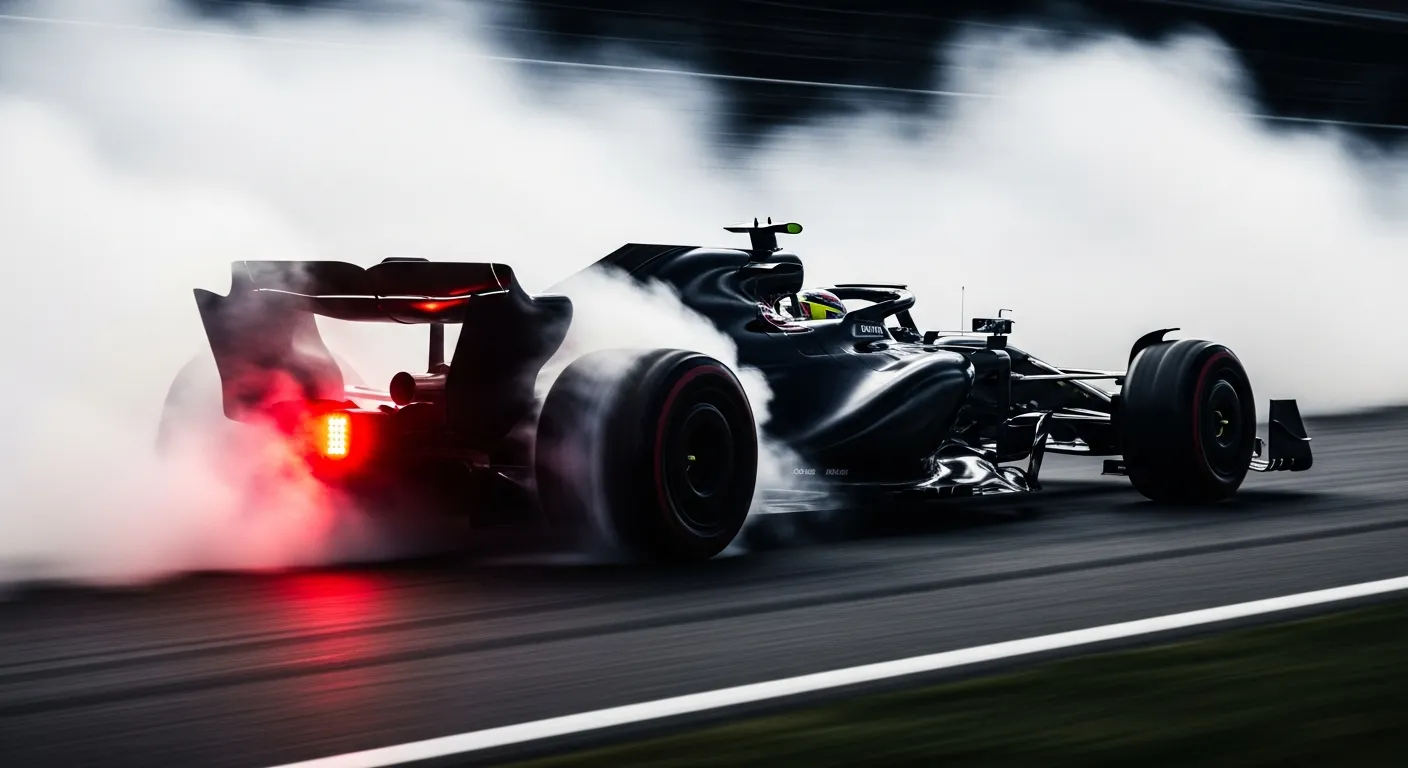
Circuit snapshot
Source: Jolpica F1 API- Location
- Jeddah, Saudi Arabia
- First F1 race
- 2021 · Saudi Arabian Grand Prix
- Most recent race
- 2025 · Saudi Arabian Grand Prix
- Seasons hosted
- 5
- Eras hosted
- 2020s
The Jeddah Corniche Circuit distinguishes itself as Formula 1's fastest street circuit, a high-octane blend of relentless speed and unforgiving walls set against the backdrop of the Red Sea.
Layout & Character
Stretching 6.174 kilometers with a staggering 27 corners, the Jeddah Corniche Circuit is an anomaly among street tracks. Unlike the tighter, more technical urban layouts, Jeddah prioritizes velocity, featuring long straights punctuated by a rapid succession of sweeping bends. Its location along the Red Sea corniche in Jeddah, Saudi Arabia provides a dramatic setting, especially under the floodlights as a night race. Since its debut in 2021, the circuit has quickly established itself as a permanent fixture, having hosted 5 Formula 1 Grands Prix, with the most recent in 2025. This makes it a significant venue in the 2020s decade of F1 racing, a period marked by its rapid integration into the sport's global footprint. While other street circuits like the Baku City Circuit offer high-speed sections, Jeddah's sheer number of quick corners creates a unique, flowing rhythm that demands absolute commitment.
Driving challenge
The primary challenge at Jeddah lies in its sustained high-speed nature combined with the ever-present threat of the concrete barriers. Drivers navigate numerous blind corners, particularly through the snaking 'esses' sections, where visibility of the apex and exit is minimal until the last moment. This demands immense bravery and precision, as any error can lead to significant consequences. The circuit's rapid changes of direction place extreme lateral G-forces on the drivers and heavy loads on the tyres, requiring meticulous tyre management over a race distance. Furthermore, the few heavy braking zones, often into chicanes like Turn 13, are critical overtaking opportunities but also high-risk areas. The mental strain on drivers is considerable, as they must maintain peak concentration for an entire race, pushing the limits inches from the walls at average speeds that rival some permanent circuits. This contrasts with a 'temple of speed' like Autodromo Nazionale Monza, which, despite higher top speeds, features fewer corners and different demands on sustained lateral load.
How the venue shapes a race weekend
As a night race, the Jeddah Corniche Circuit presents unique conditions. Cooler ambient and track temperatures compared to daytime sessions can influence tyre performance and car balance. The high-speed nature and close proximity of the walls mean that incidents are common, leading to a high probability of Safety Car or Virtual Safety Car periods. This unpredictability can dramatically reshape race strategies, making pit stop timing crucial. Teams must be prepared for rapid strategic adjustments, often gambling on the timing of neutralizations. The track surface, being a street circuit, also evolves significantly throughout the weekend as rubber is laid down, impacting grip levels and car setup decisions. Its role on the Formula 1 race calendar as an early-season event means teams are still fine-tuning their understanding of their new cars, adding another layer of complexity to the weekend.
Strategic importance in the season
Typically positioned early in the Formula 1 calendar, the Saudi Arabian Grand Prix at Jeddah holds considerable strategic weight. It serves as an early test of a team's high-speed package and driver confidence. Success here can build significant momentum for the championship contenders, while struggles can expose fundamental car weaknesses that need urgent attention. The high-risk, high-reward environment means that a strong performance can yield a substantial points haul, but a mistake can result in a costly DNF. The insights gained from managing tyres and car setup through Jeddah's demanding sequence of corners are invaluable, informing development decisions for other high-speed tracks later in the season. While not as historically significant as the Marina Bay Street Circuit, F1’s first night race, Jeddah has quickly carved out its own niche as a modern, challenging spectacle that often delivers dramatic racing early in the championship fight. For further details on current and past F1 circuits and events, the official Formula 1 website serves as a primary resource.
Explore Jeddah Corniche Circuit
- By eraSaudi Arabian Grand Prix in the 2026 regulations
- Driver recordGabriel Bortoleto at the Saudi Arabian Grand Prix
- Team recordKick Sauber at the Saudi Arabian Grand Prix
- Driver recordIsack Hadjar at the Saudi Arabian Grand Prix
- Team recordRacing Bulls at the Saudi Arabian Grand Prix
- Driver recordCarlos Sainz at the Saudi Arabian Grand Prix
- Team recordHaas at the Saudi Arabian Grand Prix
- Driver recordAlexander Albon at the Saudi Arabian Grand Prix
Common questions
- When was the first F1 race held at Jeddah?
- The Jeddah Corniche Circuit hosted its inaugural Formula 1 Grand Prix in 2021, quickly becoming a prominent fixture on the calendar.
- What type of circuit is the Jeddah Corniche Circuit?
- It is a high-speed street circuit, distinct from many urban tracks due to its emphasis on rapid, flowing corners rather than tight, low-speed sections.
- How many corners does the Jeddah Corniche Circuit have?
- The circuit features 27 corners, making it one of the most corner-dense tracks on the Formula 1 calendar, especially for a street circuit.