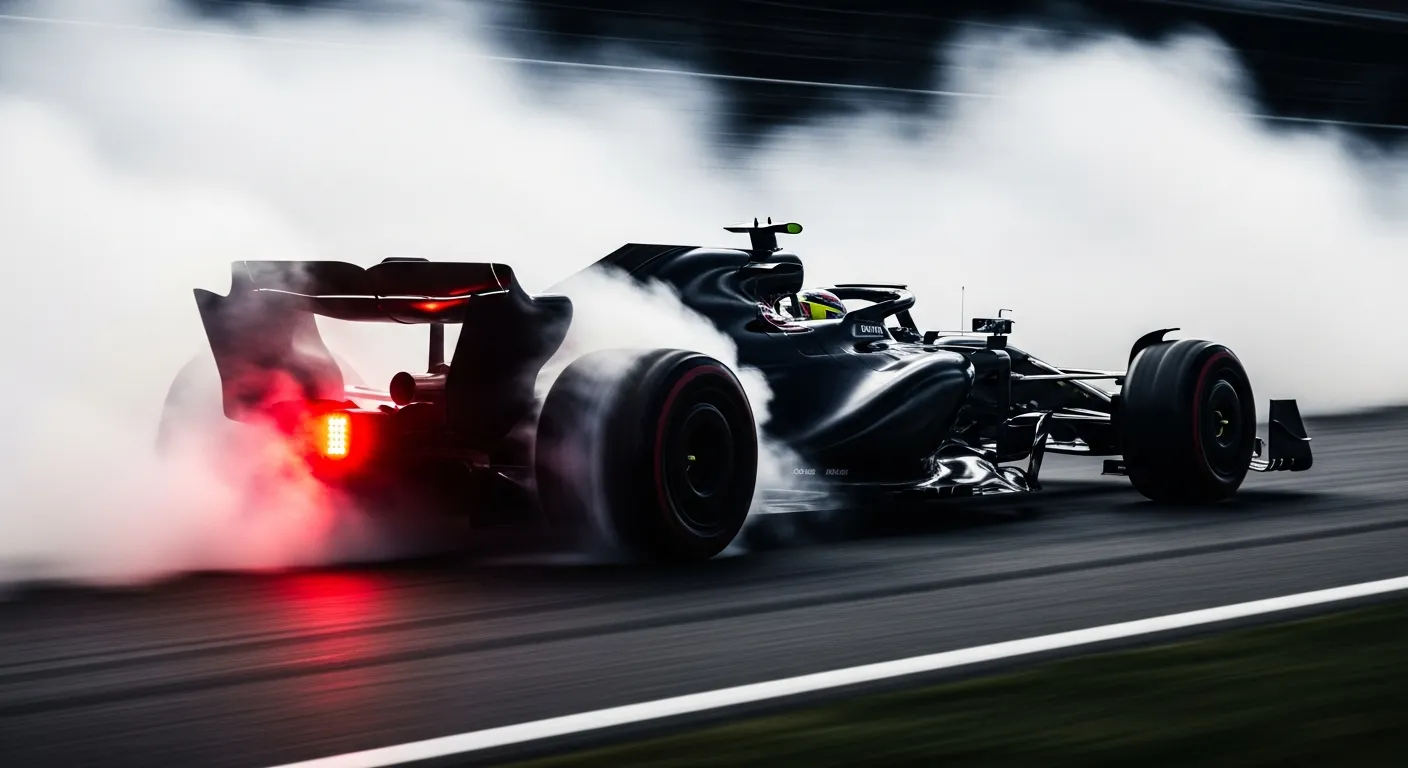
Circuit snapshot
Source: Jolpica F1 API- Location
- Monte Carlo, Monaco
- First F1 race
- 1950 · Monaco Grand Prix
- Most recent race
- 2026 · Monaco Grand Prix
- Seasons hosted
- 72
- Eras hosted
- 1950s · 1960s · 1970s · 1980s · 1990s · 2000s · 2010s · 2020s
The Circuit de Monaco, a temporary street circuit carved through the principality's affluent streets, stands alone as the most iconic and historically significant event on the Formula 1 calendar. Unlike purpose-built tracks, Monaco’s layout is dictated by the existing urban landscape of Monte Carlo, creating a challenge unparalleled in motorsport.
Layout & Character
Spanning just 3.337 kilometers with 19 corners, the Circuit de Monaco is famously the shortest and slowest track on the calendar, yet it demands absolute perfection. Since its inaugural Formula 1 Grand Prix in 1950, it has hosted 72 races, a testament to its enduring appeal and its presence across every decade from the 1950s through the 2020s. The circuit weaves past landmarks such as Casino Square, plunges through the iconic tunnel, and snakes around the harborfront's swimming pool complex. There is virtually no run-off area; the unforgiving Armco barriers are a constant, immediate threat, punishing even the slightest error. This inherent danger, combined with the circuit's tight confines, creates a spectacle unlike any other, contrasting sharply with wider, more modern venues like the Circuit of the Americas. For a deeper dive into the locale, the monaco — Wikipedia page offers extensive background on the principality itself.
Driving challenge
The driving challenge at Monaco is primarily one of precision, concentration, and bravery. Drivers must navigate the track's intricate sequence of corners, from the tight Mirabeau to the slowest corner in F1, the Grand Hotel Hairpin (formerly Loews), with millimetric accuracy. The lack of significant straights means there is little opportunity for drivers to relax or cool their tyres and brakes. While tyre degradation is typically low, the constant turning and braking put immense stress on the car's mechanical components and the driver's physical and mental endurance. Overtaking is notoriously difficult, making qualifying performance paramount. This contrasts with circuits like the Baku City Circuit, which, despite being a street circuit, features long straights that facilitate more overtaking opportunities, or even the Marina Bay Street Circuit, which, while tight, offers slightly more width in places.
How the venue shapes a race weekend
A Monaco Grand Prix weekend is distinct from any other on the Formula 1 calendar. The schedule traditionally began with practice on Thursday, though recent years have aligned it with the standard Friday start. The unique environment, with yachts filling the harbor and the principality buzzing with an exclusive atmosphere, adds to its prestige. Given the difficulty of overtaking, the qualifying session on Saturday effectively dictates much of the race outcome. Teams focus heavily on extracting maximum single-lap performance, often running high-downforce setups to maximize grip through the tight corners. The probability of a Safety Car deployment is also high given the proximity of the walls, which can dramatically alter race strategies. The official Formula 1 — race calendar + circuit pages provide current information on the event schedule and more.
Strategic importance in the season
While Monaco may not offer the highest points haul compared to other races, its strategic importance lies in its unparalleled prestige and the psychological boost a victory provides. A win here is a career-defining moment, often considered more valuable than a victory at many other venues. Situated early in the European leg of the calendar, it serves as a unique benchmark for car performance in low-speed, high-downforce conditions. Success here can build significant momentum for a team and driver, while a costly error can be a major setback. The circuit has been a consistent fixture, hosting races across eight decades, as detailed in datasets like the Jolpica — F1 circuit dataset, underscoring its enduring role in the sport's narrative. Its character rewards a specific type of car and driver, often highlighting different strengths than those seen on faster, more open tracks.
Explore Circuit de Monaco
- By eraMonaco Grand Prix in the 2026 regulations
- Driver recordGabriel Bortoleto at the Monaco Grand Prix
- Team recordKick Sauber at the Monaco Grand Prix
- By eraMonaco Grand Prix in the ground-effect era
- Driver recordIsack Hadjar at the Monaco Grand Prix
- Team recordRacing Bulls at the Monaco Grand Prix
- By eraMonaco Grand Prix in the V8 era
- Driver recordCarlos Sainz at the Monaco Grand Prix
Common questions
- Why is Monaco considered so special?
- Its unique street layout, historical significance, and the sheer difficulty of mastering its narrow, unforgiving confines elevate it beyond a typical race. A win here is a career highlight for any driver, embodying the pinnacle of F1 driving skill.
- Is it difficult to overtake at Monaco?
- Yes, overtaking is notoriously challenging due to the circuit's narrow width and lack of long straights. This makes qualifying position critically important for race success, often determining the eventual winner.