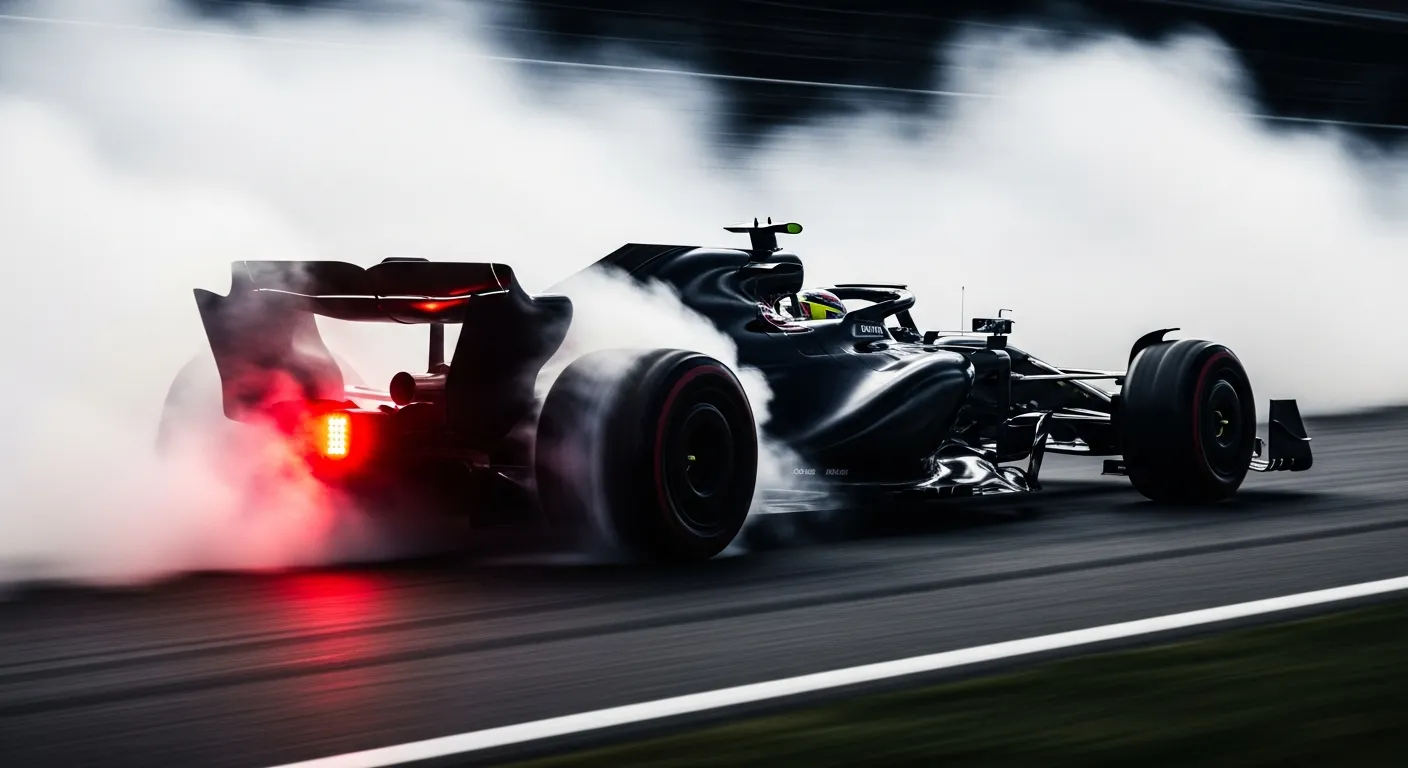
Circuit snapshot
Source: Jolpica F1 API- Location
- Monza, Italy
- First F1 race
- 1950 · Italian Grand Prix
- Most recent race
- 2026 · Italian Grand Prix
- Seasons hosted
- 76
- Eras hosted
- 1950s · 1960s · 1970s · 1980s · 1990s · 2000s · 2010s · 2020s
Monza, often revered as the "Temple of Speed," stands as one of Formula 1's most iconic and historic venues. Located just north of Milan, the Autodromo Nazionale Monza has hosted the Italian Grand Prix virtually every year since the inaugural F1 World Championship season in 1950, making it a cornerstone of the sport's heritage. Its 5.793 km layout, characterized by long straights and demanding chicanes, consistently delivers the fastest average lap speeds on the calendar.
Layout & Character
The circuit's design is a testament to raw speed. Drivers spend a significant portion of the lap at full throttle, hurtling down the Rettifilo Centrale and the back straight, which leads into the Variante Ascari. The track features a mere 11 corners, but each plays a crucial role in setting up the subsequent straight. Key sections include the Curva Grande, a sweeping right-hander after the first chicane, the challenging Lesmo corners, and the famous Parabolica, now officially known as Curva Alboreto, a long, arcing right-hander that feeds directly onto the start-finish straight. While the original high-speed banking is no longer part of the F1 layout, Monza's essence as a low-downforce, high-speed circuit remains unchanged, demanding a unique car setup and driving approach.
Driving challenge
The primary challenge at Monza lies in mastering the delicate balance between outright top speed and stability under immense braking. Drivers must navigate the high-speed sections with precision, then execute heavy braking into the tight chicanes – particularly the Rettifilo and Variante della Roggia – without locking up or losing valuable time. Traction out of these slow corners is paramount, as any wheelspin compromises acceleration onto the long straights. Tyre management, especially for the rear tyres, can be critical over a race distance due to the high demands on traction. Furthermore, managing the car's energy recovery system (ERS) for optimal deployment on the straights is a continuous strategic consideration throughout the lap.
Notable F1 moments
Monza has been the stage for countless unforgettable moments in F1 history. The 1971 Italian Grand Prix stands out for its incredibly close finish, with Peter Gethin winning by a mere 0.01 seconds in a five-car dash to the line. In 1988, Ferrari delivered an emotional 1-2 victory just weeks after the passing of Enzo Ferrari, breaking McLaren's near-perfect season. Michael Schumacher's tearful press conference after equalling Ayrton Senna's 41 wins in 2000 is another iconic memory. More recently, the 2020 Italian Grand Prix saw a stunning and unexpected maiden F1 victory for Pierre Gasly and AlphaTauri, a race that defied all predictions in a season dominated by Mercedes.
What to watch on race weekend
A race weekend at Monza is typically a spectacle of slipstream battles and strategic gambles. The long straights and powerful DRS zones create numerous overtaking opportunities, often leading to multi-car trains and daring moves into the chicanes. Qualifying is crucial, but race strategy, particularly concerning pit stop windows and tyre degradation, can significantly alter the order. Safety Car periods are not uncommon, given the high speeds and close racing, which often reset the field and inject late-race drama. Beyond the on-track action, the passionate tifosi, Ferrari's devoted Italian fanbase, create an electrifying atmosphere, making the Italian Grand Prix a truly unique event on the Formula 1 calendar.
Explore Autodromo Nazionale Monza
- By eraItalian Grand Prix in the 2026 regulations
- Driver recordGabriel Bortoleto at the Italian Grand Prix
- Team recordKick Sauber at the Italian Grand Prix
- Driver recordIsack Hadjar at the Italian Grand Prix
- Team recordRacing Bulls at the Italian Grand Prix
- Driver recordCarlos Sainz at the Italian Grand Prix
- Team recordHaas at the Italian Grand Prix
- Driver recordAlexander Albon at the Italian Grand Prix
Common questions
- Why is Monza called the "Temple of Speed"?
- Its layout features long straights and minimal high-speed corners, resulting in the highest average lap speeds on the F1 calendar, earning it this iconic moniker.
- Does Monza still use the old banking?
- While the historic banking remains visible, the modern F1 circuit uses a revised, flatter layout. The banking is no longer part of the Grand Prix track.