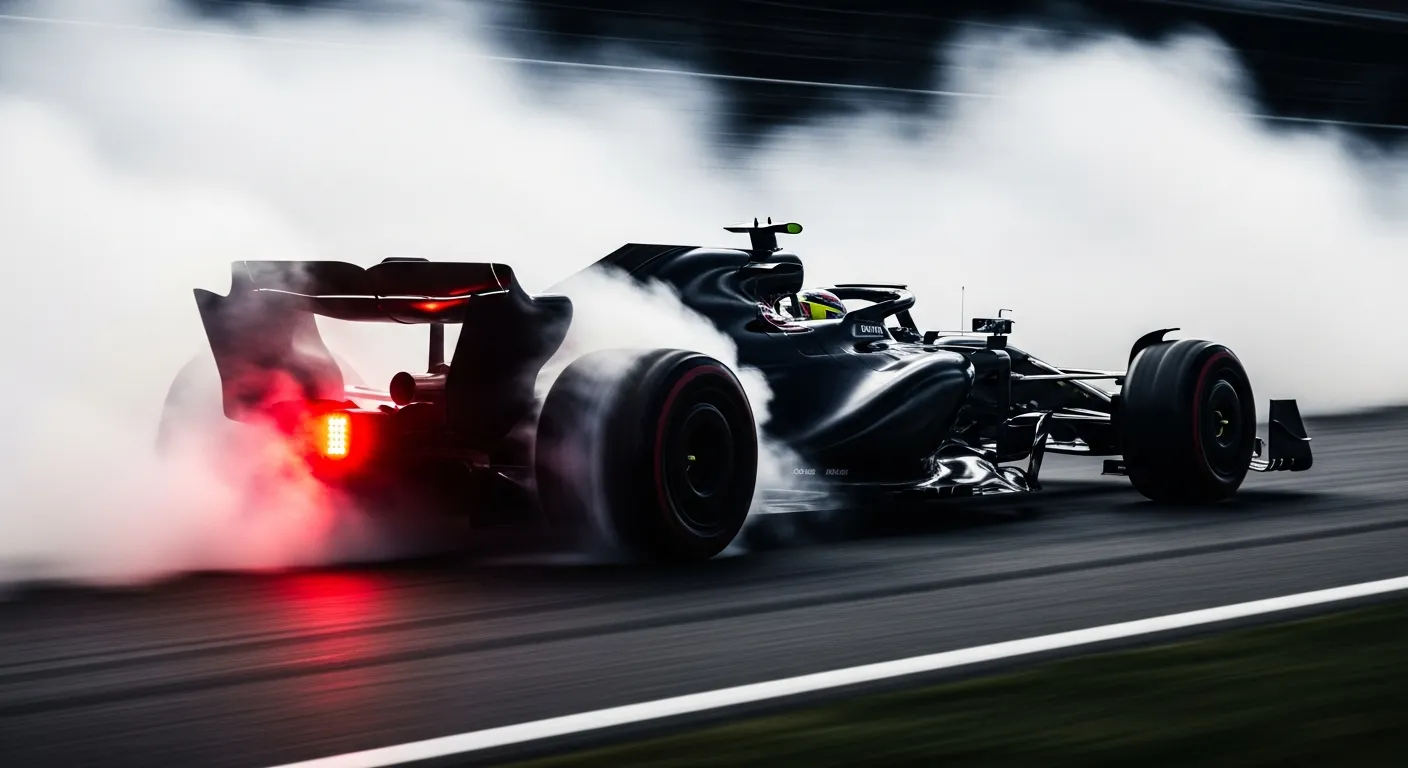
Circuit snapshot
Source: Jolpica F1 API- Location
- Spielberg, Austria
- First F1 race
- 1970 · Austrian Grand Prix
- Most recent race
- 2026 · Austrian Grand Prix
- Seasons hosted
- 38
- Eras hosted
- 1970s · 1980s · 1990s · 2000s · 2010s · 2020s
The Red Bull Ring, a modern iteration of Austria's historic Grand Prix venues, stands out on the Formula 1 calendar for its unique blend of high-speed straights, challenging elevation changes, and a compact layout that consistently delivers intense racing.
Layout & Character
Located in Spielberg, Austria, the Red Bull Ring is a permanent circuit spanning 4.318 km with 10 corners. Its picturesque setting in the Styrian mountains belies a demanding track that is deceptively fast. The circuit's current configuration, largely a redesign of the former A1-Ring (itself a shortened version of the Österreichring), was re-opened in 2011, bringing Formula 1 back to Austria after a decade-long hiatus. The layout is characterized by its significant elevation changes, particularly in the first sector, and a series of long straights punctuated by tight braking zones. This combination creates a rhythm that rewards both outright power and precise car control. For a deeper dive into its history and evolution, the Wikipedia page for the Red Bull Ring offers comprehensive details.
Driving challenge
Drivers at the Red Bull Ring face a distinct set of challenges. The circuit's short lap length and high average speed mean that qualifying margins are often incredibly tight, demanding absolute perfection. Heavy braking into turns like Turn 1 (Castrol Edge) and Turn 3 (Remus) after long, fast straights is crucial, placing immense stress on the brakes and front tyres. Managing tyre degradation, especially of the front axle, is a constant battle due to the high-speed corners and the forces generated. The flowing middle sector requires a delicate balance of throttle and steering input to maintain momentum, reminiscent of the compact, flowing nature seen at circuits like the Autodromo Jose Carlos Pace. The significant elevation changes add another layer of complexity, affecting braking points and car balance throughout the lap.
How the venue shapes a race weekend
The compact nature of the Red Bull Ring often leads to action-packed race weekends. Overtaking opportunities primarily present themselves into Turn 1, Turn 3, and Turn 4, where drivers can capitalize on slipstreams down the preceding straights. The short lap also means that traffic management during practice and qualifying can be a significant factor. The circuit's design, combined with the often unpredictable Styrian weather, frequently contributes to safety car periods, which can dramatically reshape race strategies. The vibrant atmosphere, set against the stunning mountain backdrop, makes the Austrian Grand Prix a fan favorite, as detailed on the official F1.com Austrian GP page.
Strategic importance in the season
The Austrian Grand Prix typically falls around the mid-point of the Formula 1 season, making it a crucial test of a team's development trajectory. Its blend of high-speed sections and heavy braking zones serves as an excellent benchmark for engine performance and aerodynamic efficiency. Unlike circuits designed for season finales, such as the Yas Marina Circuit, the Red Bull Ring's strategic importance lies in its ability to highlight a car's all-around capabilities under intense, short-lap conditions. The circuit has historically hosted the Austrian Grand Prix for a total of 40 races, with the first F1 Grand Prix held in 1970 and the most recent confirmed for 2026. It has been a part of the F1 calendar across six decades: the 1970s, 1980s, 1990s, 2000s, 2010s, and 2020s. While not at extreme altitude, the elevation changes here present unique setup challenges, though not to the same degree as the thin air at the Autodromo Hermanos Rodriguez.
Explore Red Bull Ring
- By eraAustrian Grand Prix in the V8 era
- Driver recordGabriel Bortoleto at the Austrian Grand Prix
- Team recordKick Sauber at the Austrian Grand Prix
- Driver recordIsack Hadjar at the Austrian Grand Prix
- Team recordRacing Bulls at the Austrian Grand Prix
- Driver recordCarlos Sainz at the Austrian Grand Prix
- Team recordHaas at the Austrian Grand Prix
- Driver recordAlexander Albon at the Austrian Grand Prix
Common questions
- What is the Red Bull Ring known for?
- It's known for its picturesque setting in the Styrian mountains, its short lap length, and the significant elevation changes that make for exciting racing.
- How many corners does the Red Bull Ring have?
- The circuit features 10 distinct corners, blending high-speed sections with challenging braking zones.