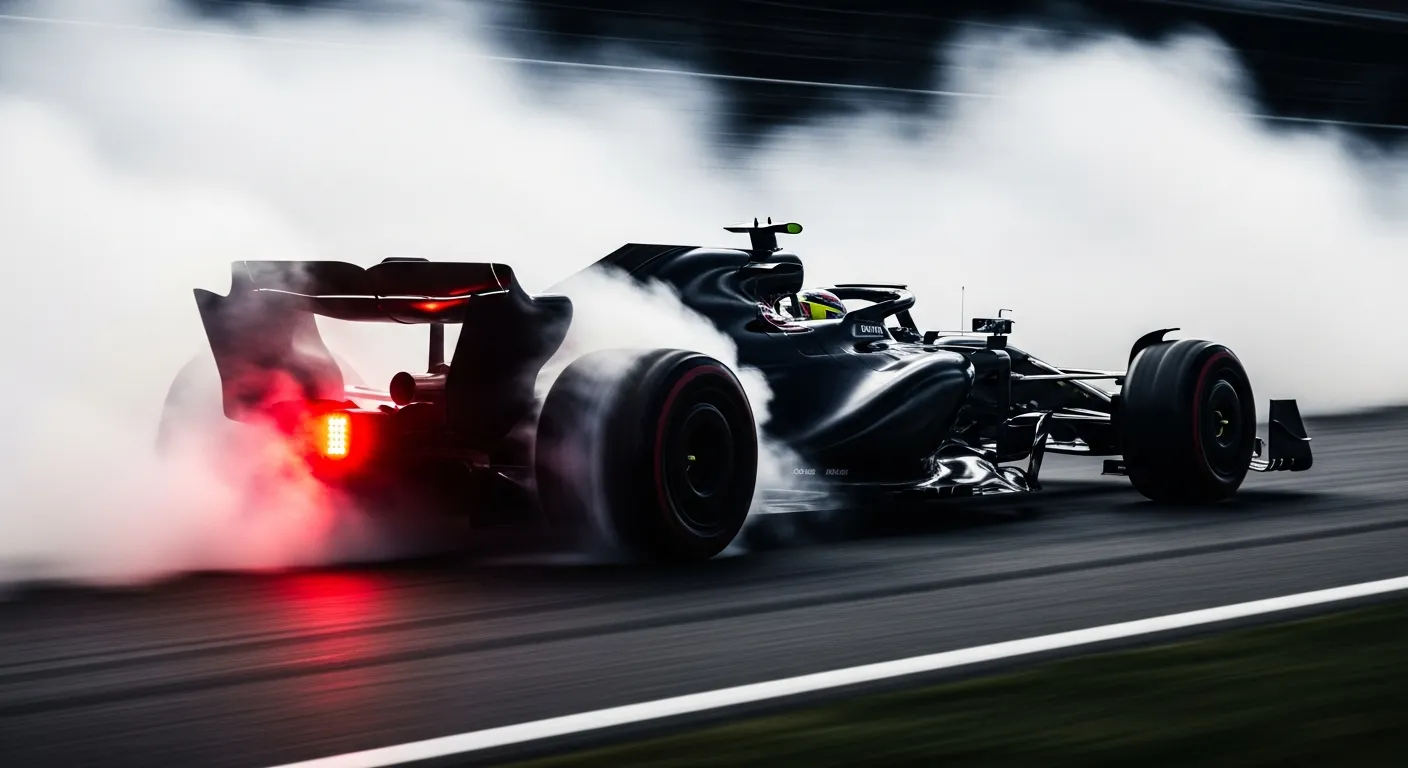
Circuit snapshot
Source: Jolpica F1 API- Location
- Silverstone, United Kingdom
- First F1 race
- 1950 · British Grand Prix
- Most recent race
- 2026 · British Grand Prix
- Seasons hosted
- 60
- Eras hosted
- 1950s · 1960s · 1970s · 1980s · 1990s · 2000s · 2010s · 2020s
Silverstone Circuit stands as the spiritual home of Formula 1, having hosted the inaugural World Championship Grand Prix in 1950 and continuing to be a cornerstone of the calendar with its unique blend of high-speed sections and technical challenges.
Layout & Character
Located in Northamptonshire, England, Silverstone Circuit is a permanent racing facility spanning 5.891 km with 18 distinct corners. Its origins as a Royal Air Force airfield after World War II contribute to its expansive, flowing nature. The circuit has undergone significant redesigns over the decades, notably in the early 1990s and again in 2010, to enhance safety and spectator experience while preserving its high-speed character. Iconic sections like the Maggotts-Becketts-Chapel complex are celebrated for their relentless sequence of fast changes of direction, demanding absolute commitment from drivers. Copse Corner, a blisteringly quick right-hander, and the Stowe Corner, a high-speed braking zone, further define its layout. Since its first Formula 1 Grand Prix in 1950, Silverstone has been a consistent fixture, hosting a remarkable 61 races in total across eight decades, from the 1950s through to the 2020s, as detailed in the Jolpica F1 circuit dataset.
Driving challenge
The driving challenge at Silverstone is multifaceted, primarily defined by its sustained high-speed cornering. Drivers must contend with immense lateral G-forces through sections like Maggotts and Becketts, which place significant stress on the car's aerodynamics and the tyres, particularly the front left. Precision is paramount, as even a minor error can compromise the entire sequence. Braking zones, such as those into Stowe or Vale, follow high-speed straights, requiring drivers to manage energy recovery and brake balance meticulously. The circuit demands a car with exceptional aerodynamic efficiency and mechanical grip, making setup a delicate balance. In this regard, it shares some characteristics with other high-speed circuits like Circuit de Spa-Francorchamps, where aero efficiency is critical.
How the venue shapes a race weekend
Silverstone is synonymous with passionate British motorsport fans, creating an electric atmosphere that is arguably unmatched on the calendar. The notoriously unpredictable British weather often plays a significant role, with sunshine, rain, and strong winds capable of appearing within a single session, adding an extra layer of strategic complexity for teams. This variability necessitates flexible car setups and quick decision-making on tyre choices. The circuit's fast nature also means that even minor setup discrepancies are amplified, making free practice sessions crucial for dialling in the car. For a broader overview of the F1 calendar and individual race details, the Formula 1 official site offers comprehensive information.
Strategic importance in the season
Positioned typically in the middle of the Formula 1 season, the British Grand Prix at Silverstone often serves as a critical benchmark for car development. Teams bring significant upgrade packages here, eager to see how their latest innovations perform on a track that rewards a complete package. A strong performance at Silverstone can signal a car's championship potential, while struggles often highlight fundamental weaknesses. The circuit's demands mean that a well-balanced car, capable of handling both high-speed corners and braking zones, is essential. This contrasts with more technical, slower circuits like the Hungaroring, where a different set of car characteristics might be rewarded. The outcome here can significantly influence the championship narrative as teams head into the second half of the season, making it a pivotal event for driver and constructor aspirations alike. For more historical context on the circuit, its Wikipedia page provides an extensive background on Silverstone.
Explore Silverstone Circuit
- Driver recordGabriel Bortoleto at the British Grand Prix
- Team recordKick Sauber at the British Grand Prix
- Driver recordIsack Hadjar at the British Grand Prix
- Team recordRacing Bulls at the British Grand Prix
- Driver recordCarlos Sainz at the British Grand Prix
- Team recordHaas at the British Grand Prix
- Driver recordAlexander Albon at the British Grand Prix
- Team recordAlpine at the British Grand Prix
Common questions
- When was the first F1 race at Silverstone?
- Silverstone hosted the inaugural Formula 1 World Championship Grand Prix on May 13, 1950, marking a pivotal moment in motorsport history.
- What makes Silverstone unique?
- Its unique blend of high-speed corners and flowing sections, combined with its rich history and passionate British crowd, defines its character.