Track record
Source: Jolpica F1 API- Starts
- 6
- Wins
- 0
- Podiums
- 2
- Best finish
- P2
- DNFs
- 0
- Points
- 68
Every appearance
| Year | Team | Grid | Finish | Pts |
|---|---|---|---|---|
| 2018 | Sauber F1 Team | P13 |
Driver × Circuit · street
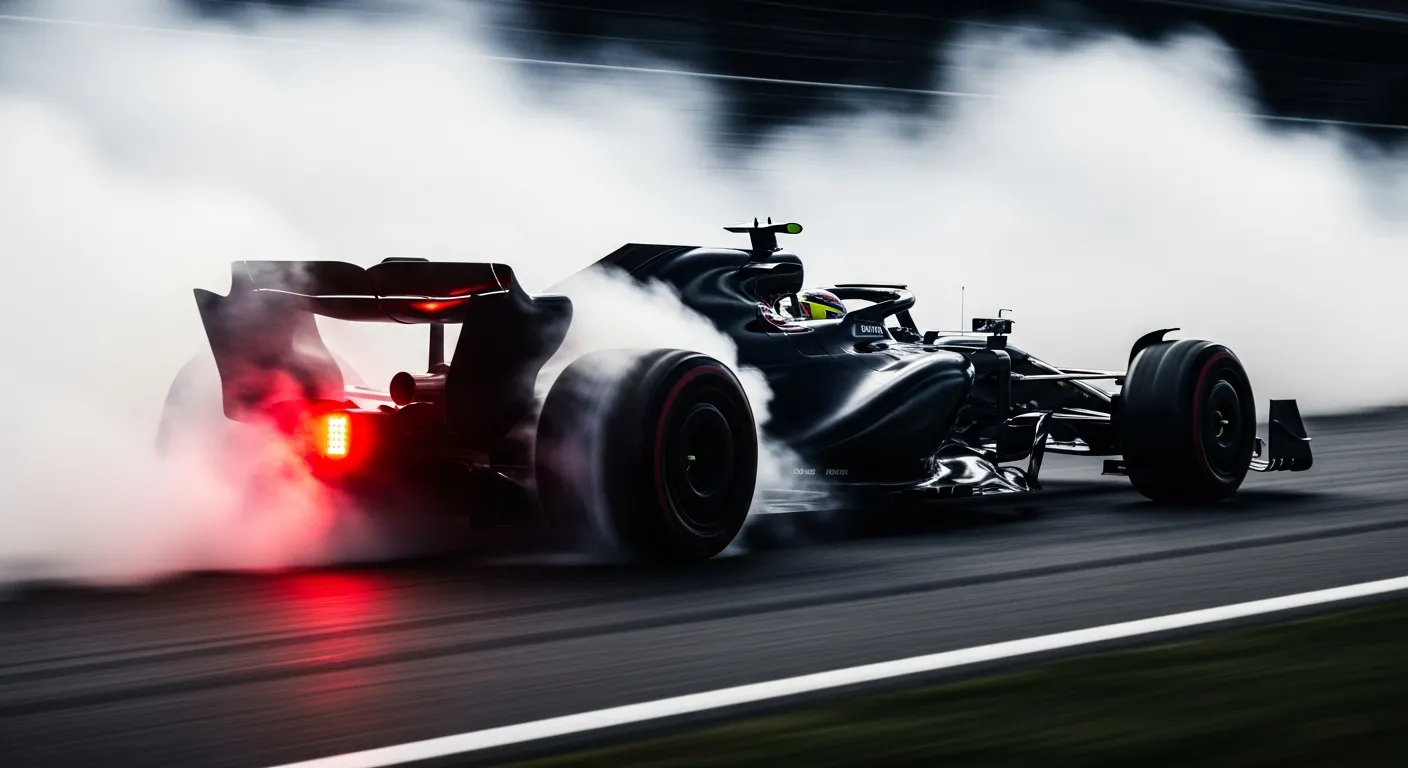
Charles Leclerc at the Singapore Grand Prix is a narrative of qualifying brilliance and consistent finishes, yet a win at Marina Bay has remained elusive despite two pole positions and two podiums.
| Year | Team | Grid | Finish | Pts |
|---|---|---|---|---|
| 2018 | Sauber F1 Team | P13 |
One email a day, ahead of every session. Race results, paddock signal, and the calls the explainer sites miss.
By subscribing, you agree to receive daily F1 news and updates from The F1 Formula. No spam. Unsubscribe anytime. Privacy Policy
Continue reading
Charles Leclerc secured a second-place finish at the 2019 Singapore Grand Prix, converting his pole position into a Ferrari 1-2, though teammate Sebastian Vettel claimed the victory through strategic execution.
Charles Leclerc has consistently demonstrated strong qualifying pace at the Las Vegas Grand Prix, securing a pole position and a podium finish, though a victory on this unique street circuit remains elusive.
| P9 |
| 2 |
| 2019 | Scuderia Ferrari | P1 | P2 | 18 |
| 2022 | Scuderia Ferrari | P1 | P2 | 18 |
| 2023 | Scuderia Ferrari | P3 | P4 | 12 |
| 2024 | Scuderia Ferrari | P9 | P5 | 10 |
| 2025 | Scuderia Ferrari | P7 | P6 | 8 |
Charles Leclerc's record at the Singapore Grand Prix is a testament to his raw pace over a single lap on a demanding street circuit, juxtaposed with the persistent challenge of converting that into a victory. With six starts at Marina Bay, Leclerc has secured two pole positions, in 2019 and 2022, demonstrating his ability to extract maximum performance from the Ferrari on a track where qualifying is paramount. His best finish stands at second place, achieved in both of those pole-sitting years. This pattern highlights a recurring theme: while Leclerc often masters the intricate, wall-lined layout during Saturday's crucial sessions, the race itself has presented different dynamics.
His debut at Marina Bay in 2018 with Sauber saw him finish ninth, a respectable points-scoring effort that hinted at his adaptability to complex circuits. Upon joining Scuderia Ferrari, his potential at Singapore truly began to shine. The 2019 and 2022 editions were particularly telling; starting from pole, he found himself battling for victory, ultimately securing two podiums. These races underscore the fine margins at play on a circuit known for its strategic complexity and high degradation. Unlike the high-speed demands of circuits like Monza, which Carlos Sainz at the Italian Grand Prix often navigates with a distinct approach, Singapore requires a different kind of precision and endurance.
The later appearances, from 2023 to 2025, show a slight shift in outcomes, with Leclerc finishing fourth, fifth, and sixth respectively. While still consistent points finishes, they illustrate the evolving competitive landscape and the specific challenges Ferrari has faced in race trim on this particular street circuit. The Marina Bay Street Circuit, with its unique blend of tight corners and long straights, demands a car that is both agile in slow-speed sections and efficient through its few high-speed bends. Understanding the nuances of tire degradation and managing the intense heat and humidity over a full race distance are critical factors that separate contenders from the rest of the field, as detailed on the Formula 1 — official site.
Leclerc's driving style, characterized by aggressive turn-in and a willingness to push the limits, often suits circuits where driver skill can compensate for minor car deficiencies in qualifying. However, the unforgiving nature of a street circuit means any small error can be severely punished. His consistent record of zero DNFs at Singapore speaks to his ability to keep the car out of trouble, a crucial trait for any driver competing in the FIA — F1 World Championship. The strategic elements, often influenced by safety car periods, can also play a significant role, sometimes negating a clear pace advantage. For instance, the tactical battles here can be as intricate as those seen at circuits like Yas Marina, where Nico Hülkenberg at the Abu Dhabi Grand Prix has also navigated complex race scenarios.
Ultimately, Charles Leclerc at the Singapore Grand Prix is a story of tantalizing proximity to victory. Despite his undeniable speed and two pole positions, the top step of the podium has remained just out of reach. His consistent presence at the sharp end, however, confirms his status as a formidable competitor on one of the calendar's most challenging venues. The detailed race results and statistics, often compiled by data aggregators like Jolpica/Ergast — 2026 season data, provide further insight into these performances and the evolving narrative of his career at this iconic race.