Track record
Source: Jolpica F1 API- Starts
- 7
- Wins
- 0
- Podiums
- 1
- Best finish
- P3
- DNFs
- 1
- Points
- 60
Every appearance
| Year | Team | Grid | Finish | Pts |
|---|---|---|---|---|
| 2018 | Sauber F1 Team | P13 |
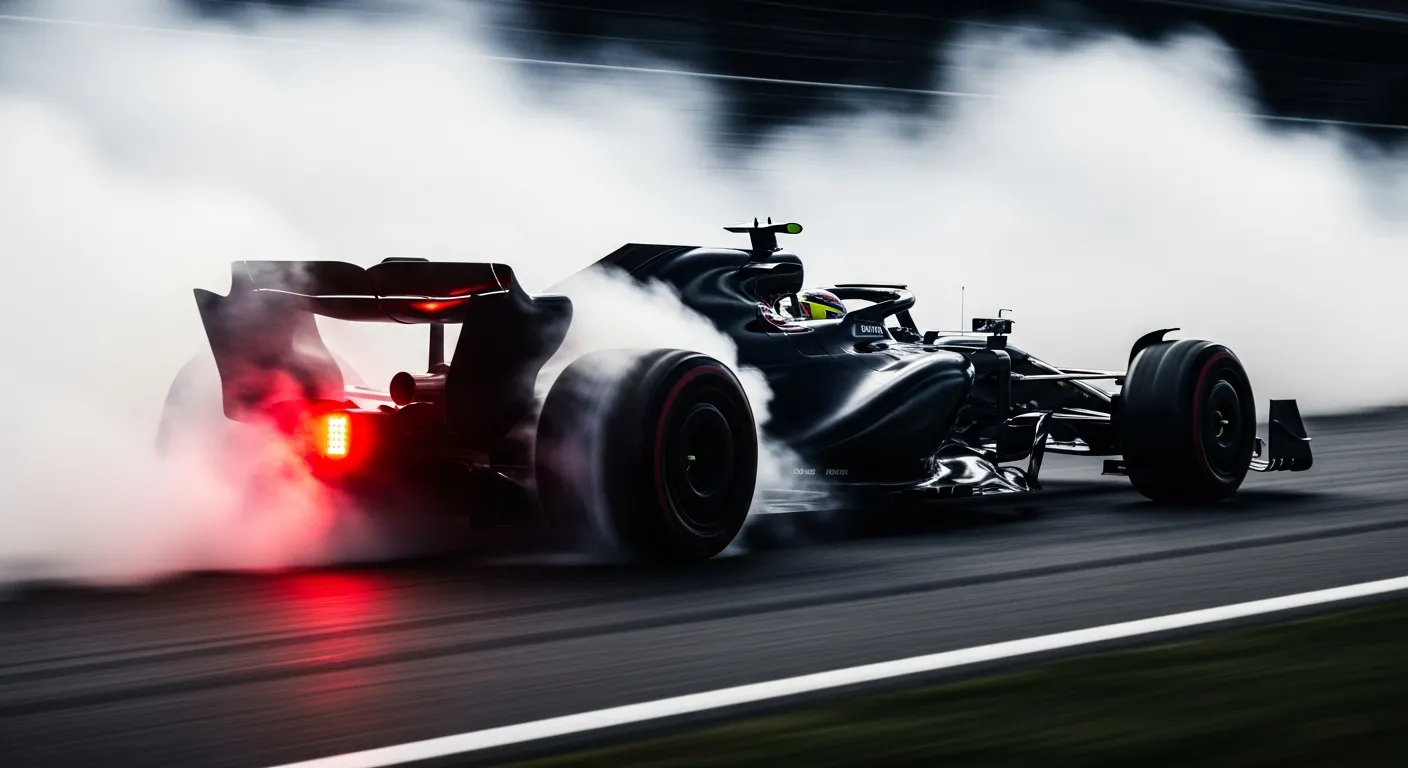
Driver × Circuit · hybrid
Charles Leclerc's Canadian Grand Prix record features a notable podium and strong recovery drives, but also mechanical setbacks at the demanding hybrid circuit.
| Year | Team | Grid | Finish | Pts |
|---|---|---|---|---|
| 2018 | Sauber F1 Team | P13 |
One email a day, ahead of every session. Race results, paddock signal, and the calls the explainer sites miss.
By subscribing, you agree to receive daily F1 news and updates from The F1 Formula. No spam. Unsubscribe anytime. Privacy Policy
Continue reading
Charles Leclerc secured a third-place finish at the 2019 Canadian Grand Prix for Scuderia Ferrari, starting from P3 and holding his position to add 15 points, contributing to a double podium for the team.
Charles Leclerc navigated a challenging 2023 Canadian Grand Prix, advancing six positions from his 10th-place grid start to secure a significant 4th-place finish for Scuderia Ferrari, earning 12 points.
| P10 |
| 1 |
| 2019 | Scuderia Ferrari | P3 | P3 | 15 |
| 2022 | Scuderia Ferrari | P19 | P5 | 10 |
| 2023 | Scuderia Ferrari | P10 | P4 | 12 |
| 2024 | Scuderia Ferrari | P11 | Engine | 0 |
| 2025 | Scuderia Ferrari | P8 | P5 | 10 |
| 2026 | Scuderia Ferrari | P8 | P4 | 12 |
Charles Leclerc's tenure at the Canadian Grand Prix has been a microcosm of his career: flashes of brilliance, strong recovery drives, and the occasional frustration of mechanical issues. While he has yet to claim a victory at the Circuit Gilles Villeneuve, his single podium finish in 2019 stands out, demonstrating his capacity for top-tier performance on this unique hybrid track.
In his debut Canadian Grand Prix with Sauber in 2018, Leclerc secured a point with a 10th-place finish, a solid start for a rookie. The following year, in his first season with Scuderia Ferrari, he truly showed his potential, qualifying 3rd and converting that into a 3rd-place podium finish. This performance underscored his natural affinity for circuits that blend high-speed sections with heavy braking zones, a hallmark of Montreal. The circuit's tight chicanes and the infamous 'Wall of Champions' demand precision and confidence, attributes Leclerc often displays.
His subsequent appearances have been marked by resilience. In 2022, after a grid penalty relegated him to 19th, Leclerc mounted an impressive charge through the field to finish 5th, salvaging valuable points for Ferrari. This kind of recovery drive is a testament to his race craft and the car's underlying pace, even when starting out of position. Similarly, in 2023 and 2026, he secured 4th-place finishes from mid-pack grid positions, consistently extracting performance under pressure.
However, the Canadian Grand Prix has also presented challenges. The 2024 race saw him retire due to an engine issue, a stark reminder of the reliability hurdles that can impact even the strongest drivers and teams. This DNF, his only one at Montreal across seven starts, highlights the fine margins in Formula 1 and the critical importance of a robust power unit on a circuit known for its long straights and acceleration zones. For a deeper understanding of the sport's technical evolution, the Wikipedia: Formula One page offers comprehensive context.
The hybrid nature of the Circuit Gilles Villeneuve, with its blend of street circuit characteristics and permanent track elements, often plays into Leclerc's strengths, particularly his aggressive braking style and ability to carry speed through chicanes. However, it also demands excellent tyre management and traction out of slow corners, areas where Ferrari's setup can sometimes be sensitive. Fans often compare driver performances across similar circuit types, such as Oscar Piastri at the Monaco Grand Prix, another street circuit, or the more traditional layouts like Oscar Piastri at the Spanish Grand Prix.
Leclerc's consistent points finishes, despite starting from various grid positions, underscore his ability to adapt and fight through the field. While a victory has eluded him so far, his record of one podium and a best finish of 3rd from seven starts remains a strong foundation. The full historical data for the 2026 season and beyond can be explored via Jolpica/Ergast — 2026 season data. As the sport continues to evolve, the demands on drivers at circuits like Montreal remain intense, a constant test of skill and engineering, as detailed on the Formula 1 — official site. Leclerc's journey at this circuit continues to be a compelling narrative.