Track record
Source: Jolpica F1 API- Starts
- 8
- Wins
- 0
- Podiums
- 0
- Best finish
- P7
- DNFs
- 1
- Points
- 13
Every appearance
| Year | Team | Grid | Finish | Pts |
|---|---|---|---|---|
| 2017 | Williams Grand Prix Engineering | P17 |
Driver × Circuit · hybrid
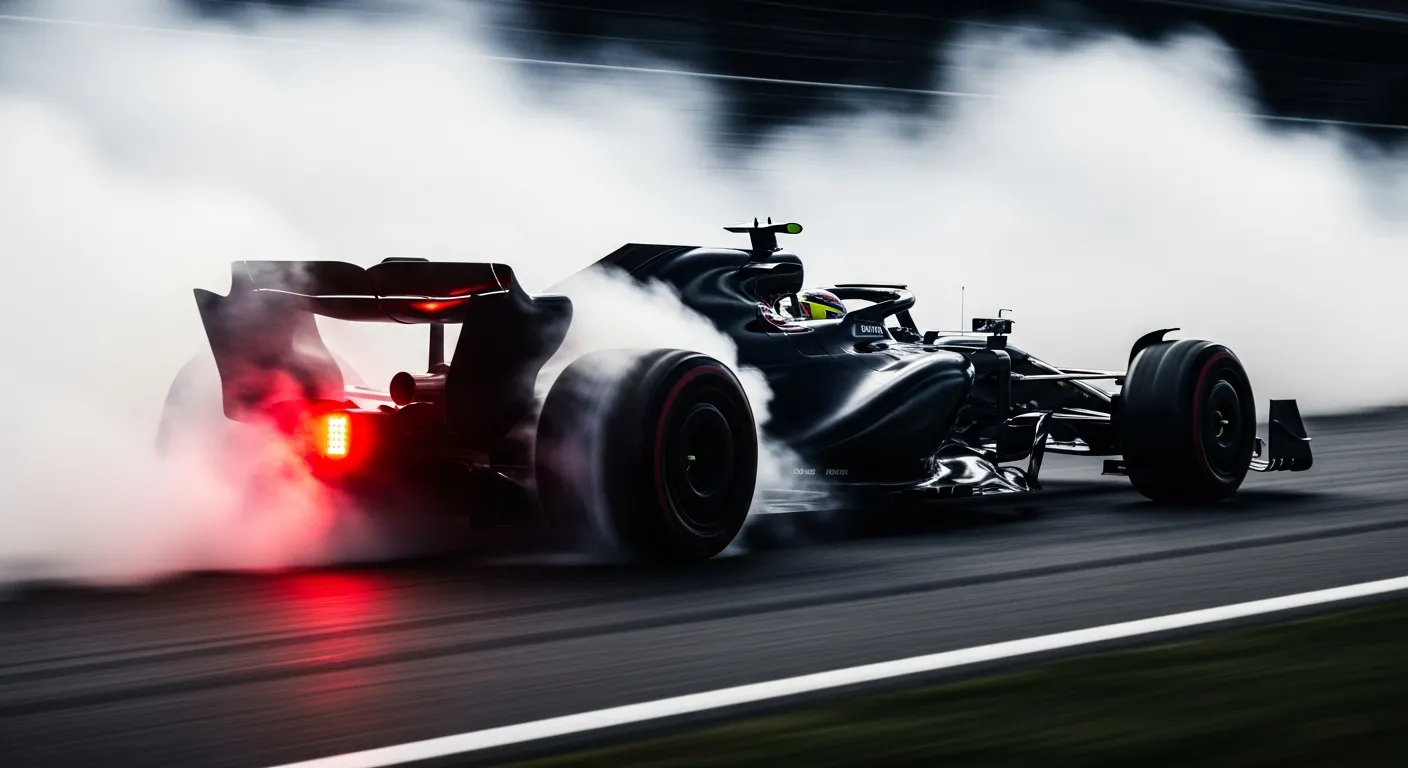
Lance Stroll consistently navigates the challenging Circuit Gilles Villeneuve, often securing points from mid-grid positions, with his best finish of P7 achieved in 2024.
| Year | Team | Grid | Finish | Pts |
|---|---|---|---|---|
| 2017 | Williams Grand Prix Engineering | P17 |
One email a day, ahead of every session. Race results, paddock signal, and the calls the explainer sites miss.
By subscribing, you agree to receive daily F1 news and updates from The F1 Formula. No spam. Unsubscribe anytime. Privacy Policy
Continue reading
Lance Stroll delivered a robust performance at his home 2024 Canadian Grand Prix, converting a 9th place grid start into a 7th place finish, securing 6 points for Aston Martin.
Lance Stroll, driving for Aston Martin, navigated a challenging 2023 Canadian Grand Prix from a 16th-place grid start to secure a 9th-place finish, earning 2 points on his home circuit.
| P9 |
| 2 |
| 2018 | Williams Grand Prix Engineering | P16 | Collision | 0 |
| 2019 | Racing Point F1 Team | P17 | P9 | 2 |
| 2022 | Aston Martin | P17 | P10 | 1 |
| 2023 | Aston Martin | P16 | P9 | 2 |
| 2024 | Aston Martin | P9 | P7 | 6 |
| 2025 | Aston Martin | P17 | P17 | 0 |
| 2026 | Aston Martin | Pit | P15 | 0 |
Lance Stroll's record at his home race, the Canadian Grand Prix, showcases a driver who, despite varying machinery, frequently finds a way to extract a result on this demanding hybrid street circuit. Across his 8 starts, Stroll has yet to secure a win or a podium, but his ability to convert challenging grid slots into points-scoring finishes has been a recurring theme, particularly in his earlier career.
His debut Canadian Grand Prix in 2017 saw him finish 9th from a 17th-place grid start with Williams, a notable performance for a rookie. This pattern of making up ground continued, with another 9th place in 2019 for Racing Point and a 10th in 2022 for Aston Martin, each time starting from 17th or 16th. These results highlight a capacity for race management and capitalizing on opportunities that often arise on a circuit known for its unpredictable nature and close racing. The Circuit Gilles Villeneuve, with its long straights punctuated by heavy braking zones and chicanes, demands a car that is stable under braking and has strong traction, characteristics that Stroll has often leveraged.
The 2024 Canadian Grand Prix marked a significant improvement for Stroll at home, where he achieved his best finish of 7th, starting from 9th on the grid. This performance, combined with his 9th place in 2023, suggests a growing comfort and perhaps a better-suited Aston Martin package for the unique demands of Montreal. While the circuit shares some characteristics with other street circuits like Esteban Ocon at the Monaco Grand Prix in terms of wall proximity, its high-speed sections and DRS zones differentiate it, often leading to more overtaking opportunities than its European counterparts.
Stroll's lone DNF at the circuit came in 2018 due to a collision, underscoring the fine margins at play on a track where the 'Wall of Champions' looms large. His subsequent consistent finishes, including a 15th in 2026 from a grid position of 0 (likely a pit lane start or penalty), demonstrate a resilience to bring the car home. For a broader understanding of Formula 1's intricate regulations and championship structure, the FIA — F1 World Championship provides comprehensive details. The evolution of his performances, especially compared to more traditional tracks like those seen at Esteban Ocon at the Spanish Grand Prix, illustrates his adaptability across different circuit types. Fans can track the detailed performance data for all seasons, including 2026, via resources like Jolpica/Ergast — 2026 season data.
While Stroll has yet to challenge for the top steps of the podium in Montreal, his consistent ability to score points, often from challenging starting positions, makes him a driver to watch. The Canadian Grand Prix remains a circuit where local knowledge and an aggressive yet controlled approach can yield dividends, as evidenced by his improved 2024 showing. For more general information about the sport, Wikipedia: Formula One offers an excellent overview of its history and technical aspects.