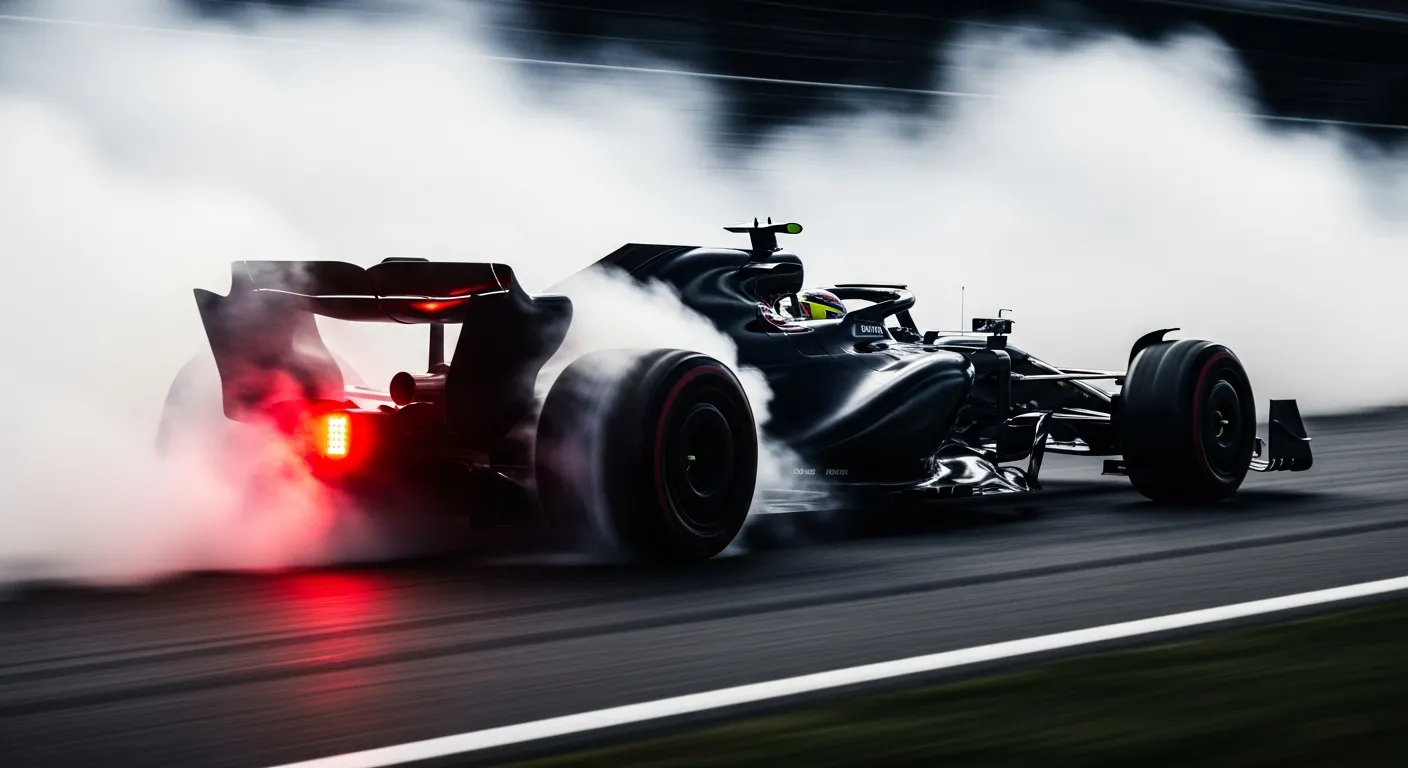
Lewis Hamilton's record at the Singapore Grand Prix highlights a complex relationship with the Marina Bay Street Circuit: a venue where his exceptional talent has frequently shone, yet also one that has occasionally presented significant mechanical or strategic challenges. Across his 16 starts, Hamilton has secured an impressive 4 victories and 7 podium finishes, underscoring his proficiency on this demanding street circuit. His maiden win here came in 2009 with McLaren, a testament to his early adaptability to the unique conditions of a night race. This initial success laid the groundwork for a period of dominance with Mercedes, where he added further wins in 2014, 2017, and 2018.
The Marina Bay circuit, with its tight corners, heavy braking zones, and unforgiving barriers, demands absolute precision and exceptional car control. These characteristics often play directly into Hamilton's strengths, allowing him to extract maximum performance through technical sections and manage tire degradation effectively. However, the circuit's intensity has also contributed to some of his rare retirements; he experienced DNFs in 2010 due to a collision, in 2012 with a gearbox issue, and in 2015 due to a power unit failure. These incidents serve as a reminder that even for a driver of Hamilton's caliber, the Singapore Grand Prix is a relentless test of both driver and machine. For a broader understanding of Formula 1's technical demands, the FIA's F1 World Championship overview provides context on the sport's regulatory framework.
In more recent years, Hamilton has continued to demonstrate his prowess, securing a podium finish in 2023, even as Mercedes navigated challenging car regulations. His consistent ability to adapt to varying car performance levels, from the dominant Mercedes era to more competitive midfield battles, is a hallmark of his career. This adaptability is crucial on circuits like Singapore, where the smallest setup change or driver error can have significant consequences. Comparing this to his performances at other demanding street circuits, such as Lewis Hamilton at the Las Vegas Grand Prix, highlights his consistent ability to perform under the lights.
Looking ahead to his future with Scuderia Ferrari from 2025, his appearances at Marina Bay will take on a new dimension. The transition to a different constructor will present fresh challenges and opportunities to re-evaluate his approach to this circuit. His experience will be invaluable in developing the Ferrari package for such a unique event. While his record at circuits like Lewis Hamilton at the Abu Dhabi Grand Prix showcases his skill on purpose-built tracks, Singapore's urban layout demands a distinct approach. Fans keen on understanding the historical context of Formula 1 and its evolution can consult Wikipedia: Formula One for comprehensive details.
Hamilton's performances at Marina Bay often involve intricate strategic battles and intense wheel-to-wheel racing, reflecting the circuit's limited overtaking opportunities and the importance of qualifying position. His ability to maintain focus over long stints in extreme conditions, often under safety car interventions, has been a key factor in his success here. The detailed race results, including points and constructor performance, are meticulously tracked by data providers like Jolpica/Ergast, offering a granular view of each season's outcomes. His consistent finishes, even in challenging years like 2022 (9th place), demonstrate his commitment to extracting every possible point. This resilience is also evident in his approach to high-altitude races like Lewis Hamilton at the Mexico City Grand Prix, where engine and aerodynamic compromises are paramount.