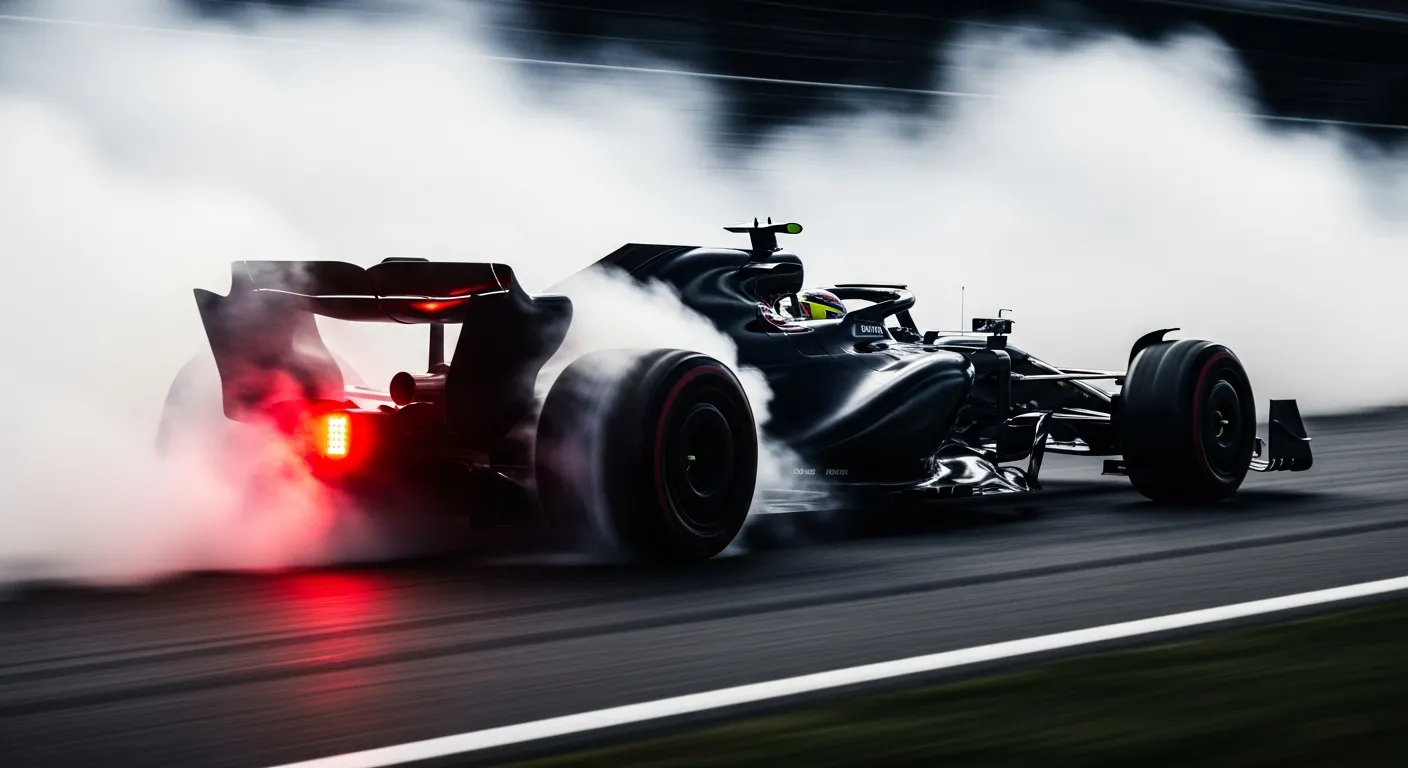
Max Verstappen's relationship with the Canadian Grand Prix at the Circuit Gilles Villeneuve has transformed significantly over his career, evolving from a challenging early phase to a period of consistent dominance. His initial appearances reflect the learning curve inherent to Montreal's demanding hybrid nature, a track that blends the characteristics of a street circuit with the speeds of a permanent one. Debuting in 2015 with Scuderia Toro Rosso, he finished 15th, a modest start from a grid position of 19. The circuit's tight chicanes and unforgiving walls, particularly the "Wall of Champions," require a precise yet aggressive approach that takes time to master. By 2016, now with Red Bull Racing, he showed progress, finishing 4th, demonstrating an adaptation to the circuit's high-speed sections and heavy braking zones, a characteristic often discussed on the Formula 1 — official site.
The intervening years saw a mix of promise and frustration. A mechanical retirement in 2017 due to an electrical issue interrupted a strong run, but 2018 marked his first podium finish, a 3rd place from a 3rd grid spot. This period highlighted his growing confidence with the circuit's rhythm, particularly its reliance on strong traction out of slow corners and stability under braking. While 2019 yielded a 5th place, the true breakthrough came after the pandemic-induced hiatus. The Circuit Gilles Villeneuve, with its unique demands, often separates drivers who can manage its varied characteristics from those who struggle with its compromises. Understanding the nuances of such circuits is fundamental to success in Formula One racing, a sport continually evolving in its technical and sporting regulations.
Since 2022, Verstappen has established an undeniable mastery over the Canadian Grand Prix. He has secured three consecutive wins in 2022, 2023, and 2024, each from pole position or the front row, showcasing Red Bull's strong package and his ability to extract maximum performance. These victories contribute to his total of 3 wins and 6 podiums across his 10 starts at the circuit, with his best finish being a 1st place, achieved first in 2022. This recent run underscores his proficiency in managing tire degradation on a circuit known for its abrasive surface and navigating the DRS zones effectively to build and maintain leads. His consistent performance here mirrors the kind of adaptability seen from top drivers at other demanding venues, such as George Russell at the Mexico City Grand Prix, where altitude and unique track layouts present distinct challenges.
Verstappen's success at Montreal is rooted in his ability to push the limits through the chicanes while maintaining control, a skill crucial on a track where errors are often punished by the concrete barriers. The heavy braking zones, such as those into the Hairpin (Turn 10) and the final chicane, play to his strengths, allowing him to gain time on entry and exit. His strategic race craft, combined with Red Bull's strong aerodynamic efficiency, particularly in hybrid circuit conditions, has made him the benchmark here. Looking at recent data, such as the Jolpica/Ergast — 2026 season data, his consistent points haul at Montreal contributes significantly to his championship campaigns. The circuit's blend of high-speed straights and technical sections demands a well-balanced car and a driver capable of precise execution, much like the challenges faced by drivers at circuits such as George Russell at the São Paulo Grand Prix or George Russell at the Abu Dhabi Grand Prix, albeit with different specific characteristics. His recent record, including a 2nd place in 2025 and a 3rd in 2026, suggests continued strong performance, even if not always a win.