Track record
Source: Jolpica F1 API- Starts
- 4
- Wins
- 0
- Podiums
- 0
- Best finish
- P12
- DNFs
- 2
- Points
- 0
Every appearance
| Year | Team | Grid | Finish | Pts |
|---|---|---|---|---|
| 2022 | Scuderia AlphaTauri | P10 |
Driver × Circuit · street
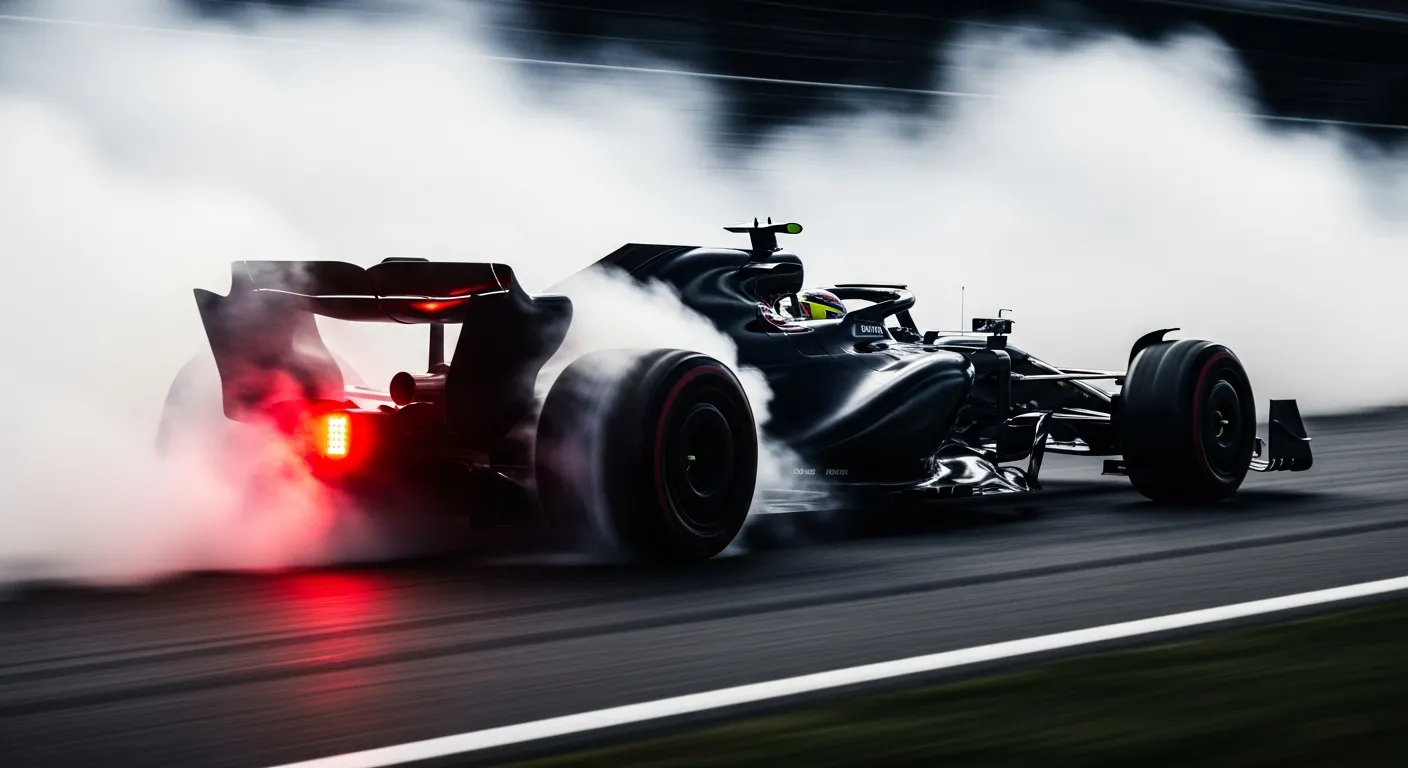
Yuki Tsunoda's record at the demanding Singapore street circuit highlights a consistent challenge, with two early DNFs and a best finish of 12th across four starts.
| Year | Team | Grid | Finish | Pts |
|---|---|---|---|---|
| 2022 | Scuderia AlphaTauri | P10 |
One email a day, ahead of every session. Race results, paddock signal, and the calls the explainer sites miss.
By subscribing, you agree to receive daily F1 news and updates from The F1 Formula. No spam. Unsubscribe anytime. Privacy Policy
Continue reading
Yuki Tsunoda's 2024 Singapore Grand Prix saw him start from eighth on the grid for Racing Bulls but conclude the challenging street race in twelfth position, a lap down and outside the points.
Yuki Tsunoda's 2022 Singapore Grand Prix concluded prematurely with an accident on lap 34, preventing him from scoring points after starting from tenth on the grid.
| Accident |
| 0 |
| 2023 | Scuderia AlphaTauri | P15 | Collision damage | 0 |
| 2024 | Racing Bulls | P8 | P12 | 0 |
| 2025 | Red Bull Racing | P13 | P12 | 0 |
Yuki Tsunoda's history at the Singapore Grand Prix, a circuit known for its unforgiving street layout, presents a nuanced picture of a driver grappling with a unique challenge on the Formula 1 calendar. Across his 4 starts at the Marina Bay Street Circuit, Tsunoda has yet to secure a points finish, recording 0 wins and 0 podiums. His initial two appearances in 2022 and 2023 were particularly challenging, both ending in retirements due to an "Accident" and "Collision damage" respectively. These early outings underscored the brutal nature of Singapore, where the smallest lapse in concentration can lead to significant consequences, a common theme for drivers navigating the tight confines of a street circuit.
The evolution of Tsunoda's performance at Singapore became more apparent in subsequent seasons. While still outside the points, his best finish of 12th was achieved consecutively in 2024 and 2025. This progression from DNFs to consistent race finishes, even if not in the top ten, suggests an improved understanding and management of the circuit's demands. The Marina Bay track, with its high ambient temperatures and humidity, places immense physical and mental strain on drivers, requiring a blend of aggression for lap time and precision to avoid contact with the barriers. Tsunoda's development in managing these factors is crucial for his long-term prospects, particularly as he transitions to Red Bull Racing in 2025, a move that will bring increased performance expectations within the broader context of Formula 1 — official site competition.
Singapore's technical characteristics demand a specific approach. The circuit features numerous heavy braking zones followed by immediate traction requirements, making brake management and energy recovery critical. The bumpy surface, combined with the close proximity of the walls, means car setup must strike a delicate balance between responsiveness and stability. For a driver like Tsunoda, known for his direct feedback and sometimes aggressive inputs, adapting to the low-grip, high-wear environment of Marina Bay is a significant test. His qualifying efforts have varied, from a grid position of 10th in 2022 to 8th in 2024, which ultimately led to his best finish, highlighting the importance of starting further up the grid on a track where overtaking is notoriously difficult. This dynamic is often seen at other demanding circuits, though the specific challenges of a night race on a street circuit are unique. For instance, the strategic considerations at Singapore differ significantly from those at a purpose-built track like Suzuka, where Jack Doohan at the Japanese Grand Prix might face different challenges.
The strategic element at Singapore is amplified by the high probability of Safety Car periods, which can entirely reshape race outcomes. Teams and drivers must be prepared for swift strategic adjustments, often requiring split-second decisions on tyre compounds and pit stop timings. Tsunoda's ability to remain composed under pressure and execute these strategies will be paramount. His journey at Marina Bay reflects a broader narrative of adaptation within Formula 1, where drivers must constantly refine their approach to diverse circuit types. The comprehensive data available from sources like Jolpica/Ergast — 2026 season data consistently shows the Singapore Grand Prix as a race of attrition, and Tsunoda's record, with its two early retirements, certainly underscores this. This pattern of challenging street circuits is also evident in the careers of other drivers, such as Pierre Gasly at the Abu Dhabi Grand Prix, where precision and strategic acumen are equally vital.
Looking ahead, as Tsunoda continues to mature as a driver, his performances at circuits like Singapore will be key indicators of his all-around capability. The precision and consistent focus required here are transferable skills invaluable across the F1 calendar, whether navigating the tight sections of a circuit like Jack Doohan at the Chinese Grand Prix or the high-speed demands of a different venue. His experience, while not yet yielding points, provides a foundation for future success, demonstrating a growing resilience to one of the sport's most demanding tests. The Singapore Grand Prix, a complex event within the annual Wikipedia: Formula One championship, remains a benchmark for driver skill and car performance, and Tsunoda's evolving record here offers valuable insights into his development.