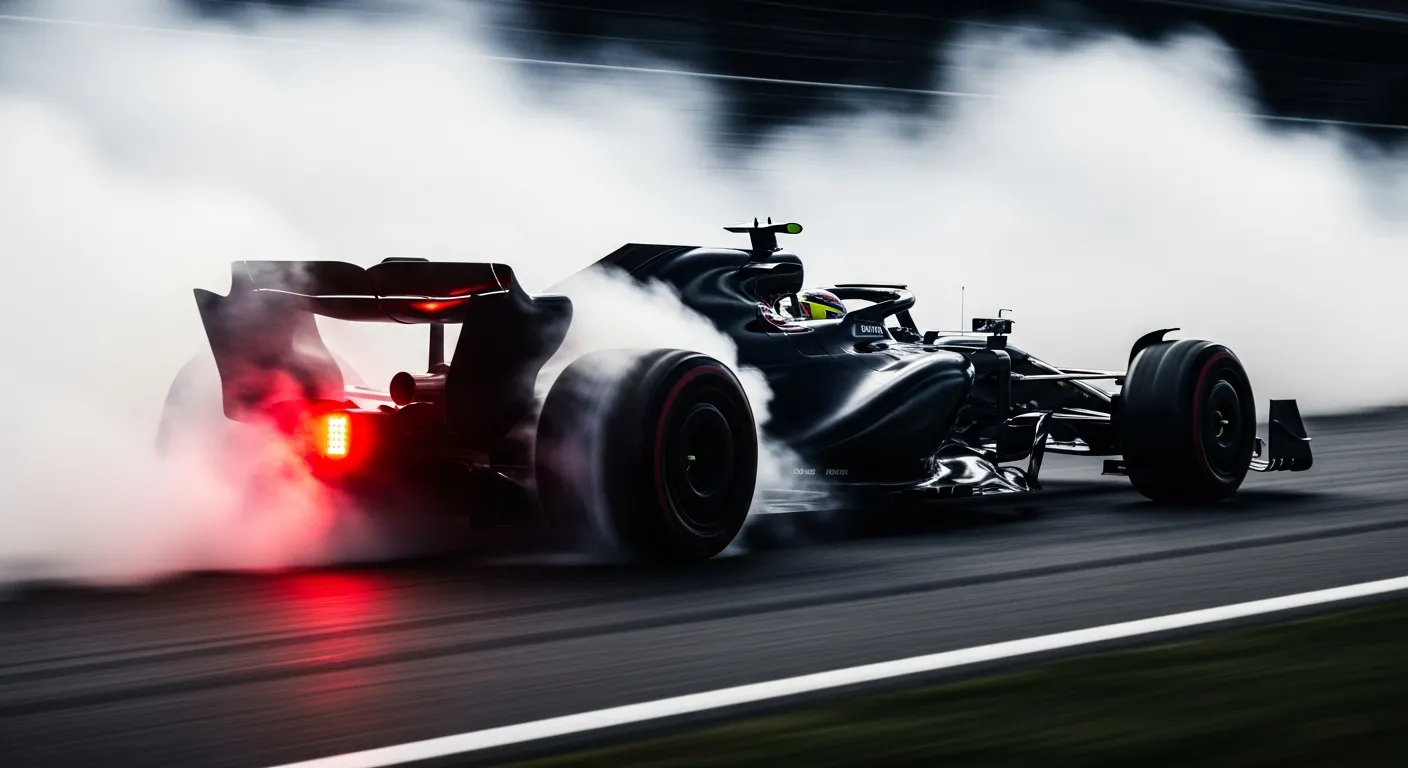
Scuderia Ferrari's performance at the Japanese Grand Prix at Suzuka has historically been a litmus test for their chassis's high-speed stability and the Ferrari power unit's sustained output through the circuit's iconic, flowing sections.
Ferrari has a significant legacy at Suzuka, a permanent circuit that rewards precision and aerodynamic efficiency. With 36 starts, the Scuderia has secured 7 victories, 20 podium finishes, and one 1-2 finish, demonstrating periods where their package perfectly aligned with the track's demands. Their first win came in 1987, but the turn of the millennium marked a golden era, with consecutive wins from 2000 to 2004. This sustained success underscores how a well-balanced Ferrari car, particularly during the V10 and early V8 eras, could master Suzuka's unique blend of high-speed corners and technical sequences. The circuit's demands on car setup are considerable, requiring a compromise between downforce for the Esses and straight-line speed for the main straight, a balance that Ferrari often found effectively during these dominant years.
Suzuka is renowned for its challenging S-curves and high-speed sections like 130R, placing a premium on a car's aerodynamic platform and mechanical grip. A car that exhibits strong front-end turn-in and stable rear-end through rapid changes of direction typically excels here. Ferrari's recent cars, while often strong in slow-to-medium speed corners, have sometimes struggled with the sustained high-speed loading and tire management required at Suzuka. This contrasts with circuits like McLaren at the Spanish Grand Prix, where a different set of aerodynamic priorities might yield success. The Ferrari power unit, while generally competitive, faces a stern test here, needing to deliver consistent power without excessive fuel consumption or thermal degradation over a race distance. The circuit's layout means that any weakness in high-speed stability or tire wear is quickly exposed, often leading to a challenging race for teams that haven't found the optimal setup.
While Ferrari's seven wins are impressive, their last victory at Suzuka was in 2004. Recent appearances have seen them frequently on the podium, with 3rd place finishes in 2022, 2024, and 2026, and a 2nd place in 2019. This suggests a consistent capability for strong points finishes, even if outright victory has been elusive. The team's ability to extract performance from the SF-24 and subsequent iterations will depend heavily on addressing the specific high-speed cornering characteristics that Suzuka demands. Analyzing past race data, such as that available through Jolpica/Ergast — 2026 season data, often reveals patterns in how different car philosophies perform under Suzuka's unique pressures. The strategic element is also significant; the permanent nature of the circuit allows for consistent data gathering, but unpredictable weather, as seen in some past Japanese Grands Prix, can quickly alter race dynamics.
The Japanese Grand Prix is often a race where driver skill can make a tangible difference, particularly through the flowing sections where confidence and precision are paramount. For Scuderia Ferrari, managing tire degradation, especially on the harder compounds, is crucial given Suzuka's abrasive surface and high-energy corners. This is a challenge shared with other high-speed tracks, such as McLaren at the British Grand Prix, where tire management can dictate strategy. Frédéric Vasseur's approach to race strategy and car development for such demanding circuits will be key. The evolving technical regulations, detailed on the Formula 1 — official site, also play a role in how teams design their cars for specific track characteristics, influencing Ferrari's long-term prospects at Suzuka. The single 1-2 finish for Ferrari at Suzuka, achieved in 2002, highlights the rare alignment of both drivers and car performance needed to dominate this circuit.