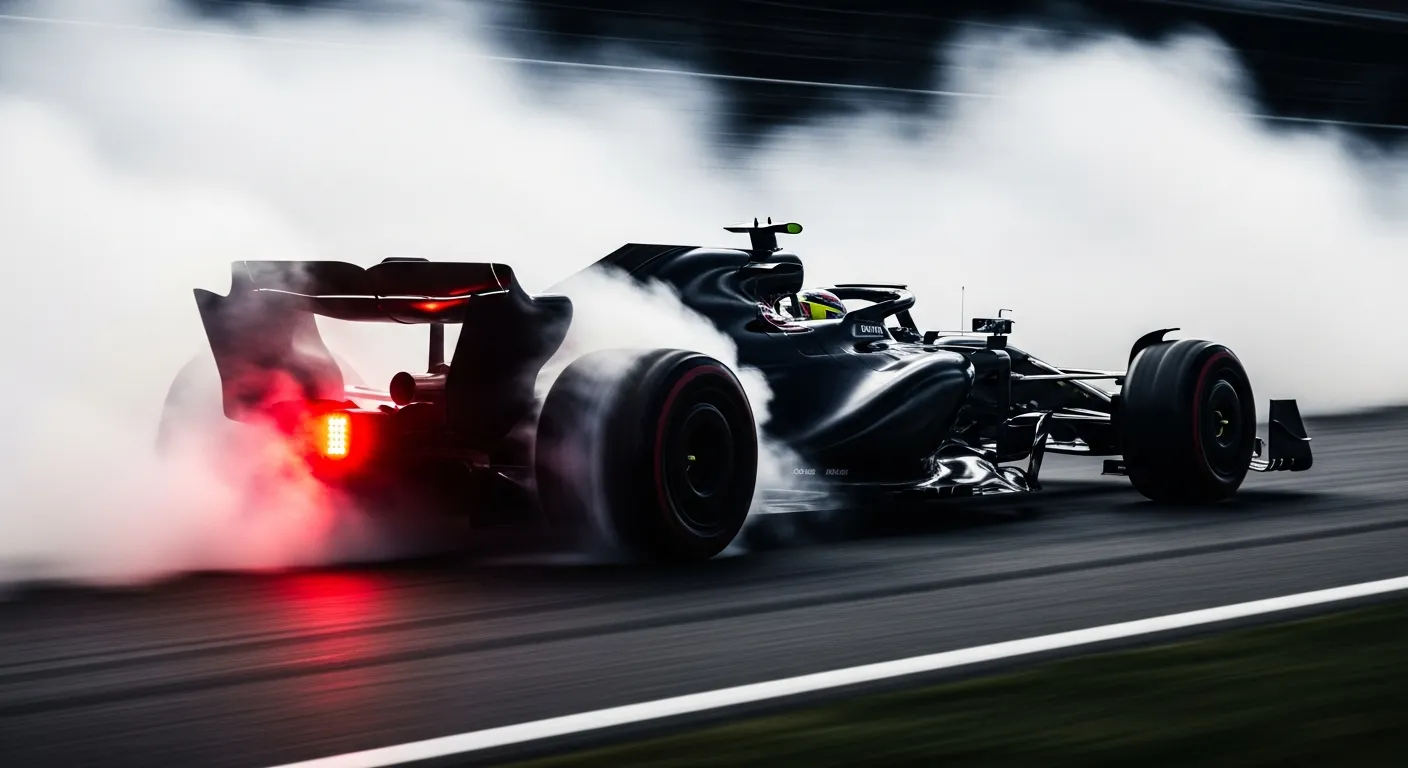
Constructor snapshot
Source: Jolpica F1 API- F1 debut
- 2021 · Bahrain Grand Prix
- Most recent race
- 2026 · Canadian Grand Prix
- Seasons contested
- 6
- Total points
- 552
The BWT Alpine F1 Team represents the latest iteration of a storied Formula 1 presence rooted in Enstone, UK, a facility that has housed championship-winning operations for decades.
History
Alpine's journey in Formula 1 began with its rebranding from the Renault F1 Team for the 2021 season, marking a new chapter for the French marque. However, the team's operational base in Enstone, Oxfordshire, boasts a much richer heritage, tracing its roots back to the Toleman team of 1986. This site has been the foundation for two constructor championship triumphs under its previous guises – Benetton in 1995 and Renault in 2005 and 2006. This deep history provides a unique context for Alpine's current ambitions, aiming to rekindle that championship-winning spirit.
Since its debut as Alpine in the 2021 Bahrain Grand Prix, the team has contested 119 races, securing 1 win and 5 podium finishes. Their total points tally stands at 552, a testament to consistent, albeit challenging, efforts in the midfield. The team's official presence can be explored further on the BWT Alpine F1 Team — official site, which details their current operations and future aspirations. The transition from a works Renault team to a customer power unit relationship with Mercedes for 2026 signifies a pivotal strategic shift, moving away from a fully integrated engine and chassis philosophy that defined much of its predecessor's history.
Driving DNA
Alpine's approach has often been characterized by a blend of French national pride and the pragmatic engineering expertise of its Enstone base. As a constructor that has historically built both its chassis and power unit, the team has faced the unique challenges and opportunities that come with such an integrated operation. This contrasts with teams like Aston Martin, which, despite significant investment, relies on a customer engine supply. The team’s commitment to developing its own power unit, until the 2026 shift, underscored a desire for complete control over its performance package. However, this has also meant navigating the complexities of engine development alongside chassis design, a task that has proven increasingly difficult against larger, more established power unit manufacturers.
Partnerships are crucial in modern F1, and Alpine maintains strong ties with industry leaders. For instance, their collaboration with Castrol × Alpine highlights the critical role of lubricant technology in performance. The team's recent struggles to consistently challenge at the front have prompted significant structural changes, including a new team principal, Oliver Oakes, tasked with steering the team back towards competitiveness. Insights into these developments and more can be found through comprehensive The Race — Alpine coverage.
The 2026 Lineup
Looking ahead to the 2026 season, Alpine has confirmed an all-French driver lineup featuring Pierre Gasly and Jack Doohan. Gasly brings a wealth of experience and a Grand Prix victory to the team, providing a known quantity as the sport enters a new regulatory era. Doohan, a product of the Alpine Academy, represents the next generation of talent, eager to make his mark in Formula 1. This pairing reflects Alpine's commitment to nurturing French talent while also leveraging proven racecraft, aiming to build a stable foundation for their future ambitions.
What's at stake
The 2026 season represents a monumental inflection point for Alpine. The decision to transition from its long-standing works Renault power unit to a customer engine supply from Mercedes marks the end of an era for the Enstone-based operation's engine-building legacy. This move, while potentially simplifying the team's focus to chassis development, also means relinquishing control over a key performance differentiator. Oliver Oakes, as Team Principal, faces the immense challenge of integrating the new power unit effectively while simultaneously optimizing the chassis under the new technical regulations. Much like Kick Sauber preparing for its Audi transition, Alpine must manage a significant shift in its core technical philosophy. The success of this integration, coupled with the performance of Gasly and Doohan, will dictate whether Alpine can ascend the grid or continue to battle in the competitive midfield. The team's history, from its Benetton and Renault days, is rich with innovation, and 2026 offers a chance to write a new, defining chapter, as detailed on Wikipedia: Alpine F1 Team.
Read the full editorial
Explore Alpine
- Circuit recordAlpine at the São Paulo Grand Prix
- Circuit recordAlpine at the United States Grand Prix
- Circuit recordAlpine at the Azerbaijan Grand Prix
- Circuit recordAlpine at the Hungarian Grand Prix
- Circuit recordAlpine at the Spanish Grand Prix
- Circuit recordAlpine at the Emilia Romagna Grand Prix
- Circuit recordAlpine at the Bahrain Grand Prix
- Circuit recordAlpine at the Australian Grand Prix
2026 lineup
Common questions
- Where is the BWT Alpine F1 Team based?
- The BWT Alpine F1 Team's chassis operations are based in Enstone, Oxfordshire, UK, a facility with a long and successful history in Formula 1.
- How many races has Alpine F1 Team won?
- Since its rebranding as Alpine F1 Team in 2021, the constructor has secured 1 race win, achieved at the 2021 Hungarian Grand Prix.
- What is Alpine's power unit strategy for 2026?
- For the 2026 season, Alpine will transition from using its in-house Renault power units to becoming a customer team, supplied by Mercedes-AMG High Performance Powertrains.