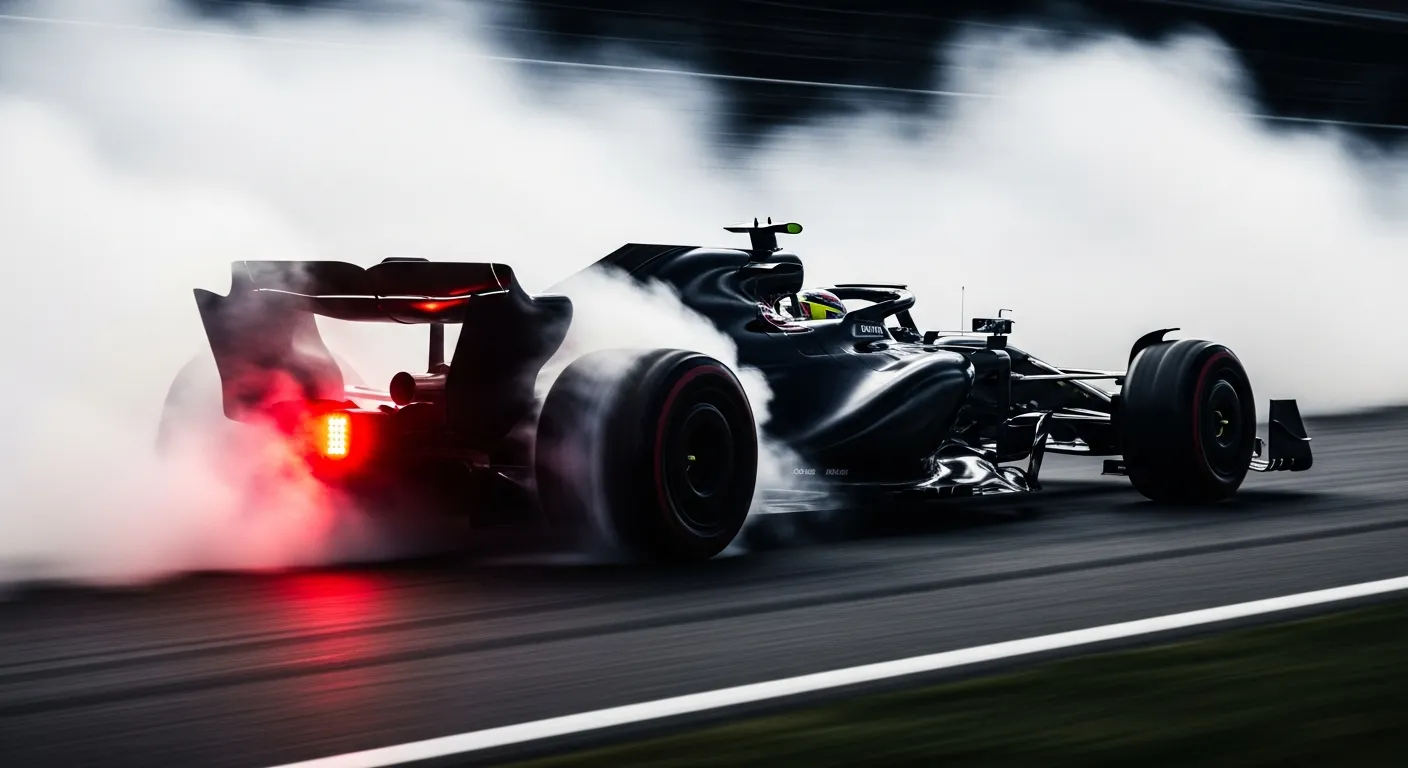
Constructor snapshot
Source: Jolpica F1 API- F1 debut
- 2005 · Australian Grand Prix
- Most recent race
- 2026 · Canadian Grand Prix
- Seasons contested
- 22
- Total points
- 8,134
- 1-2 finishes
- 31
Red Bull Racing stands as a testament to strategic acquisition and sustained high-performance engineering, transforming a midfield contender into a multi-championship winning juggernaut.
History
Red Bull Racing entered Formula 1 in 2005, acquiring the Jaguar Racing team and establishing its headquarters in Milton Keynes, Great Britain. From its debut at the 2005 Australian Grand Prix, the team, under the leadership of Team Principal Christian Horner, embarked on a journey to challenge the established order. Early years saw gradual improvement, but the true turning point arrived with the recruitment of Adrian Newey, whose aerodynamic genius became synonymous with the team's success. More information about the team's operations can be found on the Oracle Red Bull Racing official site.
The first golden era for Red Bull Racing began in 2010, securing four consecutive Constructors' and Drivers' Championships with Sebastian Vettel. This period showcased the team's ability to innovate within technical regulations, consistently producing cars that excelled in downforce and cornering speed. After a period of adaptation to the hybrid era — a time when Mercedes dominated — Red Bull re-emerged as a consistent front-runner, particularly after forging a strong partnership with Honda for their power units. This collaboration culminated in another era of dominance, beginning in 2021 and extending through 2024 with Max Verstappen at the helm.
To date, Oracle Red Bull Racing has contested 423 races, achieving an impressive 130 wins and 234 podium finishes. Their record also includes 31 one-two finishes and a total of 8134 points, reflecting their consistent presence at the sharp end of the grid over 22 seasons. For more detailed historical data, one can consult the Red Bull constructor seasons data on Jolpica.
Driving DNA
The core philosophy of Red Bull Racing has always revolved around aggressive aerodynamic development and a relentless pursuit of performance. This approach is deeply embedded in their car design, often favoring a high-rake concept that maximizes downforce, a trait that has defined their chassis for many years. The team's operational excellence extends to pit stops, where they have frequently set benchmarks for speed and precision, demonstrating a holistic commitment to maximizing every millisecond on track.
Their success is not solely a product of engineering; it also stems from a robust driver development program, famously nurturing talent through the Racing Bulls sister team. This pipeline ensures a steady stream of promising drivers, ready to step into the senior team when opportunities arise. The synergy between a stable technical leadership, a clear design philosophy, and a strong driver roster has been crucial to their sustained competitiveness. The team's commitment to pushing boundaries is evident in their innovative partnerships, such as their title partnership with Oracle, leveraging cloud technology for performance insights.
The 2026 lineup
Looking ahead to the significant regulation changes in 2026, Oracle Red Bull Racing has confirmed a compelling driver lineup: Max Verstappen and Liam Lawson. Verstappen, a multi-time World Champion, brings unparalleled speed, consistency, and racecraft, making him a cornerstone of the team's future ambitions. His ability to extract maximum performance from any package will be vital during a period of technical upheaval.
Liam Lawson, stepping up from his reserve and junior roles, represents the latest product of Red Bull's driver development system. His promotion signals confidence in his raw talent and adaptability, qualities that will be essential as the team navigates the new power unit regulations. This pairing balances championship-winning experience with burgeoning potential, aiming to maintain Red Bull's competitive edge.
What's at stake
The 2026 season marks a pivotal moment for Red Bull Racing as they transition to their own in-house power unit, the Red Bull Powertrains-Ford. This move represents a monumental engineering challenge and a significant strategic shift, moving away from customer engines to become a self-sufficient constructor in all aspects. The success of this venture will largely determine their trajectory in the new regulatory era.
The ambition is clear: to replicate their chassis dominance with an equally potent power unit. This internal development, detailed in news outlets like The Race's Red Bull coverage, places immense pressure on their Milton Keynes facility. The stakes are incredibly high, as the performance of the new power unit will be critical against established engine manufacturers like Alpine (who are also undergoing significant changes) and Ferrari. The integration of the power unit with Adrian Newey's chassis designs will be the ultimate test of their comprehensive engineering capabilities. The partnership with Ford for the 2026 power unit underscores the scale of this undertaking, bringing a global automotive giant into their F1 project.
Our analysis
Latest analysis on Red Bull Racing

Red Bull Poaches Mercedes Talent as the 2026 Title Fight Hits the Breaking Point
As Andrea Kimi Antonelli maintains his championship lead, Red Bull has responded by signing Mercedes’ junior chief Gwen Lagrue and maximizing a "miracle" podium in Budapest.

Red Bull's Clever Tactics After Hamilton's Costly Crash
Lewis Hamilton's recent crash proved costly, opening the door for Red Bull's strategic brilliance. We break down how their clever tactics are shaping the championship battle.

Red Bull Confirms Major Change, Norris Faces Spa Setback
Red Bull has confirmed a significant change to its technical leadership, while Lando Norris faces a grid penalty at Spa. Get the latest F1 news and what it means for the championship.

Ferrari's Title Reckoning: Red Bull's Major Decision Looms
Ferrari faces a critical juncture in the championship fight as Red Bull Racing prepares to make a pivotal decision that could reshape the title race. The pressure is on in Maranello.

Piastri's F1 Future: Red Bull's Verstappen Explanation
Oscar Piastri's F1 trajectory is clearer after Red Bull's recent comments regarding Max Verstappen's long-term commitment. We break down the latest news and what it means for the grid.

Red Bull's Latest Exit & Antonelli's Rising Star: F1 News
Red Bull faces another significant departure from its technical team, while Mercedes junior Andrea Kimi Antonelli continues to impress, fueling speculation about his F1 future. Get the latest F1 news.
Explore Red Bull Racing
- Circuit recordRed Bull Racing at the São Paulo Grand Prix
- Circuit recordRed Bull Racing at the United States Grand Prix
- Circuit recordRed Bull Racing at the Azerbaijan Grand Prix
- Circuit recordRed Bull Racing at the Hungarian Grand Prix
- Circuit recordRed Bull Racing at the Spanish Grand Prix
- Circuit recordRed Bull Racing at the Emilia Romagna Grand Prix
- Circuit recordRed Bull Racing at the Australian Grand Prix
2026 lineup
Common questions
- When was Red Bull Racing founded?
- Red Bull Racing was founded in 2005, acquiring the Jaguar Racing team. Their first Formula 1 race was the 2005 Australian Grand Prix.
- Who is the Team Principal of Red Bull Racing?
- Christian Horner has been the Team Principal of Red Bull Racing since its inception in 2005, making him one of the longest-serving team principals in F1 history.
- What power unit will Red Bull Racing use in 2026?
- In 2026, Red Bull Racing will transition to its own in-house power unit, the Red Bull Powertrains-Ford, marking a significant strategic shift.