Track record
Source: Jolpica F1 API- Starts
- 7
- Wins
- 1
- Podiums
- 2
- Best finish
- P1
- DNFs
- 2
- Points
- 63
Won here in: 2024
Every appearance
| Year | Team | Grid | Finish | Pts |
|---|---|---|---|---|
| 2018 |
Driver × Circuit · street
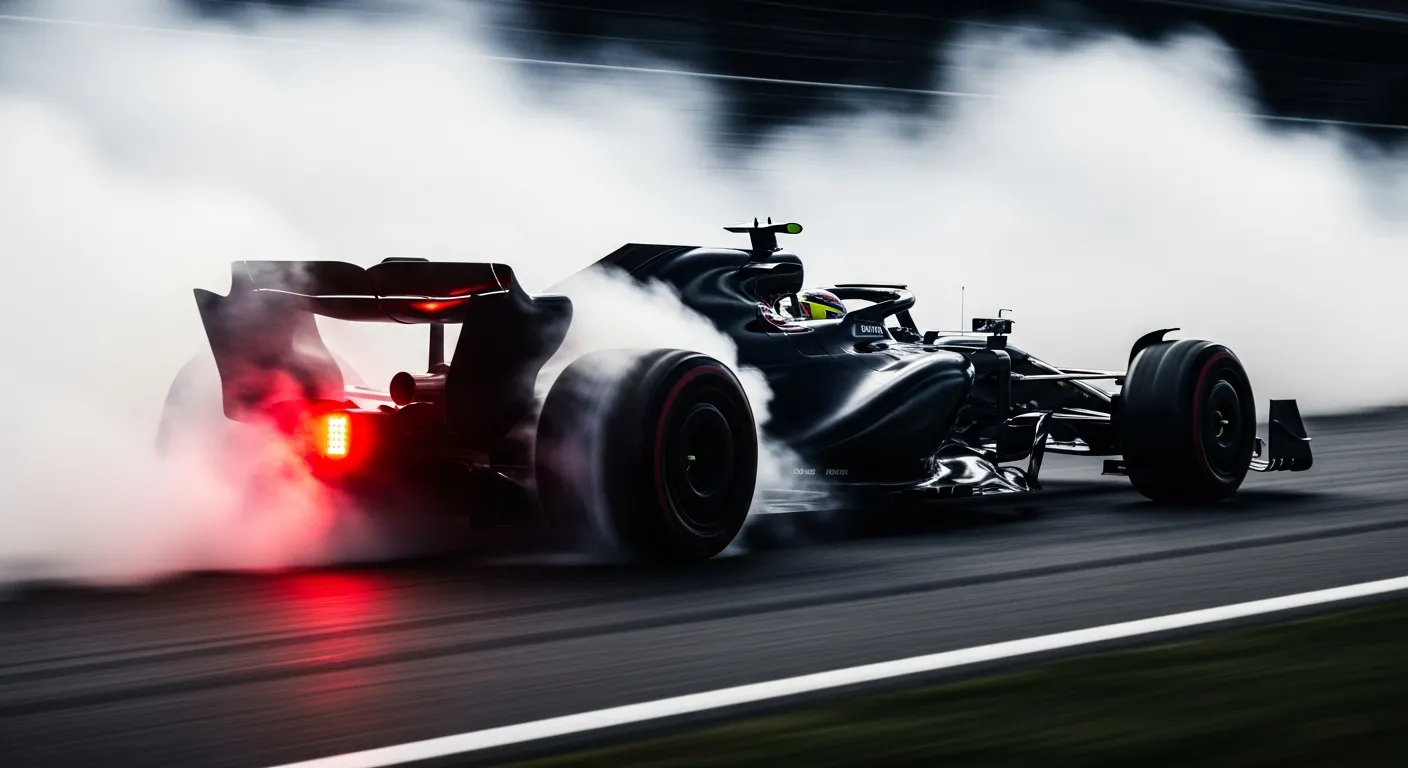
Charles Leclerc's journey at his home Monaco Grand Prix has been a compelling narrative of overcoming persistent challenges and strategic misfortunes to secure a long-awaited victory.
Won here in: 2024
| Year | Team | Grid | Finish | Pts |
|---|---|---|---|---|
| 2018 |
One email a day, ahead of every session. Race results, paddock signal, and the calls the explainer sites miss.
By subscribing, you agree to receive daily F1 news and updates from The F1 Formula. No spam. Unsubscribe anytime. Privacy Policy
Continue reading
Charles Leclerc's 2022 Monaco Grand Prix was a story of a home race pole position that ultimately converted to a fourth-place finish for Scuderia Ferrari, yielding 12 points.
Charles Leclerc secured a momentous victory at his home 2024 Monaco Grand Prix, converting his pole position into a dominant win and earning 25 points for Scuderia Ferrari.
| Sauber F1 Team |
| P14 |
| P18 |
| 0 |
| 2019 | Scuderia Ferrari | P15 | Puncture | 0 |
| 2021 | Scuderia Ferrari | Pit | Driveshaft hub | 0 |
| 2022 | Scuderia Ferrari | P1 | P4 | 12 |
| 2023 | Scuderia Ferrari | P6 | P6 | 8 |
| 2024 | Scuderia Ferrari | P1 | P1 | 25 |
| 2025 | Scuderia Ferrari | P2 | P2 | 18 |
Charles Leclerc's relationship with the Monaco Grand Prix, his home race, has been a defining chapter in his Formula 1 career, marked by a unique blend of raw pace and frustrating outcomes before his eventual triumph. For years, the circuit seemed to conspire against him, despite his evident talent for threading a car through its unforgiving street layout. His early appearances reflected this struggle: a collision in 2018 while with Sauber, followed by a puncture in 2019 and a driveshaft hub issue in 2021, both with Ferrari, resulted in three DNFs from his first three starts.
The 2021 and 2022 seasons were particularly poignant. In 2021, Leclerc secured pole position but was unable to start the race due to a driveshaft issue discovered on the way to the grid, a cruel blow that underscored the circuit's demanding nature and the fine margins involved. The following year, 2022, saw him convert another pole position into a fourth-place finish, largely due to a critical strategic misstep by his team during the race's changeable conditions. This period highlighted not just the inherent difficulties of the Monaco street circuit but also the immense pressure on a local hero to perform, often amplified by external factors beyond his control. These experiences offer a stark contrast to more traditional circuits like Lewis Hamilton at the Chinese Grand Prix, where strategic variables often play out differently.
His breakthrough finally arrived in 2024. After securing pole position, Leclerc delivered a composed and dominant performance, managing the race from the front to claim his maiden victory at Monaco. This win was not just a personal milestone but also a significant moment for Ferrari, breaking a long-standing jinx at the principality for their home driver. The victory demonstrated Leclerc's refined race craft and ability to maintain focus under immense pressure, a skill crucial on a circuit where overtaking is notoriously difficult and qualifying performance is paramount. The 2025 season saw him continue this strong form, securing a second-place finish, further solidifying his command of the Monte Carlo streets.
Monaco demands a unique driving style, favoring precision, confidence in high-speed corners, and exceptional car placement. Leclerc's natural aggression, combined with his intimate knowledge of every kerb and barrier, makes him a formidable competitor here. His ability to extract maximum performance in qualifying, often on the absolute limit, is a testament to his skill on this type of circuit, much like other drivers excel on demanding street circuits such as Lewis Hamilton at the Miami Grand Prix. The psychological aspect of racing at home, with its added pressures, has clearly been a journey for Leclerc, one he has ultimately navigated successfully. For more on the history and evolution of Formula 1, including the significance of iconic circuits like Monaco, the Wikipedia: Formula One page provides extensive context.
The data from his appearances, available through sources like Jolpica/Ergast — 2026 season data, tells a story of perseverance: 7 starts, 1 win, and 2 podiums, with his best finish being first place in 2024. His journey at Monaco exemplifies the unpredictable nature of Formula 1 and the sheer determination required to conquer its most iconic challenges. His performance here is always a focal point of the season, drawing significant attention from fans and analysts alike, as detailed on the Formula 1 — official site.