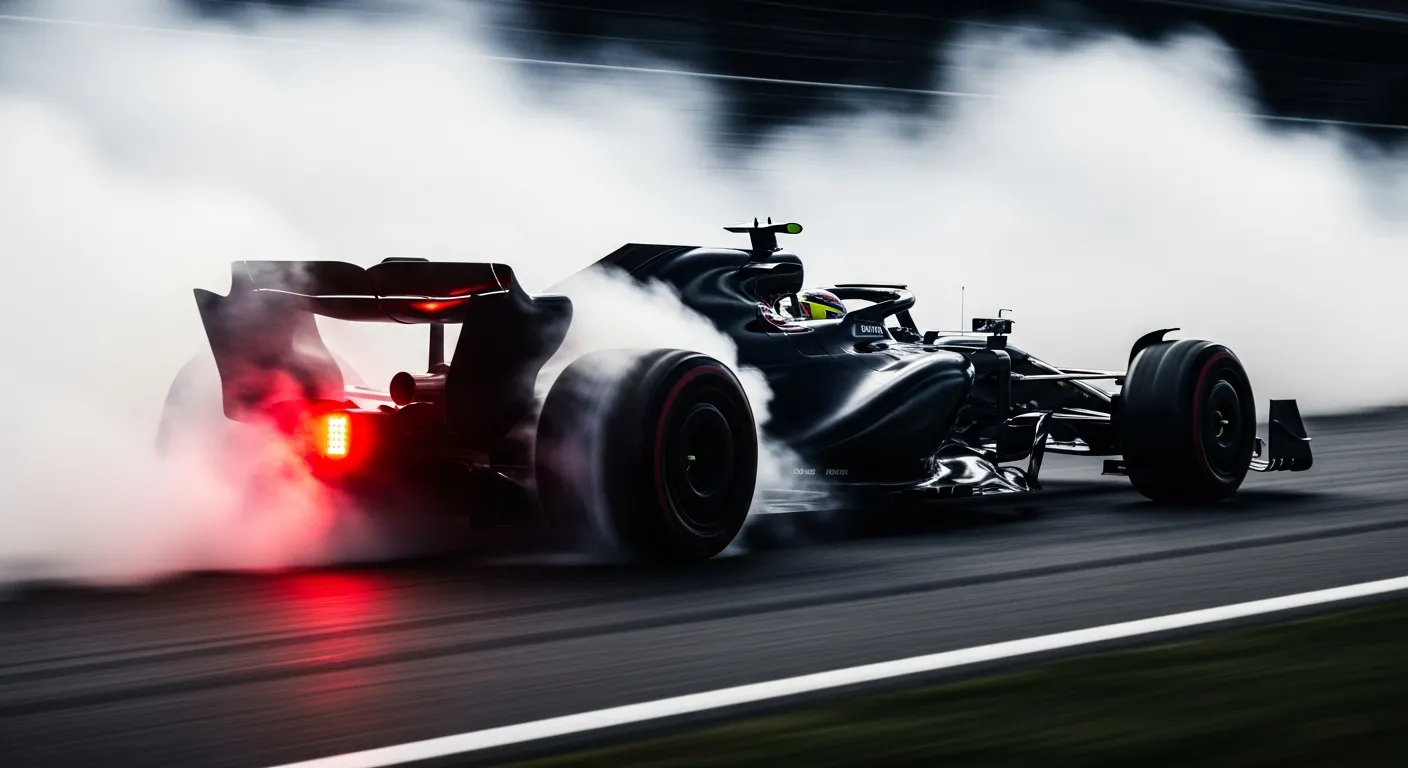
Fernando Alonso's extensive career at the British Grand Prix at Silverstone stands out for his remarkable adaptability, securing two victories and six podiums across diverse eras and machinery on this demanding permanent circuit. With 22 starts, Alonso has navigated the evolution of Formula 1 at one of its most iconic venues, demonstrating a consistent ability to extract performance regardless of the car beneath him. His journey at Silverstone began in 2001 with Minardi, a challenging debut where he finished 16th, a stark contrast to the competitive heights he would later reach.
His first significant success at Silverstone arrived during his championship-winning years with Renault. After a pole position in 2005, he secured a second-place finish, signaling his growing prowess. The following year, 2006, marked his inaugural victory at the circuit, starting from pole and dominating the race. This period underscored Alonso's capacity to master the high-speed, flowing nature of Silverstone, a circuit that rewards precision and confidence through its legendary corners. His ability to manage tyres and execute strategic races was often a highlight, a trait that would serve him well throughout his career.
Alonso's second victory came in 2011 with Ferrari, a testament to his enduring skill and the team's strategic execution. This win, coupled with a second-place finish in 2012 and a third in 2013, solidified his reputation as a formidable competitor at the British Grand Prix. Even during less competitive stints, such as with McLaren, Alonso continued to demonstrate flashes of brilliance, often outperforming the machinery. His P10 finish in 2015 and P8 in 2018 with McLaren, despite the car's limitations, showcased his relentless race craft. For a deeper dive into how other top drivers approach this circuit, consider Max Verstappen at the British Grand Prix, whose more recent dominance offers a contemporary contrast.
In recent years, with Alpine and Aston Martin, Alonso has continued to add to his points tally at Silverstone. His P7 in 2021 and P5 in 2022 with Alpine, followed by a P7 in 2023 and P8 in 2024 with Aston Martin, illustrate his sustained ability to perform at the sharp end of the midfield or better. The circuit's blend of high-speed straights and technical sections demands a holistic approach, where driver feedback and setup precision are paramount. Alonso's extensive experience allows him to provide invaluable input, often optimizing a car that might not be inherently the fastest. His approach to race strategy and tyre conservation, particularly on a circuit like Silverstone, is a masterclass in itself, a topic often discussed on the Formula 1 — official site. For those interested in the broader historical context of F1, Wikipedia: Formula One provides a comprehensive overview of the sport's evolution.
Alonso's 22 starts, 2 wins, and 6 podiums at Silverstone paint a picture of a driver who consistently finds a way to be competitive. The permanent nature of the circuit means that historical data and driver experience play a significant role in preparation, and Alonso's depth of knowledge is unparalleled. While some circuits might favor raw, youthful aggression, Silverstone often rewards the nuanced understanding that comes with decades of racing, a quality Alonso embodies. His consistent point-scoring finishes, even in challenging machinery, highlight his ability to maximize every opportunity. We can observe similar strategic depth in drivers at other demanding permanent circuits, such as Max Verstappen at the Belgian Grand Prix. Analyzing historical race data, such as that available from Jolpica/Ergast — 2026 season data, further underscores the consistency of top performers at these venues.