Track record
Source: Jolpica F1 API- Starts
- 1
- Wins
- 0
- Podiums
- 0
- Best finish
- —
- DNFs
- 1
- Points
- 0
Every appearance
| Year | Team | Grid | Finish | Pts |
|---|---|---|---|---|
| 2025 | Alpine F1 Team | P14 |
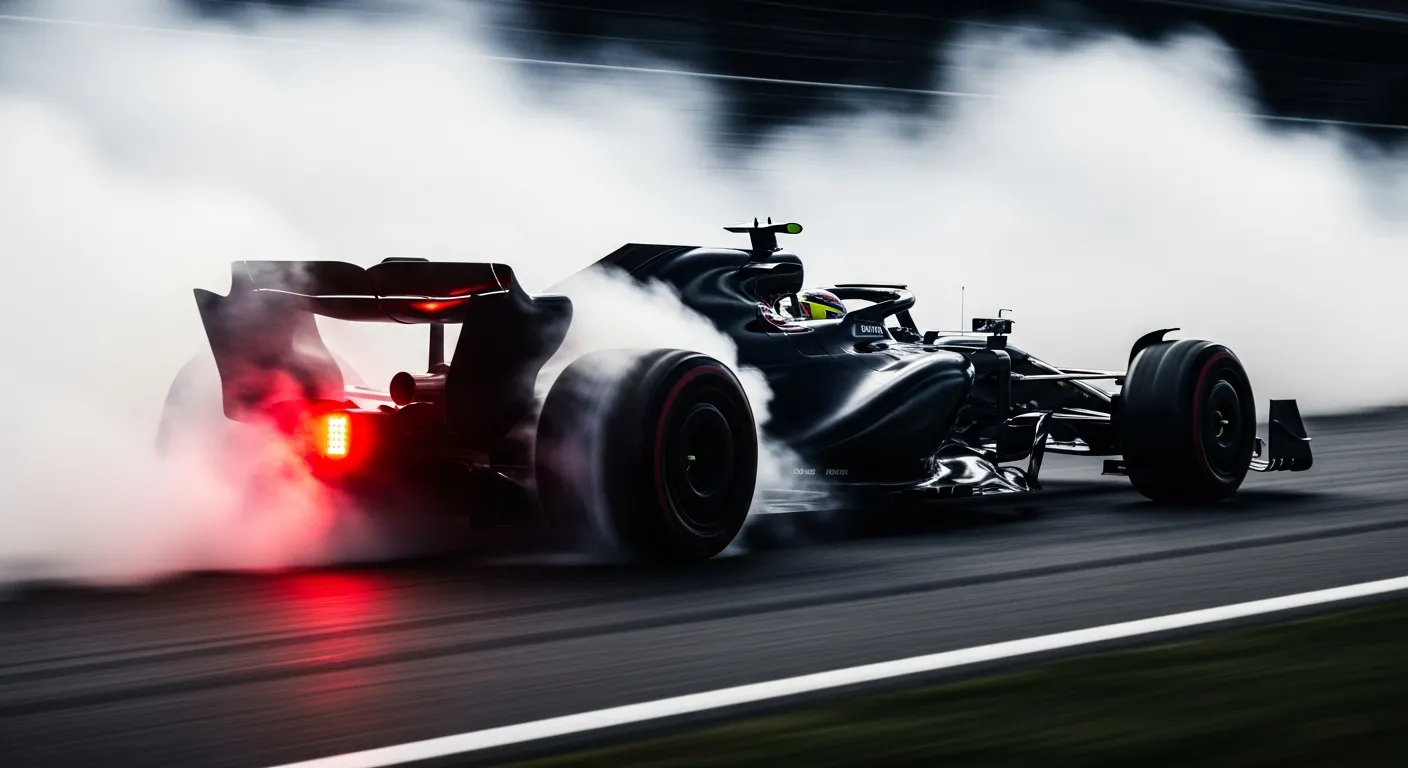
Driver × Circuit · street
Jack Doohan's sole Formula 1 appearance at the Australian Grand Prix in 2025 ended prematurely with an accident, leaving his potential at Albert Park largely unexplored.
| Year | Team | Grid | Finish | Pts |
|---|---|---|---|---|
| 2025 | Alpine F1 Team | P14 |
One email a day, ahead of every session. Race results, paddock signal, and the calls the explainer sites miss.
By subscribing, you agree to receive daily F1 news and updates from The F1 Formula. No spam. Unsubscribe anytime. Privacy Policy
Continue reading
Jack Doohan's home Grand Prix debut at the 2025 Australian Grand Prix ended prematurely with an accident on lap 0, preventing him from completing any race laps for Alpine.
Jack Doohan's 2025 Miami Grand Prix ended prematurely with a collision on the opening lap, resulting in a DNF for the Alpine driver from his 14th grid position.
| Accident |
| 0 |
Jack Doohan's singular Formula 1 outing at the Australian Grand Prix in 2025 remains a brief, yet defining, entry in his early career record at the Albert Park circuit. Starting from 14th on the grid with Alpine F1 Team, his race concluded with an accident, resulting in a DNF and leaving him with 0 points from his 1 start. This outcome means Doohan has 0 wins and 0 podiums at this venue, and his best finish is officially null, as he did not complete the race.
The Albert Park circuit, a semi-permanent street track, presents a unique blend of high-speed sections and technical corners, demanding precision and a nuanced understanding of evolving grip levels. Its layout, particularly after recent modifications, encourages faster, more flowing lines while still punishing errors with its close proximity to walls. For a driver like Doohan, known for his aggressive yet precise style from his Formula 2 campaigns, this type of circuit could theoretically be a strong fit. His ability to extract pace in qualifying, often a hallmark of his junior career, would be crucial on a track where grid position is highly valued, as seen in the performances of drivers like Yuki Tsunoda at the Australian Grand Prix who have adapted well to its demands.
However, the 2025 incident at Albert Park means there is limited direct F1 data to analyze Doohan's specific strengths or weaknesses on this particular layout. His 1 start provides a glimpse of his qualifying potential, lining up 14th, but the early retirement prevents any assessment of his race pace, tyre management, or ability to navigate the circuit's more challenging sequences under race conditions. The Australian Grand Prix is often a physically demanding race, and adapting to the nuances of F1 machinery on a street circuit requires significant seat time and confidence, elements that were cut short for Doohan in 2025.
Looking ahead, any future appearances for Doohan at Albert Park would offer a fresh opportunity to demonstrate his capabilities. The circuit's characteristics, with its heavy braking zones into corners like Turn 3 and Turn 11, combined with the quick changes of direction, demand a car with strong front-end grip and stable braking. These are areas where a driver's confidence can make a significant difference. For a comprehensive overview of Formula 1's official events and regulations, the Formula 1 — official site provides extensive resources. Further historical performance metrics for various seasons can often be found through data aggregators like Jolpica/Ergast — 2026 season data, which detail specific race outcomes and driver statistics. Understanding the broader context of Formula 1's evolution and its global calendar can be explored through resources such as Wikipedia: Formula One.
While his initial foray was brief, the potential for Doohan to excel on circuits that reward bravery and precision, much like Carlos Sainz at the São Paulo Grand Prix has demonstrated his adaptability, remains. The Australian Grand Prix, with its unique blend of permanent circuit speeds and street circuit unforgiveness, will be a key venue for Doohan to establish a more complete F1 record should he return.