Track record
Source: Jolpica F1 API- Starts
- 6
- Wins
- 0
- Podiums
- 0
- Best finish
- P4
- DNFs
- 0
- Points
- 37
Every appearance
| Year | Team | Grid | Finish | Pts |
|---|---|---|---|---|
| 2019 | McLaren Racing | P7 |
Driver × Circuit · street
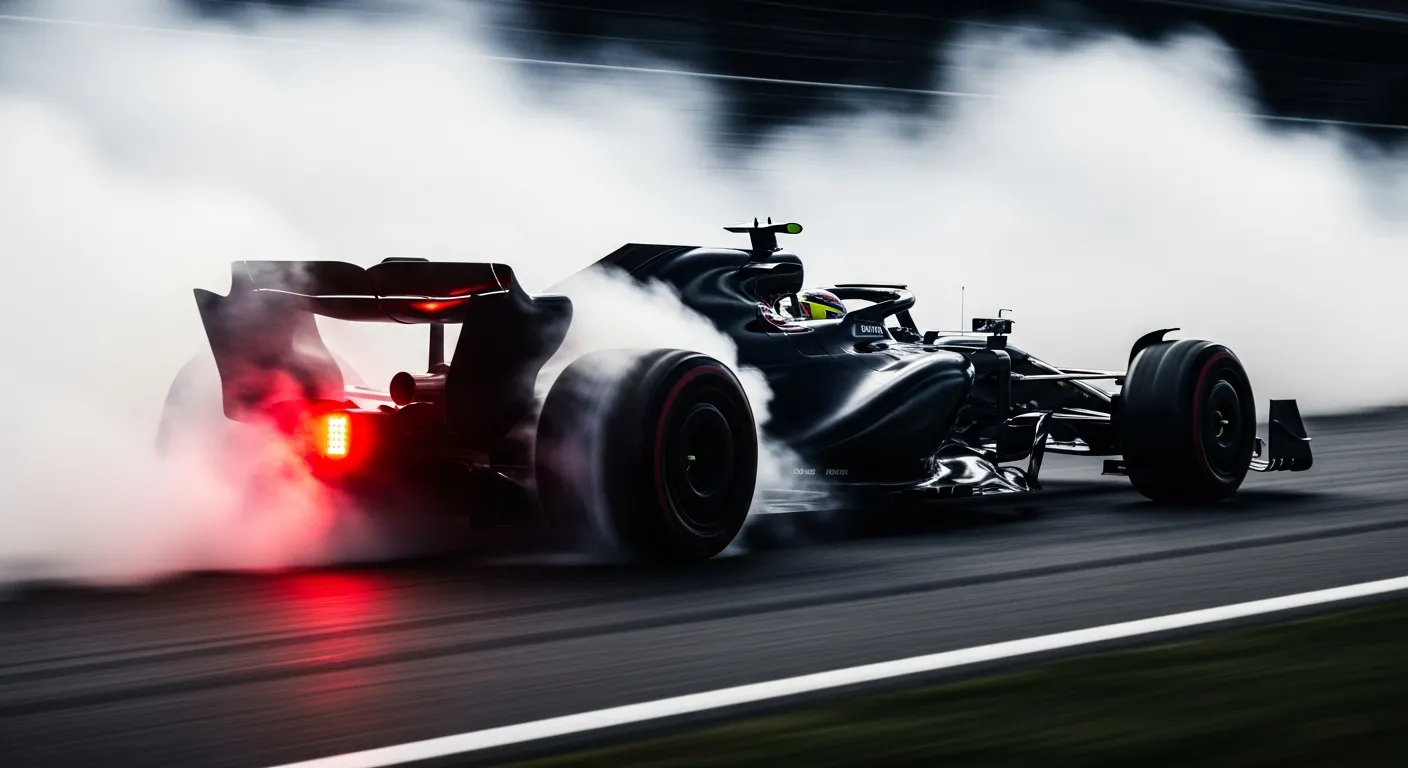
Lando Norris at the Azerbaijan Grand Prix has consistently delivered points finishes, with his best result being a fourth-place finish in 2024, reflecting a steady performance on Baku's demanding street circuit.
| Year | Team | Grid | Finish | Pts |
|---|---|---|---|---|
| 2019 | McLaren Racing | P7 |
One email a day, ahead of every session. Race results, paddock signal, and the calls the explainer sites miss.
By subscribing, you agree to receive daily F1 news and updates from The F1 Formula. No spam. Unsubscribe anytime. Privacy Policy
Continue reading
Lando Norris executed a remarkable recovery drive at the 2024 Azerbaijan Grand Prix, climbing from a 15th-place grid start to finish 4th and claim the fastest lap, adding 13 points to his championship tally.
Lando Norris secured a ninth-place finish at the 2023 Azerbaijan Grand Prix, converting a seventh-place grid start into two valuable points for McLaren Racing on the challenging Baku City Circuit.
| P8 |
| 4 |
| 2021 | McLaren Racing | P9 | P5 | 10 |
| 2022 | McLaren Racing | P11 | P9 | 2 |
| 2023 | McLaren Racing | P7 | P9 | 2 |
| 2024 | McLaren Racing | P15 | P4 | 13 |
| 2025 | McLaren Racing | P7 | P7 | 6 |
Lando Norris's record at the Azerbaijan Grand Prix, a street circuit known for its unique blend of high-speed sections and intricate technical corners, reflects a consistent points-scoring ability rather than headline-grabbing podiums, with his best finish of fourth coming in 2024. Across six starts at Baku, Norris has yet to secure a win or a podium, but his knack for navigating the circuit's challenges has seen him finish in the points in every appearance. This consistency, particularly in a McLaren car that has seen various stages of competitiveness, underscores his adaptability.
The Baku City Circuit presents a distinct challenge, demanding both outright straight-line speed for its monumental main straight and precise car control through its narrow, winding 'castle section'. Norris's driving style, often characterized by a blend of aggression and technical finesse, tends to thrive in scenarios requiring pinpoint accuracy and confidence in high-speed changes of direction. However, the circuit's long DRS zones and heavy braking points also test a car's power unit and brake stability, areas where McLaren has, at times, faced varying degrees of competitiveness relative to its rivals. His fifth-place finish in 2021 and the more recent fourth in 2024 highlight periods when the McLaren package, combined with Norris's execution, found a more optimal balance for Baku's demands.
While Norris has shown strong performances at circuits like the Austrian Grand Prix, which also feature high-speed sections but with more traditional run-off areas, Baku's unforgiving walls add an extra layer of pressure. The margin for error is minimal, and a small misjudgment can easily lead to a significant incident. This aspect of street circuit racing often plays to the strengths of drivers who can extract maximum performance from the car while maintaining a disciplined approach, a trait Norris has honed throughout his career. For a broader understanding of the sport's governance and technical regulations, the FIA — F1 World Championship provides comprehensive details on the framework within which these races are contested.
The evolution of the McLaren car, particularly its aerodynamic efficiency and low-speed cornering grip, has directly influenced Norris's potential at Baku. In seasons where the car struggled with drag or lacked sufficient downforce in the slower sections, even Norris's talent could only push it so far. Conversely, improvements in these areas, as seen in the 2024 season leading to his best finish, directly translate into stronger race pace and better qualifying positions. This dynamic is not unique to Baku; similar trends can be observed at other high-speed, low-downforce tracks, or even more balanced circuits like the British Grand Prix where McLaren's development trajectory often becomes evident. The evolution of Formula One itself, particularly regarding the design and challenges of street circuits, offers context to Baku's unique demands.
Ultimately, Norris's Azerbaijan Grand Prix record is one of consistent performance within the constraints of his machinery. While a podium has eluded him, his ability to extract points reliably on this challenging street circuit is a testament to his skill. Detailed race results and season statistics, like those found on Jolpica/Ergast — 2026 season data, underscore Norris's consistent points haul and gradual improvement at this particular venue, reflecting his growth as a driver and McLaren's development efforts. His focus will undoubtedly remain on converting these strong points finishes into a maiden podium at Baku in future appearances, mirroring the ambition seen at other demanding venues like the Belgian Grand Prix.