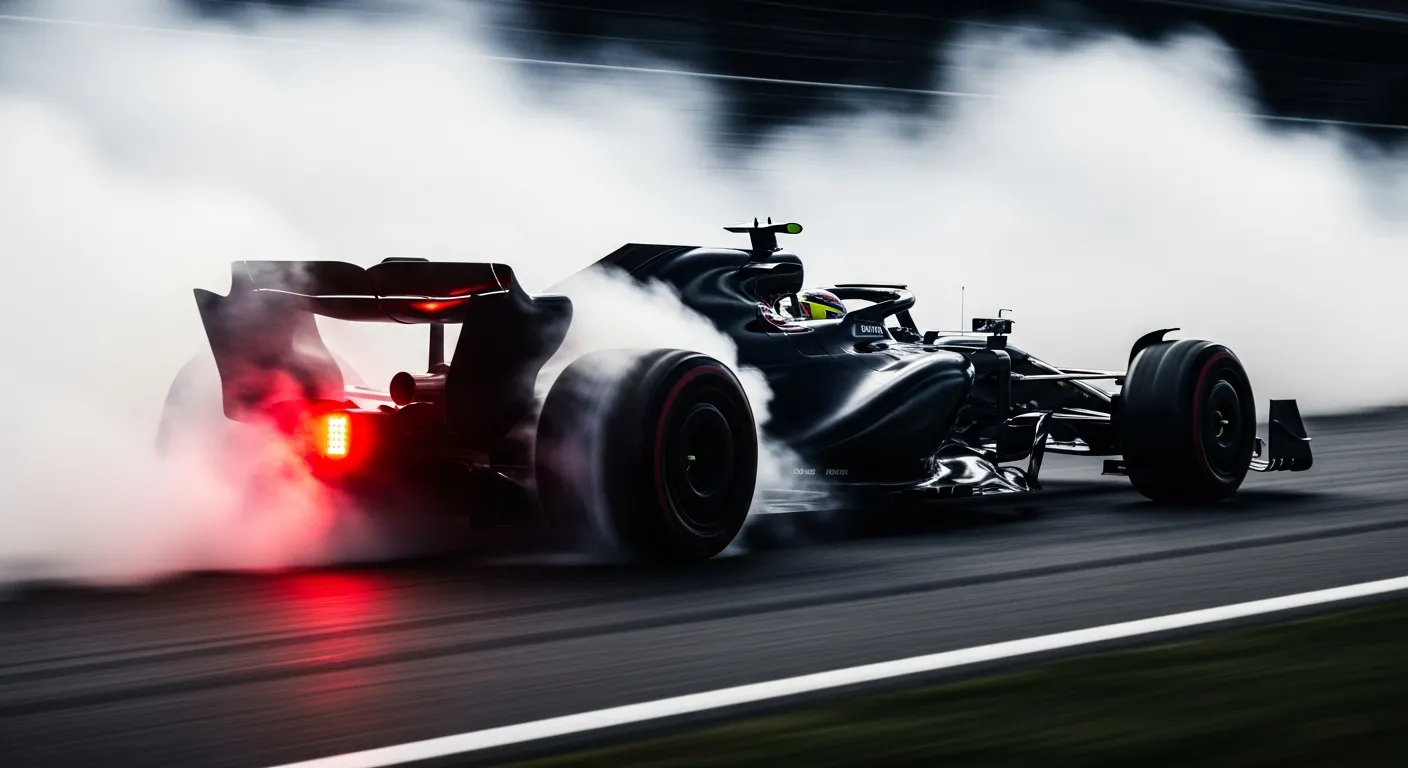
Lewis Hamilton's relationship with the Monaco Grand Prix is one of the most intriguing in his illustrious career, marked by both dominant victories and weekends where the circuit's unforgiving nature exposed car or driver vulnerabilities. Across his 18 starts, Hamilton has secured three victories (2008, 2016, 2019) and a total of seven podium finishes, showcasing his ability to master the Principality's tight confines when the package is optimized.
His maiden Monaco win in 2008 with McLaren was a masterclass in adapting to changing conditions, starting third, dropping to fifth, but then recovering to take the lead. This early success underscored his raw talent for street circuits. However, the 2009 event stands as a stark reminder of Monaco's demands, where a grid penalty and a challenging car saw him start 19th and finish 12th. It's a circuit where even the most decorated drivers can find themselves battling the car as much as the competition, a sentiment echoed by many, including his former teammate George Russell at the Monaco Grand Prix, who has also experienced the unique pressures here.
With Mercedes, Hamilton added two more victories in 2016 and 2019, both demonstrating his exceptional tire management and strategic acumen. The 2019 win, in particular, was a poignant drive dedicated to Niki Lauda, where he held off Max Verstappen on worn tires for much of the race. These performances highlight a driver who, when given a competitive car, can extract every ounce of performance, often finding grip where others cannot. For a broader understanding of Formula 1's intricate technical demands, the FIA — F1 World Championship provides comprehensive regulatory details.
Yet, recent years have seen Hamilton face more challenging outings at Monaco. From 2021 to 2024, his finishes ranged from 4th to 8th, reflecting Mercedes' struggles with the specific low-speed characteristics and bumpy surface of the Monte Carlo street circuit. These results underscore how critical car setup and confidence are on a track with virtually no margin for error. The data from sources like Jolpica/Ergast — 2026 season data consistently shows how specific circuit characteristics impact overall performance across seasons. Looking ahead to his move to Ferrari in 2025, his 5th place finish in that year's Monaco Grand Prix suggests a potential return to stronger form, aligning with the Scuderia's typically strong performance on circuits demanding high mechanical grip. This transition will be a fascinating chapter, much like observing how drivers adapt to different challenges, such as George Russell at the Bahrain Grand Prix or George Russell at the Saudi Arabian Grand Prix, each demanding a distinct approach. The nuances of driver and car performance across various circuits are a core element of Wikipedia: Formula One's extensive historical analysis.
Monaco remains a circuit that rewards bravery and precision, but also punishes the slightest misstep. Hamilton's record here, with its peaks and troughs, is a testament to the unique challenge it presents to even the sport's greatest drivers. His ability to adapt, his strategic awareness, and his undeniable pace have secured him a place among Monaco's multiple winners, but the circuit's inherent unpredictability means every appearance is a new test.