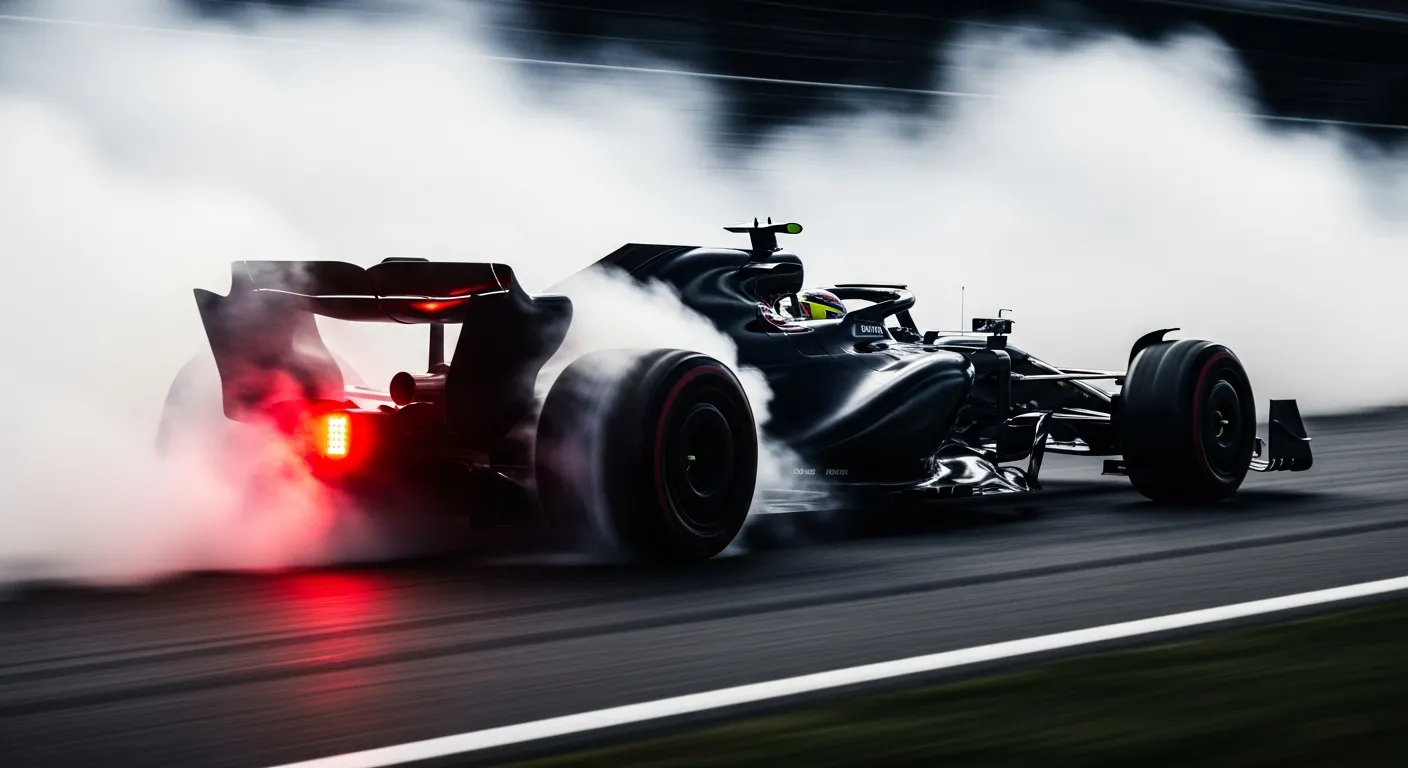
Lewis Hamilton's extensive history at the Belgian Grand Prix at Spa-Francorchamps reveals a driver capable of dominant performances, yet also one who has frequently encountered the circuit's unforgiving nature. Across 19 starts, Hamilton has secured an impressive 5 wins and stood on the podium 11 times, with his best finish being a 1st place, achieved in 2010, 2015, 2017, 2020, and most recently in 2024. This consistent ability to challenge for the top step highlights his prowess on high-speed, flowing circuits that reward precision and commitment. His early career at McLaren saw him claim his first Spa victory in 2010, a testament to his adaptability even in the nascent stages of his Formula 1 journey.
However, Spa has also presented significant challenges for Hamilton, with 5 retirements marking some of his more difficult weekends. These incidents, often collisions as seen in 2009, 2011, 2012, 2014, and 2022, underscore the circuit's demanding character, where small errors can have large consequences. The unique blend of high-speed sections like the Kemmel Straight and the technical demands of corners such as Pouhon, combined with the often-unpredictable Ardennes weather, requires a nuanced approach to setup and race strategy. Hamilton's capacity to extract performance from his car, particularly through the iconic Eau Rouge-Raidillon complex, has often been a highlight of his weekends here, showcasing his confidence and the car's aerodynamic efficiency.
His long tenure with Mercedes AMG F1 saw a period of sustained success at this venue, contributing significantly to his win tally. The 2016 race, where he started 21st due to grid penalties and still climbed to a podium finish, stands as a prime example of his racecraft and ability to recover positions on a circuit that offers genuine overtaking opportunities. This kind of performance is a hallmark of top-tier drivers, much like the strategic races we've seen from others, such as George Russell at the Australian Grand Prix or Oscar Piastri at the Qatar Grand Prix. For a deeper dive into the technical aspects of Formula 1, the FIA — F1 World Championship provides comprehensive regulations and event details.
Looking ahead, Hamilton's move to Scuderia Ferrari for the 2025 season will introduce a new dynamic to his Spa performances. His 2025 appearance, already recorded as a 7th place finish, will be the first time he tackles the circuit in red. The adaptation to a new car philosophy on a circuit as demanding as Spa will be a key storyline, as it always is when a driver transitions teams. Fans eager to track future season data can consult resources like Jolpica/Ergast — 2026 season data. The history of Formula One, including Hamilton's significant contributions, is well-documented on Wikipedia: Formula One, offering further context to his career achievements. His continued presence at the front, even with the challenges of a new team, will be a focal point for fans and analysts alike, echoing the anticipation around other new matchups like Oscar Piastri at the Las Vegas Grand Prix.