Constructor record
Source: Jolpica F1 API- Starts
- 6
- Race wins
- 0
- Podiums
- 0
- 1-2 finishes
- 0
- Best finish
- P7
- Points
- 30
Every appearance
| Year | Best | 2nd | Pts |
|---|---|---|---|
| 1960 | P11 | — | 0 |
Team × Circuit · permanent
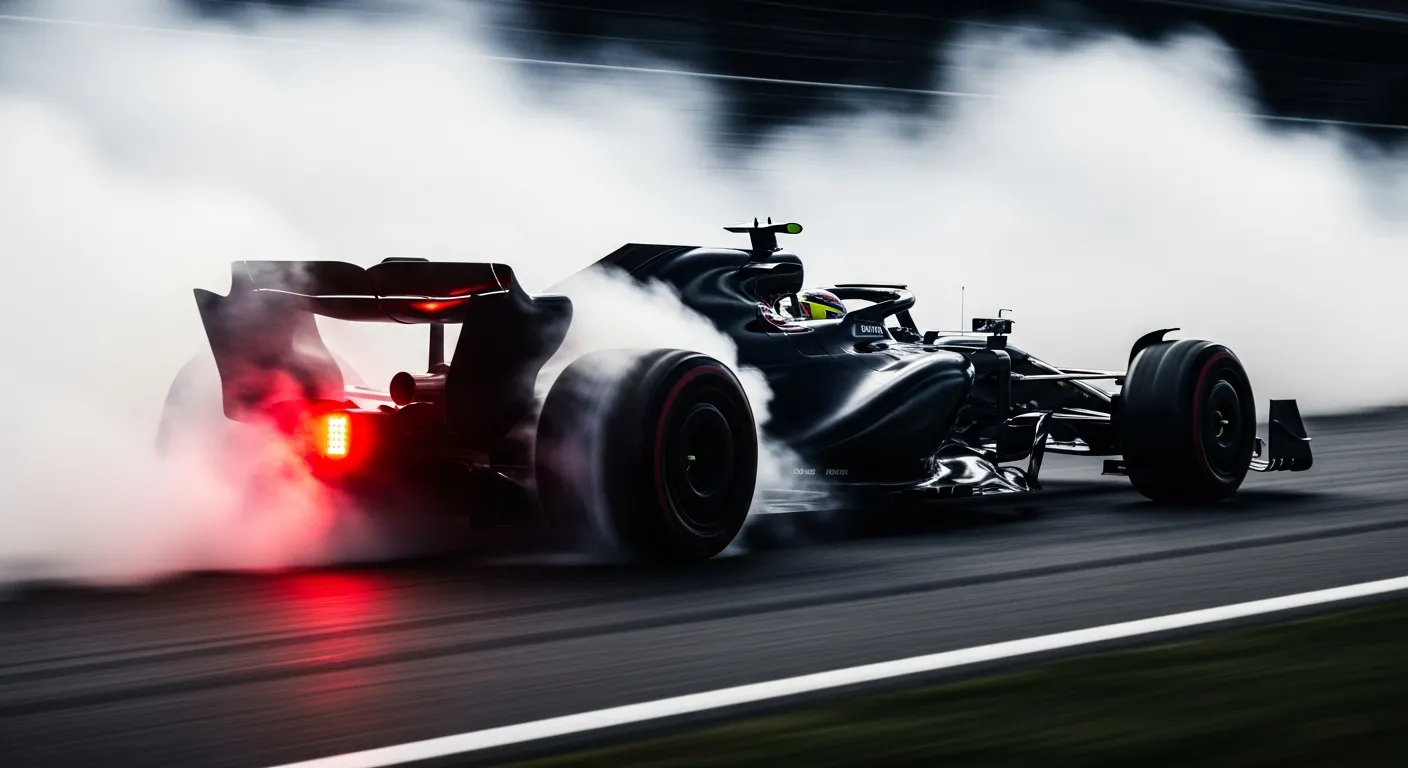
Aston Martin's journey at Silverstone, a permanent home circuit, has seen a gradual ascent from a single 1960 appearance to consistent points finishes, culminating in a best 7th place.
| Year | Best | 2nd | Pts |
|---|---|---|---|
| 1960 | P11 | — | 0 |
One email a day, ahead of every session. Race results, paddock signal, and the calls the explainer sites miss.
By subscribing, you agree to receive daily F1 news and updates from The F1 Formula. No spam. Unsubscribe anytime. Privacy Policy
Continue reading
Alpine's record at the British Grand Prix at Silverstone is marked by inconsistency, with a best finish of 5th in 2022 amidst several point-less outings.
Red Bull Racing's journey at the British Grand Prix reflects a distinct evolution, transforming from early struggles to a formidable force with five victories and a dozen podiums at their home circuit.
| 2021 | P8 | — | 4 |
| 2022 | P9 | P11 | 2 |
| 2023 | P7 | P14 | 6 |
| 2024 | P7 | P8 | 10 |
| 2025 | P7 | P9 | 8 |
Aston Martin's relationship with the British Grand Prix at Silverstone is a narrative of two distinct eras, separated by six decades. The team's initial foray into Formula 1 saw them compete at Silverstone in 1960, securing a best position of 11th and no points. After a long hiatus, the Aston Martin name returned to the grid in 2021, marking a new chapter for the team at their home circuit. Since then, they have made six starts, consistently improving their performance, although a win or podium at Silverstone remains elusive.
The Silverstone circuit, with its blend of high-speed corners like Copse and Maggotts-Becketts-Chapel, alongside technical sections, places a premium on aerodynamic efficiency and a stable chassis. For Aston Martin, particularly with their Mercedes power unit (until the transition to Honda in 2026), outright power is a given, but the car's ability to generate consistent downforce through sweeping corners is paramount. The team's design philosophy, often focused on a strong front end for turn-in and a stable rear for traction out of corners, is rigorously tested here. A car that can carry speed through the fast changes of direction without excessive understeer or oversteer is crucial for a competitive lap time.
Over the recent seasons, Aston Martin has demonstrated a clear upward trend. From scoring 4 points with a best finish of 8th in 2021, they improved to 2 points with a 9th place in 2022. The 2023 season saw their strongest performance yet, securing 6 points with a best finish of 7th. This progression suggests a growing understanding of how to optimize their package for Silverstone's demanding layout. While they haven't achieved a 1-2 finish or a podium, the consistent points finishes underscore their development as a mid-field contender, aiming to challenge the established front-runners. The team's total points accumulated at Silverstone since their return stands at 30, with their best individual finish being 7th in 2023.
Success at Silverstone is not merely about raw pace; it's about finding the right balance between high-speed stability and mechanical grip for the slower sections. The permanent nature of the circuit allows teams to gather extensive data, refining setups over multiple sessions. This contrasts with street circuits like Mercedes at the Singapore Grand Prix, where track evolution is more pronounced and data collection can be challenging. The focus on high-speed cornering also distinguishes Silverstone from power-sensitive tracks like Mercedes at the Italian Grand Prix, where top-end speed is the dominant factor. The continuous development of their aerodynamic package, as detailed on the Formula 1 — official site, is key to unlocking further performance at a circuit of Silverstone's character.
Looking ahead, the team's performance at Silverstone will be a critical indicator of their overall chassis strength and aerodynamic prowess. As the team continues to evolve, their ability to extract performance from the high-speed sections will be a benchmark for their progress. The data from circuits with similar characteristics, such as Spa-Francorchamps, where Mercedes at the Belgian Grand Prix often performs well due to its high-speed nature, can offer valuable insights. The detailed historical data available through resources like Jolpica/Ergast — 2026 season data provides a clear picture of their trajectory and the challenges ahead in breaking into the top three at their home race.