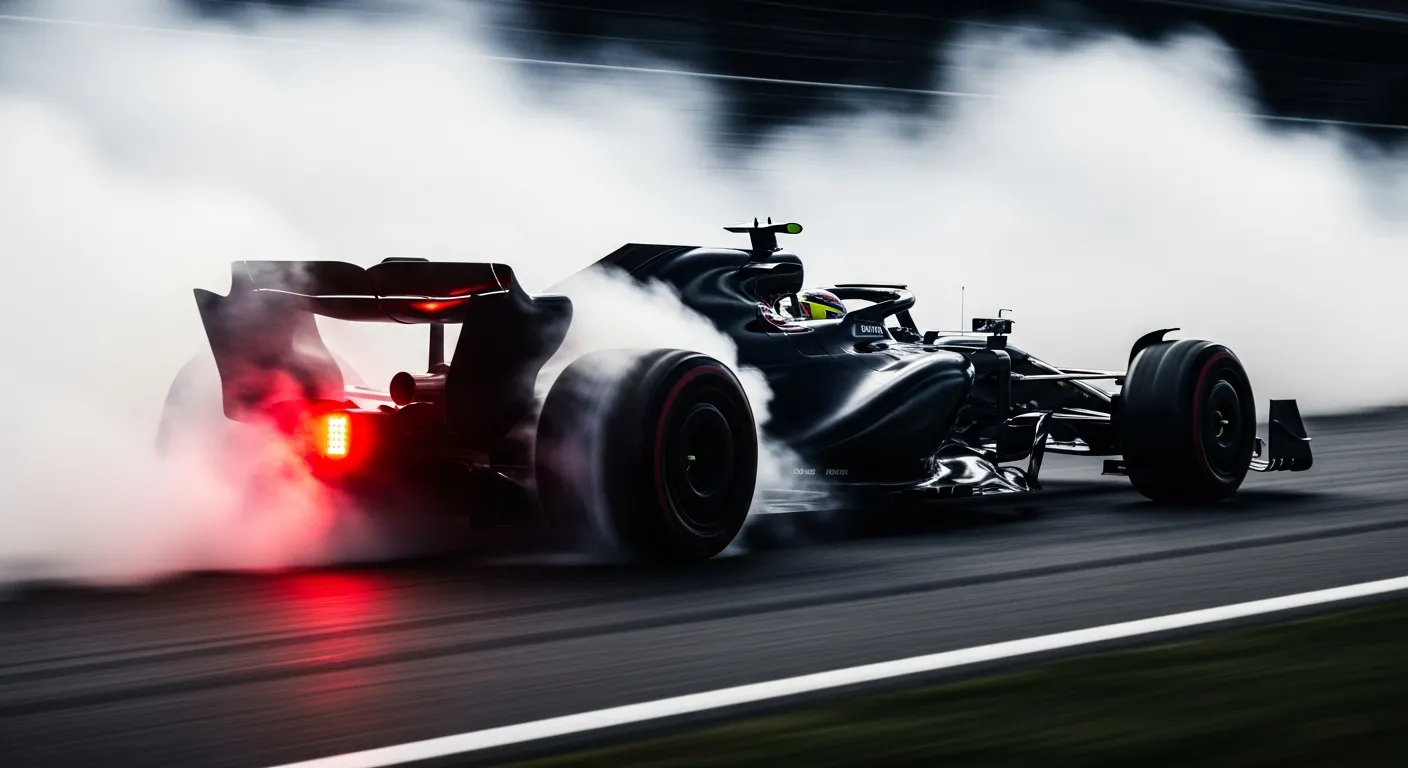
Ferrari's performance at the São Paulo Grand Prix is a narrative of both dominant periods and challenging adaptations to the circuit's distinctive layout and altitude.
Scuderia Ferrari HP arrives at the São Paulo Grand Prix with a rich, albeit sometimes inconsistent, history at the Autódromo José Carlos Pace. This permanent, anti-clockwise circuit has witnessed Ferrari secure nine victories and 23 podium finishes across 42 starts, including a notable 1-2 finish in 2007. These statistics paint a picture of a team capable of immense success when its machinery aligns with the unique demands of Interlagos.
The circuit itself presents a multifaceted engineering challenge. Situated at approximately 800 meters above sea level, the thinner air directly impacts the efficiency of the Ferrari power unit and the effectiveness of aerodynamic elements. This altitude necessitates specific engine mapping and aero configurations to compensate for the reduced downforce and power. The track's layout, a blend of the sweeping, high-speed 'S do Senna' and Curva do Sol, followed by a tight, technical infield section, demands a car with exceptional balance. Mechanical grip is paramount for navigating the slower corners and ensuring strong traction out of them, which is critical for setting up speed on the subsequent straights.
Ferrari's periods of dominance here, particularly during the early 2000s with Michael Schumacher and later with Kimi Räikkönen and Felipe Massa, often coincided with chassis designs that excelled in these specific areas. The 2007 season, culminating in a drivers' championship for Räikkönen at Interlagos, showcased a Ferrari package that could extract maximum performance from both its power unit and its mechanical setup, leading to that memorable 1-2 finish. Such triumphs highlight how a well-rounded car concept, capable of managing both the high-speed sections and the demanding infield, is rewarded. This balance is a constant pursuit for all teams, as explored in general terms on the Wikipedia: Formula One page, detailing the sport's technical evolution.
However, the São Paulo Grand Prix has also exposed Ferrari's vulnerabilities. The 2019 race stands as a stark example, where both cars finished outside the points following a race incident, underscoring how quickly fortunes can turn when the car's setup or overall philosophy doesn't perfectly suit the track. This particular event highlighted challenges with tire management and overall car balance, issues that can be exacerbated by Interlagos's undulating nature and varied cornering speeds. Similar struggles can be observed at other circuits that demand a specific car characteristic, such as Aston Martin at the Bahrain Grand Prix or Aston Martin at the Chinese Grand Prix, where tire degradation and traction are key.
For Frédéric Vasseur's Scuderia Ferrari HP, success at Interlagos hinges on a precise calibration of the car's strengths against the circuit's inherent challenges. The performance of the Ferrari power unit in thinner air, combined with a chassis that offers both robust mechanical grip and efficient aerodynamics, will dictate their competitive standing. Teams must also contend with the strategic complexities of a race often punctuated by safety cars and unpredictable weather, making adaptability crucial. This holistic approach to race weekend preparation is fundamental, as detailed by the FIA — F1 World Championship regulations, emphasizing the comprehensive nature of F1 competition. The historical data, like that found on Jolpica/Ergast — 2026 season data, consistently shows that a truly optimized package is required to succeed here.