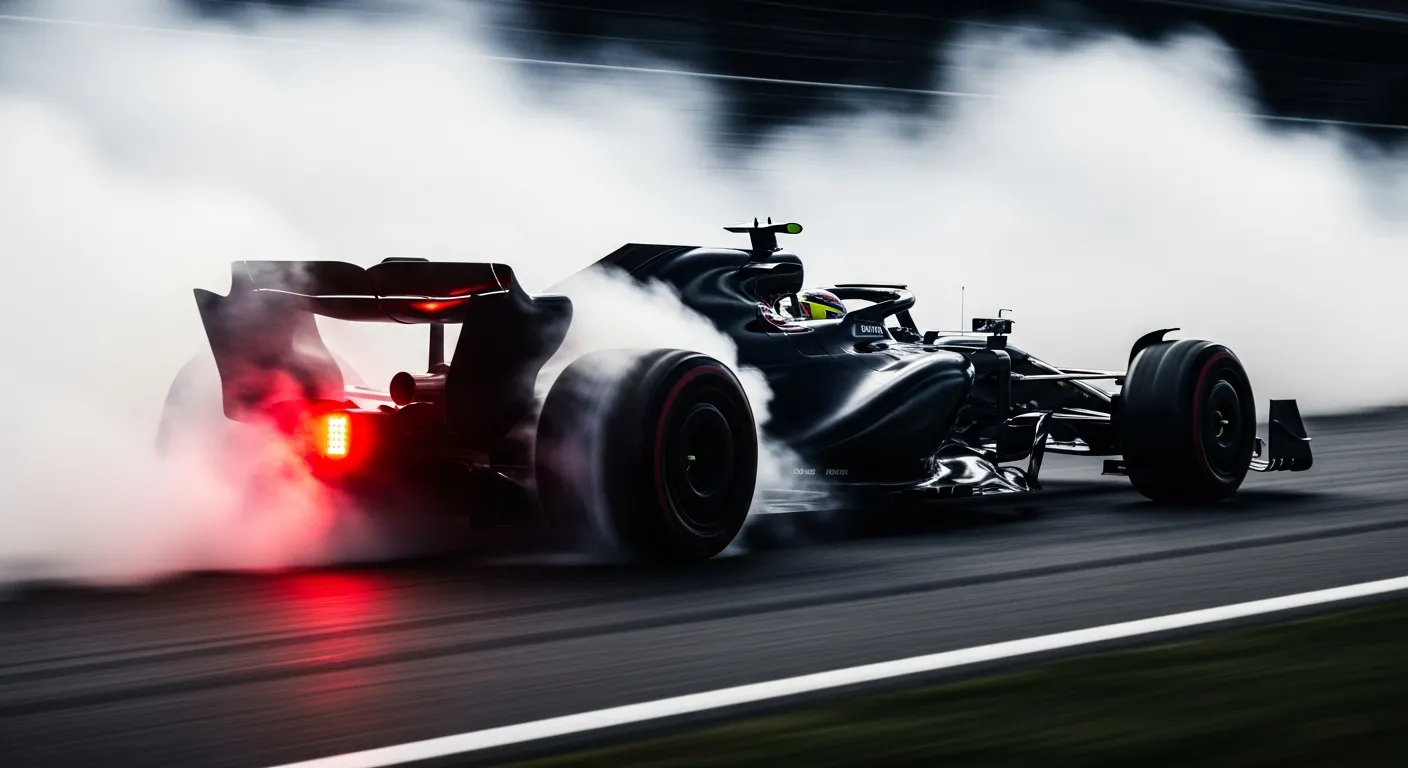
McLaren has accumulated a significant record at the Chinese Grand Prix, with 19 starts since the circuit's inception. Their history here is punctuated by considerable success, including 4 wins and 9 podium finishes. The early years of the Shanghai circuit saw McLaren frequently contending at the sharp end, securing their first victory in 2008. This era, characterized by powerful engines and aerodynamically refined chassis, often played to McLaren's strengths on tracks that demanded a blend of straight-line speed and high-speed cornering prowess. The circuit's long back straight, a key feature of the Shanghai International Circuit layout, rewards strong power unit performance, an area where McLaren, particularly with its Mercedes power unit, has historically been competitive.
The team continued its strong run into the early 2010s, adding further victories in 2010 and 2011, and achieving 2 one-two finishes, showcasing a period of dominant performance. These successes underscore McLaren's ability to adapt its car concept to the unique challenges of Shanghai, which requires a delicate balance between aerodynamic load for its sweeping turns and mechanical grip for the tighter, technical sections. The extensive data available through resources like Jolpica/Ergast highlights these periods of competitive advantage. However, the mid-2010s presented a different picture, with McLaren experiencing a dip in form, failing to score points in several appearances between 2014 and 2017, and again in 2019. This period coincided with significant regulatory shifts and internal restructuring, which saw the team grappling with car concepts that struggled to consistently perform across varied circuit characteristics, a challenge not unlike those faced by teams like Racing Bulls at the British Grand Prix during their own development phases.
The return of the Chinese Grand Prix in 2024 saw McLaren demonstrate a notable resurgence. A second-place finish, alongside another points finish, marked a strong return to form, signaling the effectiveness of their current car development trajectory. This performance suggests that the current McLaren chassis, with its emphasis on aerodynamic efficiency and high-speed stability, is well-suited to the demands of Shanghai's fast corners and long straights. The team's ability to manage tire degradation, a critical factor on this abrasive surface, will be key to sustaining this momentum. For an overall understanding of the sport's regulations and competitive landscape, the Formula 1 — official site offers comprehensive insights into how teams navigate such challenges.
Looking ahead, the team's ongoing development under Andrea Stella aims to build on this foundation. The Shanghai circuit, with its blend of high-speed and technical sections, serves as an excellent proving ground for a car's overall balance and responsiveness. While the circuit shares some high-speed characteristics with tracks like Spa, its unique combination of long corners and heavy braking zones means a car optimized for Racing Bulls at the Belgian Grand Prix might not automatically excel here without specific setup adjustments. McLaren's performance in China will continue to be a crucial indicator of their progress in developing a truly versatile challenger, capable of fighting for podiums and wins consistently throughout the season, much like how Racing Bulls at the Austrian Grand Prix often reveals their car's core strengths.
The team's historical record at this permanent facility underscores a potential for strong results when their car concept aligns with the circuit's demands. The blend of power, aero, and mechanical grip required means that a strong showing here can be a powerful statement of intent for the rest of the season.