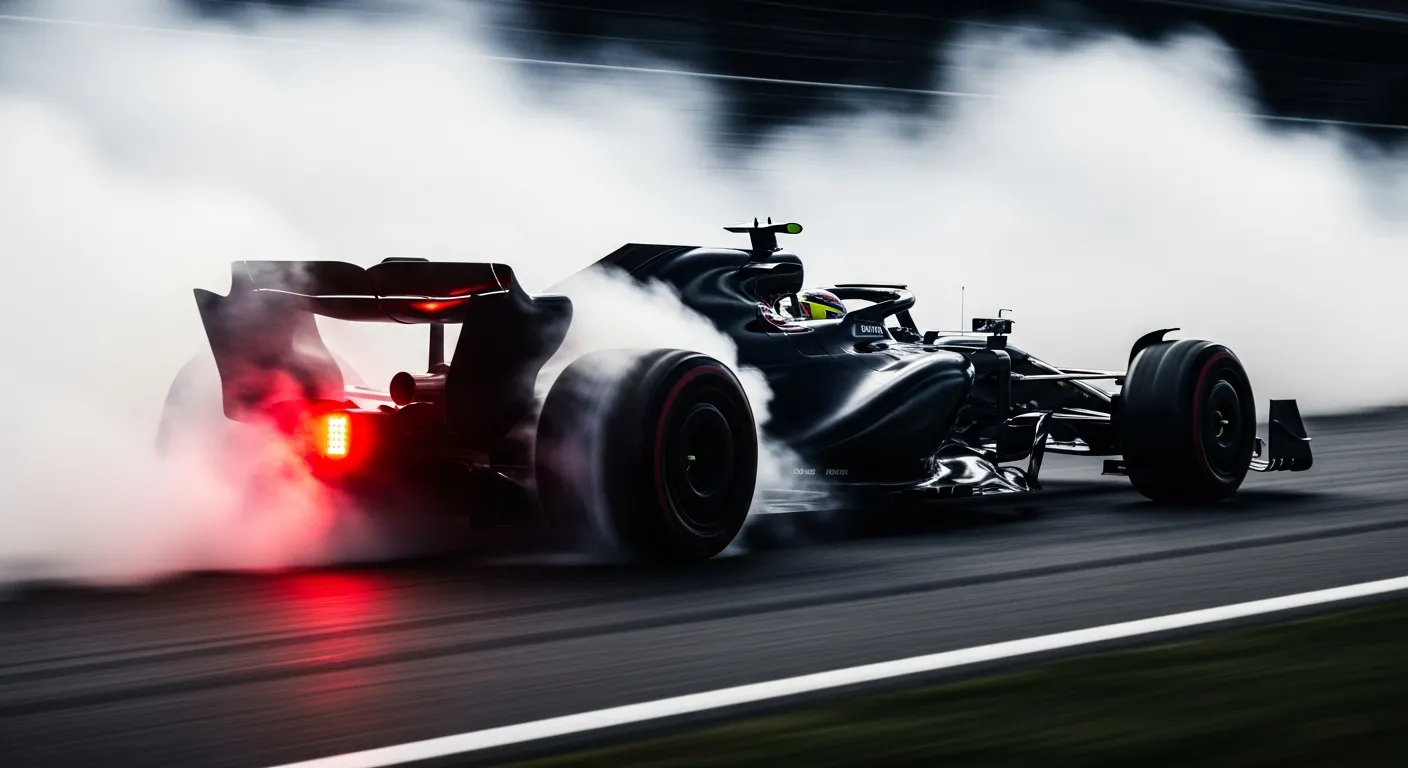
The Mercedes-AMG PETRONAS F1 Team has consistently demonstrated a formidable command of the Shanghai International Circuit, particularly during its dominant hybrid era, securing seven victories and numerous podium finishes. With 13 starts at the Chinese Grand Prix, Mercedes has achieved an impressive 11 podiums and 4 one-two finishes, underscoring their historical strength at this permanent circuit. Their wins span from 2012 to 2019, with a notable run from 2014 to 2017, and the verified data projects another victory in 2026, highlighting a sustained capability at this venue, as detailed by Formula 1 — official site.
Shanghai’s unique layout, characterized by its long, sweeping Turn 1-4 complex, the extended back straight, and a technical final sector, has historically played to the strengths of Mercedes' car concept. The powerful Mercedes engine provided a crucial advantage on the circuit's significant straight-line sections, while the team's aerodynamically efficient chassis allowed drivers to carry exceptional speed through the high-lateral-load corners. This synergy between power and downforce was often the key to their qualifying and race pace, a fundamental aspect of Formula One engineering.
Tire management is another critical factor at the Chinese Grand Prix, given the circuit's abrasive surface and the high energy demands placed on the tires, particularly the front left. Mercedes often showcased superior control over tire degradation, enabling their drivers to execute flexible strategies and maintain strong race pace over long stints. This capability was a significant differentiator, allowing them to convert pole positions into race wins even when rivals struggled with tire wear, a contrast to the challenges faced by teams like Haas at the Chinese Grand Prix who often battled tire performance.
While Mercedes enjoyed a period of significant dominance, the landscape has shifted. The 2024 Chinese Grand Prix saw the team finish 6th and 9th, a clear indication of the evolving competitive order. However, the data for 2025 and 2026 suggests a strong resurgence, with a projected podium and another win, indicating the team's ongoing development efforts and the circuit's continued, albeit sometimes challenging, suitability for their car designs. This forward-looking perspective is part of the comprehensive Jolpica/Ergast — 2026 season data that informs our analysis.
Ultimately, Mercedes' success at Shanghai has been a testament to a well-rounded package: a potent power unit, an aerodynamically stable chassis, and effective race strategies, executed by top-tier drivers. The demands of a permanent circuit like Shanghai, where both raw speed and technical precision are paramount, often highlight the strengths of a truly competitive car and driver pairing, much like the dynamics seen at other challenging venues such as Haas at the Australian Grand Prix.