Track record
Source: Jolpica F1 API- Starts
- 2
- Wins
- 0
- Podiums
- 0
- Best finish
- P12
- DNFs
- 1
- Points
- 0
Every appearance
| Year | Team | Grid | Finish | Pts |
|---|---|---|---|---|
| 2025 | Kick Sauber F1 Team | P13 |
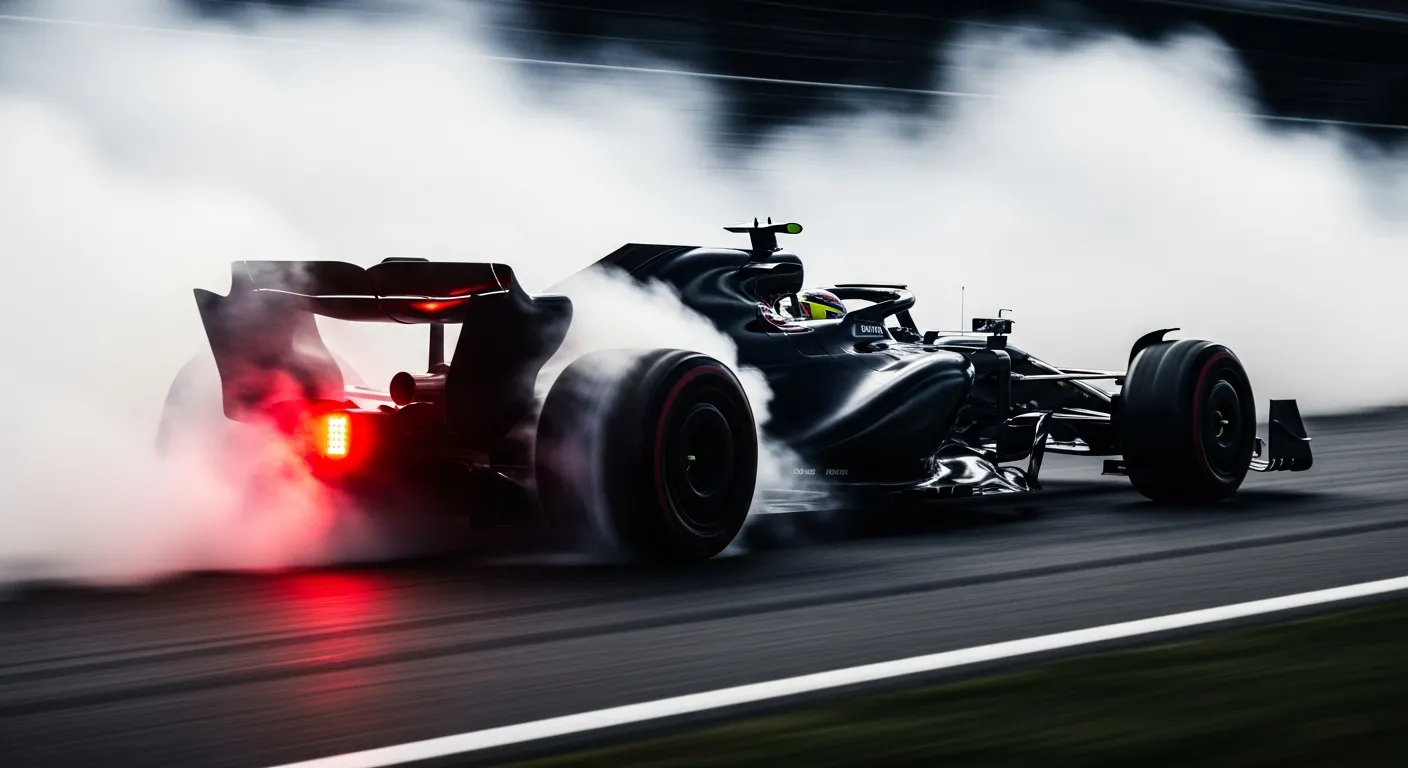
Driver × Circuit · street
Gabriel Bortoleto's initial F1 outings at the Miami Grand Prix have been a test of adaptation, marked by a DNF and a best finish of 12th, reflecting the unique challenges of this temporary street circuit.
| Year | Team | Grid | Finish | Pts |
|---|---|---|---|---|
| 2025 | Kick Sauber F1 Team | P13 |
One email a day, ahead of every session. Race results, paddock signal, and the calls the explainer sites miss.
By subscribing, you agree to receive daily F1 news and updates from The F1 Formula. No spam. Unsubscribe anytime. Privacy Policy
Continue reading
Gabriel Bortoleto navigated a challenging 2026 Miami Grand Prix for Audi, climbing from a 21st grid start to finish 12th, albeit one lap down, without scoring points.
Gabriel Bortoleto's 2025 Miami Grand Prix ended prematurely on lap 30 due to an engine failure, preventing the Kick Sauber driver from completing the race and scoring points.
| Engine |
| 0 |
| 2026 | Audi | P21 | P12 | 0 |
Gabriel Bortoleto's fledgling Formula 1 career has seen him tackle the distinctive Miami Grand Prix circuit twice, presenting a mixed bag of results that underscore the steep learning curve for any driver adapting to the sport's highest tier. His debut appearance in 2025, driving for Kick Sauber, saw him start from 13th on the grid but unfortunately conclude the race with a retirement due to an engine issue, earning no points. The following year, now with Audi, Bortoleto returned to Miami, starting further back in 21st and managing to bring the car home in 12th position, again outside the points. This record, with 2 starts, 0 wins, 0 podiums, and a best finish of 12th, illustrates the formidable task of mastering a circuit like Miami while simultaneously developing within a new team.
The Miami International Autodrome, a temporary street circuit built around Hard Rock Stadium, presents a unique set of challenges that can prove particularly demanding for drivers in their early F1 seasons. Its layout combines high-speed sections with tighter, technical corners, and the nature of its surface often means lower grip levels, especially off the racing line. This requires a specific approach to car setup and driver technique, prioritizing precision and confidence over raw aggression. Unlike permanent race tracks, the concrete barriers at Miami offer little forgiveness for error, a characteristic shared with other demanding street circuits such as Isack Hadjar at the Azerbaijan Grand Prix or Isack Hadjar at the Singapore Grand Prix. For a driver like Bortoleto, extracting consistent performance across the varied sectors of Miami is crucial, a skill that develops with experience and track time.
Bortoleto's performances at Miami so far suggest an ongoing process of adaptation. The DNF in 2025, while not necessarily a reflection of his driving, meant valuable track time was lost. His 12th place finish in 2026, though not a points-scoring result, demonstrated an ability to navigate the race distance and improve upon his starting position. This progress, however incremental, is vital for a developing talent. The circuit's demands on tire management, particularly in the hot and humid Florida conditions, also add another layer of complexity. Understanding how the tires behave through the long, sweeping turns and under heavy braking is a nuanced aspect of racing that can significantly impact race strategy and overall pace. For a deeper understanding of the sport's technical and sporting regulations, the FIA — F1 World Championship provides comprehensive details.
Considering the evolution of the Audi team and Bortoleto's own development, future appearances at Miami will be a key indicator of his growth. The ability to find the limit quickly in qualifying, coupled with robust race craft to manage the race's strategic elements, will be paramount. As F1 continues to evolve, with new regulations and car designs, a driver's adaptability to diverse circuits like Miami remains a critical measure of their potential. For those interested in the broader context of Formula One's history and structure, Wikipedia: Formula One offers an extensive overview. The detailed race data, such as that found on Jolpica/Ergast — 2026 season data, provides the granular insights necessary to track driver and team performance over time, highlighting the specific challenges and successes at each event, including Bortoleto's journey at Miami. His trajectory at this unique American venue will be a storyline to follow closely in the seasons to come, particularly as he seeks to convert potential into points-scoring finishes.