Track record
Source: Jolpica F1 API- Starts
- 1
- Wins
- 0
- Podiums
- 0
- Best finish
- P11
- DNFs
- 0
- Points
- 0
Every appearance
| Year | Team | Grid | Finish | Pts |
|---|---|---|---|---|
| 2025 | Racing Bulls | P10 |
Driver × Circuit · permanent
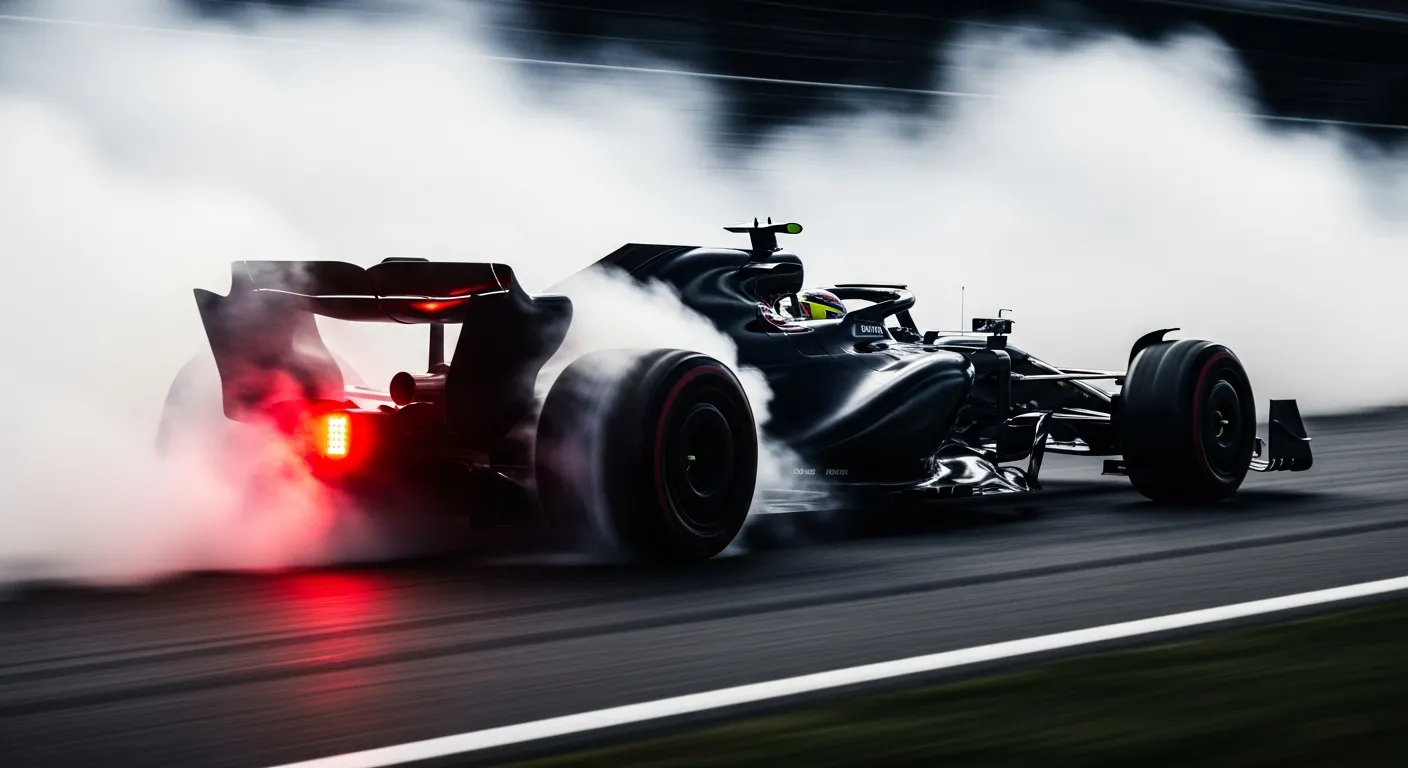
Isack Hadjar's sole appearance at the Hungarian Grand Prix in 2025 saw him finish 11th for Racing Bulls, demonstrating a solid, if unrewarded, performance at the demanding Hungaroring.
| Year | Team | Grid | Finish | Pts |
|---|---|---|---|---|
| 2025 | Racing Bulls | P10 |
One email a day, ahead of every session. Race results, paddock signal, and the calls the explainer sites miss.
By subscribing, you agree to receive daily F1 news and updates from The F1 Formula. No spam. Unsubscribe anytime. Privacy Policy
Continue reading
Isack Hadjar started the 2025 Hungarian Grand Prix from P10 but finished just outside the points in P11, completing 69 laps for Racing Bulls.
Isack Hadjar's sole appearance at the Austrian Grand Prix in 2025 resulted in a 12th-place finish, marking his initial foray into a challenging circuit for the Racing Bulls team.
| P11 |
| 0 |
Isack Hadjar's single outing at the Hungarian Grand Prix in 2025 offers a crucial early data point for his F1 career, specifically highlighting his adaptation to one of the calendar's most technically demanding permanent circuits. During that 2025 event, Hadjar, driving for Racing Bulls, started from 10th on the grid and ultimately finished 11th, just outside the points. This performance, while not adding to his points tally, reflects a measured approach on a circuit known for punishing even minor errors.
The Hungaroring, often dubbed 'Monaco without walls' due to its tight, twisty nature, demands a different kind of precision than high-speed circuits like Suzuka, a track where Yuki Tsunoda at the Japanese Grand Prix has shown his mettle. It's a circuit where aerodynamic efficiency and driver finesse through a relentless series of corners are paramount, rather than outright top-end speed. For a driver like Hadjar making his initial foray into Formula 1, navigating the Hungaroring's unique rhythm presents a significant challenge. His single start, 0 wins, 0 podiums, and a best finish of 11th underline the steep learning curve inherent in F1, especially at a track that offers few opportunities for rest or recovery during a lap.
Success at the Hungarian Grand Prix hinges on a consistent pace, excellent tyre management, and the ability to extract maximum performance from the car through its many medium and slow-speed corners. The circuit's abrasive surface can be taxing on tyres, requiring drivers to balance aggression with preservation. Hadjar's P11 finish, while not yielding points, indicates a measured approach, a trait valuable on tracks where consistency is key, much like the strategic races Yuki Tsunoda at the Australian Grand Prix has navigated. The proximity to the points-paying positions suggests potential, but also highlights the fine margins in Formula 1.
For a rookie, managing the complex corners and tyre degradation here is a significant test, akin to the strategic demands seen at circuits such as the one where Carlos Sainz at the Abu Dhabi Grand Prix often faces unique tyre challenges. The Formula 1 — official site provides comprehensive details on the circuit's layout and historical data, which underscores its technical nature. This single appearance is recorded in the Jolpica/Ergast — 2026 season data, offering a snapshot of his early F1 career. Understanding the broader context of Wikipedia: Formula One helps frame the challenge of adapting to such a diverse calendar. His experience here will undoubtedly be a foundational element as his career progresses, offering valuable insights into his adaptability under pressure.