Track record
Source: Jolpica F1 API- Starts
- 1
- Wins
- 0
- Podiums
- 0
- Best finish
- P13
- DNFs
- 0
- Points
- 0
Every appearance
| Year | Team | Grid | Finish | Pts |
|---|---|---|---|---|
| 2025 | Racing Bulls | P8 |
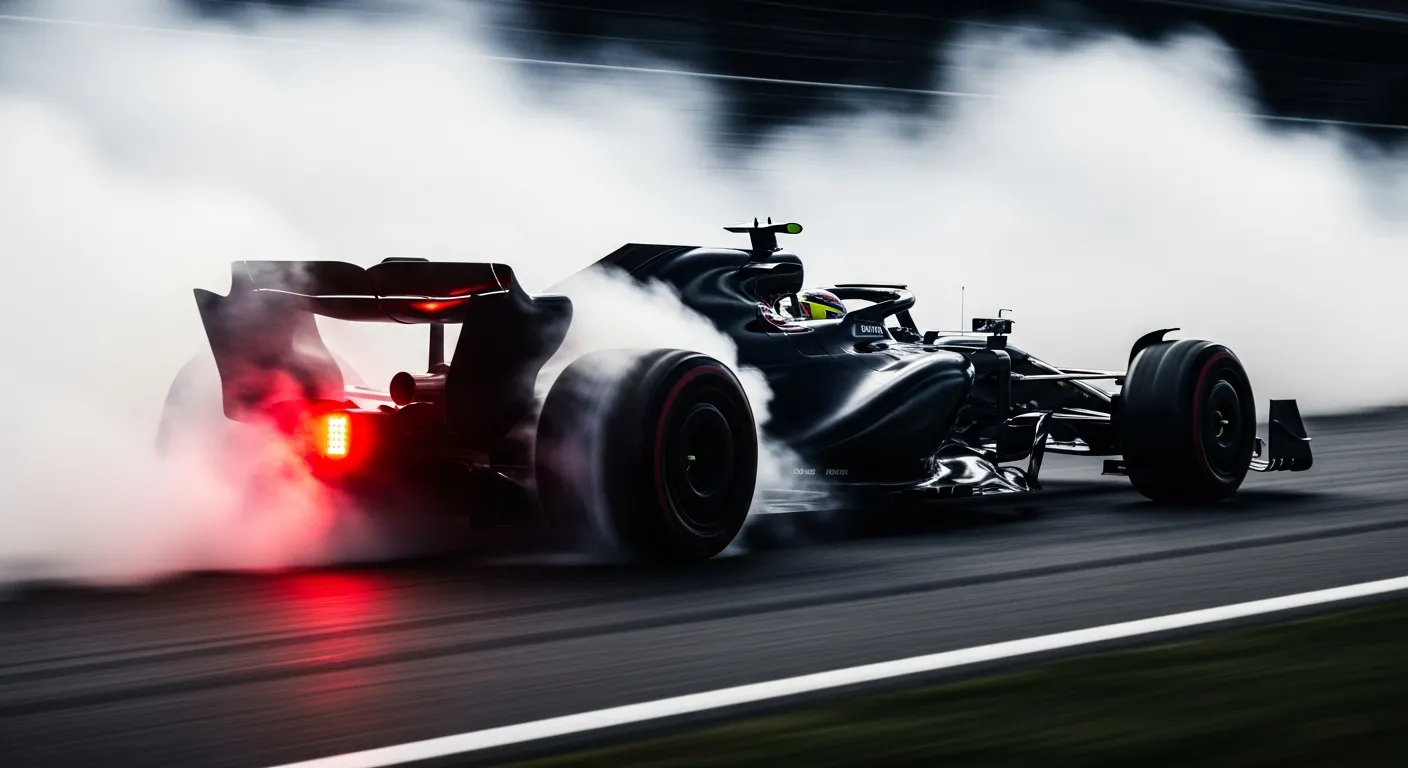
Driver × Circuit · permanent
Isack Hadjar's single outing at the Mexico City Grand Prix in 2025, finishing 13th, offers the initial benchmark for his performance at this unique high-altitude circuit.
| Year | Team | Grid | Finish | Pts |
|---|---|---|---|---|
| 2025 | Racing Bulls | P8 |
One email a day, ahead of every session. Race results, paddock signal, and the calls the explainer sites miss.
By subscribing, you agree to receive daily F1 news and updates from The F1 Formula. No spam. Unsubscribe anytime. Privacy Policy
Continue reading
Isack Hadjar, driving for Racing Bulls at the 2025 Mexican Grand Prix, started from P8 but concluded the race in 13th position, completing 70 laps and finishing one lap down from the leader without scoring points.
Isack Hadjar's sole appearance at the Austrian Grand Prix in 2025 resulted in a 12th-place finish, marking his initial foray into a challenging circuit for the Racing Bulls team.
| P13 |
| 0 |
Isack Hadjar's debut at the Mexico City Grand Prix in 2025, where he secured a 13th-place finish for Racing Bulls, provides the foundational data point for his relationship with this challenging permanent circuit. His 1 start at the Autódromo Hermanos Rodríguez, while not yielding points, represents a clean run to the flag, finishing just one lap down from the leaders. For a young driver, navigating the unique demands of Mexico City without incident is a significant first step.
The Mexico City Grand Prix presents a distinct set of challenges, primarily due to its extreme altitude. At over 2,200 meters above sea level, the air density is significantly lower, impacting both engine performance and aerodynamic efficiency. Power units produce less horsepower, and downforce levels are reduced, requiring teams to run maximum wing angles to compensate. This creates a fascinating paradox: cars are set up for high downforce but still slide through corners due to the thin air, demanding precise car control and excellent tyre management. Hadjar's ability to bring the car home in 13th, ahead of several more experienced competitors, suggests a degree of adaptability to these conditions.
His performance can be viewed in the context of other young drivers tackling demanding tracks. For instance, the technical precision required at a circuit like the Autódromo Hermanos Rodríguez shares some characteristics with the nuanced driving needed at a venue such as George Russell at the Spanish Grand Prix, where a strong understanding of aero balance and tyre degradation is paramount. Similarly, the long straights and heavy braking zones, particularly into Turn 1, demand a confident and aggressive approach, a trait often seen from drivers who excel at circuits like George Russell at the British Grand Prix.
While Hadjar has 0 wins and 0 podiums at this circuit, his best finish of 13th in his only appearance lays a solid groundwork. The Racing Bulls package typically faces a stern test in Mexico due to the power-sensitive nature of the track, yet also benefits from strong mechanical grip in the stadium section. Hadjar's task will be to extract more from the car in qualifying, an area where the high-altitude conditions can often shuffle the grid. Understanding the nuances of the circuit, from the low-grip surface to the critical tyre temperatures, is key to improving on that initial result. For a broader understanding of how Formula 1 operates globally, the official Formula 1 site offers extensive insights into race operations and regulations. Furthermore, detailed historical data, such as that available through Jolpica/Ergast — 2026 season data, allows for deeper analysis of past performances at specific circuits. The unique demands of high-altitude racing are a fascinating aspect of the sport, as detailed in various resources, including general information on Wikipedia: Formula One.
Looking ahead, Hadjar's development at a circuit like Mexico City will be crucial. His ability to manage the delicate balance between pushing the limits and preserving the car, especially under the strenuous conditions of high altitude, will define his progress. The experience gained in 2025 will undoubtedly inform his approach to future appearances, much like how drivers refine their strategies over multiple visits to tracks with specific challenges, such as George Russell at the Canadian Grand Prix where wall proximity and braking stability are key. His next outing here will be a true measure of his growth and adaptation within the sport.