Track record
Source: Jolpica F1 API- Starts
- 6
- Wins
- 1
- Podiums
- 2
- Best finish
- P1
- DNFs
- 1
- Points
- 57
Won here in: 2025
Every appearance
| Year | Team | Grid | Finish | Pts |
|---|---|---|---|---|
| 2019 |
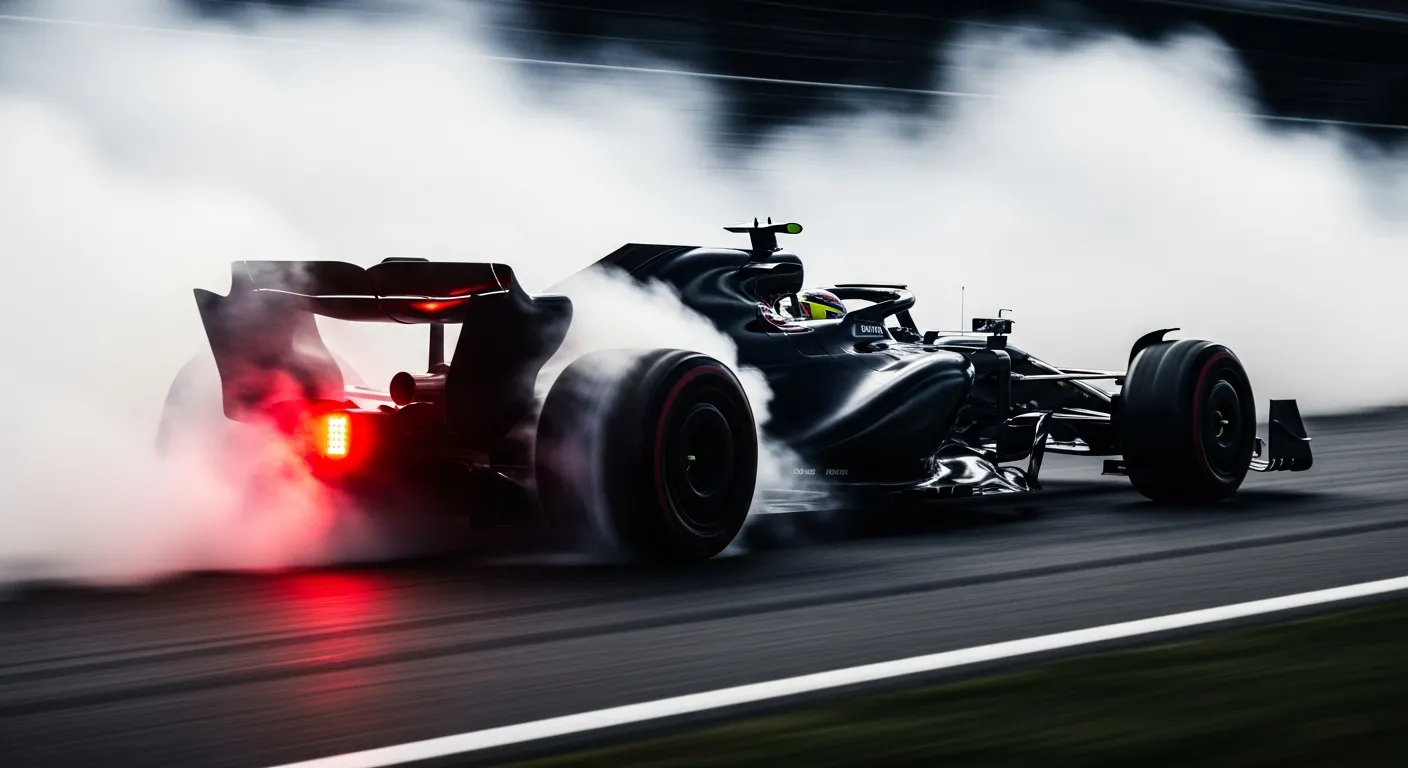
Driver × Circuit · permanent
Lando Norris's journey at the São Paulo Grand Prix has evolved from consistent points finishes to a breakthrough win, showcasing his adaptation to Interlagos's unique demands.
Won here in: 2025
| Year | Team | Grid | Finish | Pts |
|---|---|---|---|---|
| 2019 |
One email a day, ahead of every session. Race results, paddock signal, and the calls the explainer sites miss.
By subscribing, you agree to receive daily F1 news and updates from The F1 Formula. No spam. Unsubscribe anytime. Privacy Policy
Continue reading
Lando Norris secured a commanding victory at the 2025 São Paulo Grand Prix, converting his pole position into a win and extending his championship lead.
Lando Norris, starting from pole position at the 2024 São Paulo Grand Prix, navigated a challenging race at Interlagos to secure a P6 finish for McLaren Racing, adding 8 points to his championship tally.
| McLaren Racing |
| P10 |
| P8 |
| 4 |
| 2021 | McLaren Racing | P5 | P10 | 1 |
| 2022 | McLaren Racing | P6 | Gearbox | 0 |
| 2023 | McLaren Racing | P6 | P2 | 19 |
| 2024 | McLaren Racing | P1 | P6 | 8 |
| 2025 | McLaren Racing | P1 | P1 | 25 |
Lando Norris's record at the São Paulo Grand Prix, particularly at the demanding Autódromo José Carlos Pace, illustrates a clear arc of development, culminating in a definitive victory in 2025 after years of building experience.
Norris made his debut at the circuit, then known as the Brazilian Grand Prix, in 2019, securing a respectable 8th place finish from a 10th-place grid start. This early performance hinted at his capability to manage the circuit's undulating nature and tight sections. His 2021 appearance saw a grid start of 5th, but he finished 10th, indicating the challenges of maintaining position on a circuit known for its strategic complexity and potential for unpredictable weather. These initial outings provided crucial data for McLaren and Norris, laying the groundwork for future improvements.
The 2022 event proved to be a setback, with Norris retiring due to a gearbox issue from a 6th-place grid slot. However, this DNF was followed by a significant turning point in 2023. Starting from 6th, Norris delivered a standout performance, securing a 2nd-place podium finish. This result underscored McLaren's improved package and Norris's growing confidence and race management skills, particularly in navigating the circuit's challenging final sector. The São Paulo Grand Prix, with its anti-clockwise layout and elevation changes, demands a precise yet aggressive approach, a balance Norris has increasingly mastered.
The trajectory continued upwards in 2024, where Norris secured pole position, only to finish 6th. This demonstrated his raw speed over a single lap but also highlighted the complexities of converting pole into victory at Interlagos, where race strategy and tyre degradation are paramount. However, the 2025 season marked the pinnacle of his efforts at this venue. From another pole position, Norris achieved his first win at the São Paulo Grand Prix, a testament to his evolution as a driver and McLaren's consistent development. This victory adds to his total of 1 win and 2 podiums at the circuit, with his best finish being 1st in 2025. For a broader understanding of how different drivers approach unique circuit challenges, one might compare this to Charles Leclerc at the British Grand Prix, another circuit demanding high-speed precision.
Interlagos's short lap and blend of high-speed straights with technical corners, like the Senna S, require a car with strong aerodynamic efficiency and excellent traction out of slow corners. Norris's driving style, characterized by smooth inputs and a keen ability to carry speed through flowing sections, often aligns well with such demands. The circuit's propensity for safety cars and varying weather conditions also plays into the hands of drivers who can adapt quickly, a trait Norris has honed over his career. The official Formula 1 — official site often highlights how driver adaptability is key at such venues.
With 6 starts and only 1 DNF, Norris has shown resilience and a capacity to learn from each appearance. His total of 57 points collected at the São Paulo Grand Prix reflects a consistent ability to extract performance, particularly in recent years. The circuit's unique characteristics, including its uphill run to the finish line, place a premium on power unit performance and effective energy deployment. As Norris continues to mature, his strategic understanding of races at circuits like Interlagos will be crucial. This evolution is a fascinating aspect of modern Formula One racing, where raw pace must be coupled with strategic acumen. Examining Jolpica/Ergast — 2026 season data provides a numerical lens on how driver and team performance trends can be tracked across seasons and circuits, offering insights into these developments. Comparisons could also be drawn to how drivers like Charles Leclerc at the Belgian Grand Prix manage similar high-speed, elevation-rich tracks.