Track record
Source: Jolpica F1 API- Starts
- 3
- Wins
- 0
- Podiums
- 1
- Best finish
- P2
- DNFs
- 0
- Points
- 28
Every appearance
| Year | Team | Grid | Finish | Pts |
|---|---|---|---|---|
| 2023 | Mercedes AMG F1 | P10 |
Driver × Circuit · street
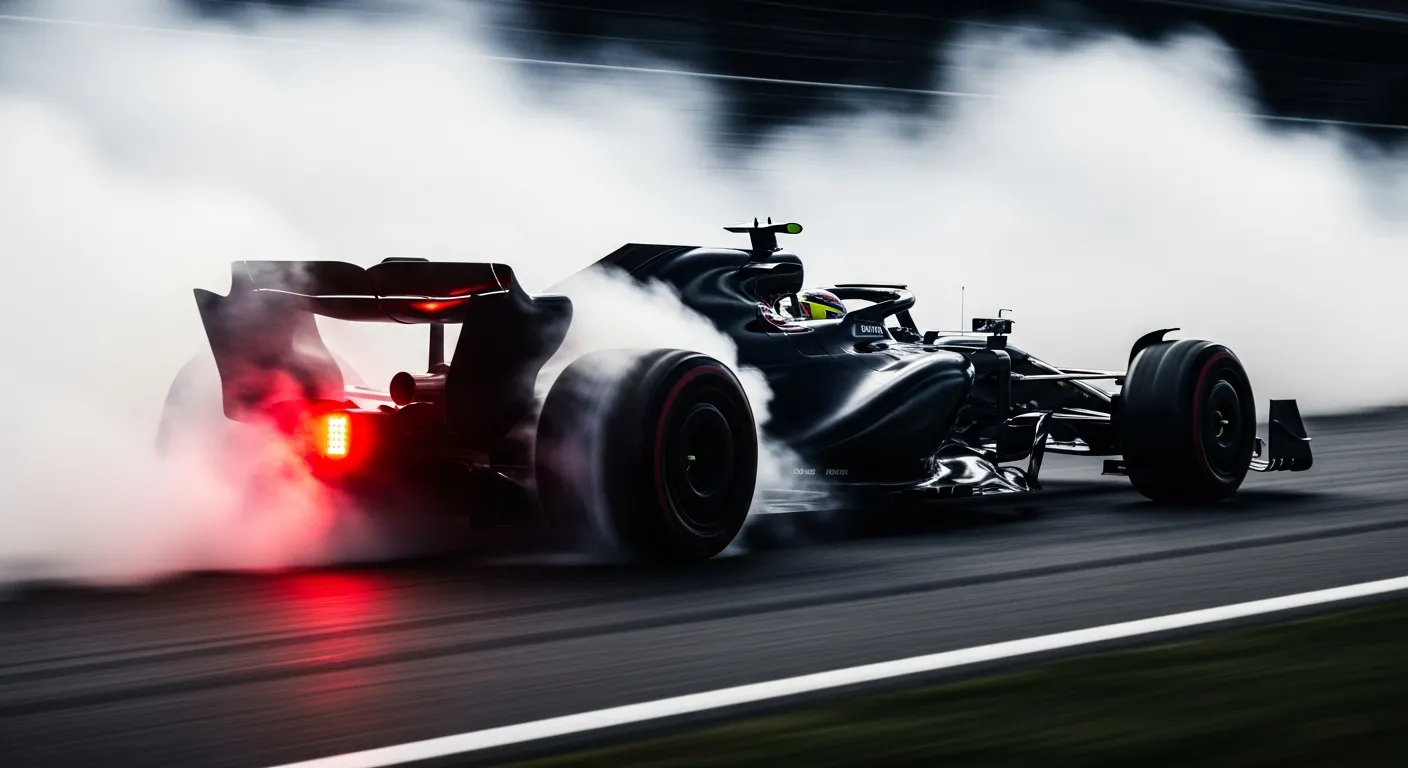
Lewis Hamilton's performance at the Las Vegas Grand Prix showcases his adaptability on a challenging street circuit, with a notable podium finish in 2024.
| Year | Team | Grid | Finish | Pts |
|---|---|---|---|---|
| 2023 | Mercedes AMG F1 | P10 |
One email a day, ahead of every session. Race results, paddock signal, and the calls the explainer sites miss.
By subscribing, you agree to receive daily F1 news and updates from The F1 Formula. No spam. Unsubscribe anytime. Privacy Policy
Continue reading
Lewis Hamilton navigated a challenging 2025 Las Vegas Grand Prix from a P19 grid start to secure an eighth-place finish for Scuderia Ferrari, earning four crucial championship points.
Lewis Hamilton secured a second-place finish for Mercedes at the 2024 Las Vegas Grand Prix, starting from tenth on the grid and contributing to a strong team performance alongside his winning teammate.
| P7 |
| 6 |
| 2024 | Mercedes AMG F1 | P10 | P2 | 18 |
| 2025 | Scuderia Ferrari | P19 | P8 | 4 |
Lewis Hamilton's evolving record at the Las Vegas Grand Prix reflects the unique challenges of the street circuit and his adaptability, culminating in a podium finish before his anticipated move to Ferrari. With three starts at the Las Vegas Strip Circuit, Hamilton has consistently navigated the distinct demands of this nocturnal event, demonstrating his race craft under pressure.
His inaugural appearance in 2023 saw him qualify 10th and finish 7th for Mercedes, a result that hinted at the car's initial struggles with the low-grip surface and long straights. The Las Vegas track, with its blend of high-speed sections and tight corners, requires a specific car setup that Mercedes initially found difficult to optimize. However, Hamilton's experience allowed him to extract a solid points finish, a testament to his ability to manage challenging conditions on a new circuit.
The 2024 season marked a significant improvement for Hamilton at Las Vegas. Starting again from 10th on the grid, he climbed through the field to secure a 2nd place finish, marking his sole podium at this venue. This performance underscored a better understanding of the circuit's nuances by both driver and team, showcasing Hamilton's capacity for strategic overtakes and effective tyre management on a track known for its abrasive surface. This result stands as his best finish at the circuit to date, contributing significantly to his total of 28 points accumulated across his appearances.
Looking ahead to 2025, Hamilton is set to compete at Las Vegas with Scuderia Ferrari, a transition that introduces a new dynamic to his record here. His 2025 appearance, starting from 19th and finishing 8th, will be crucial in understanding how he adapts to the Ferrari package on a street circuit. This shift offers a compelling narrative, especially when considering how other drivers, such as Charles Leclerc at the Chinese Grand Prix, have adapted to different car philosophies on similar urban layouts. The data from Jolpica/Ergast — 2026 season data will provide further context for future analyses of his Ferrari tenure.
Hamilton's history at Las Vegas, while not yet including a victory, illustrates his consistent ability to extract performance even when the car might not be ideally suited to the track's characteristics. His singular podium in 2024 highlights a peak performance, and fans will be keen to observe how his approach evolves with Ferrari. For a broader understanding of Formula 1's historical context, the Wikipedia: Formula One page offers extensive information on the sport's evolution and various circuit types. The official Formula 1 — official site remains the primary source for race results and championship standings.