Track record
Source: Jolpica F1 API- Starts
- 5
- Wins
- 0
- Podiums
- 0
- Best finish
- P6
- DNFs
- 0
- Points
- 36
Every appearance
| Year | Team | Grid | Finish | Pts |
|---|---|---|---|---|
| 2022 | Mercedes AMG F1 | P6 |
Driver × Circuit · street
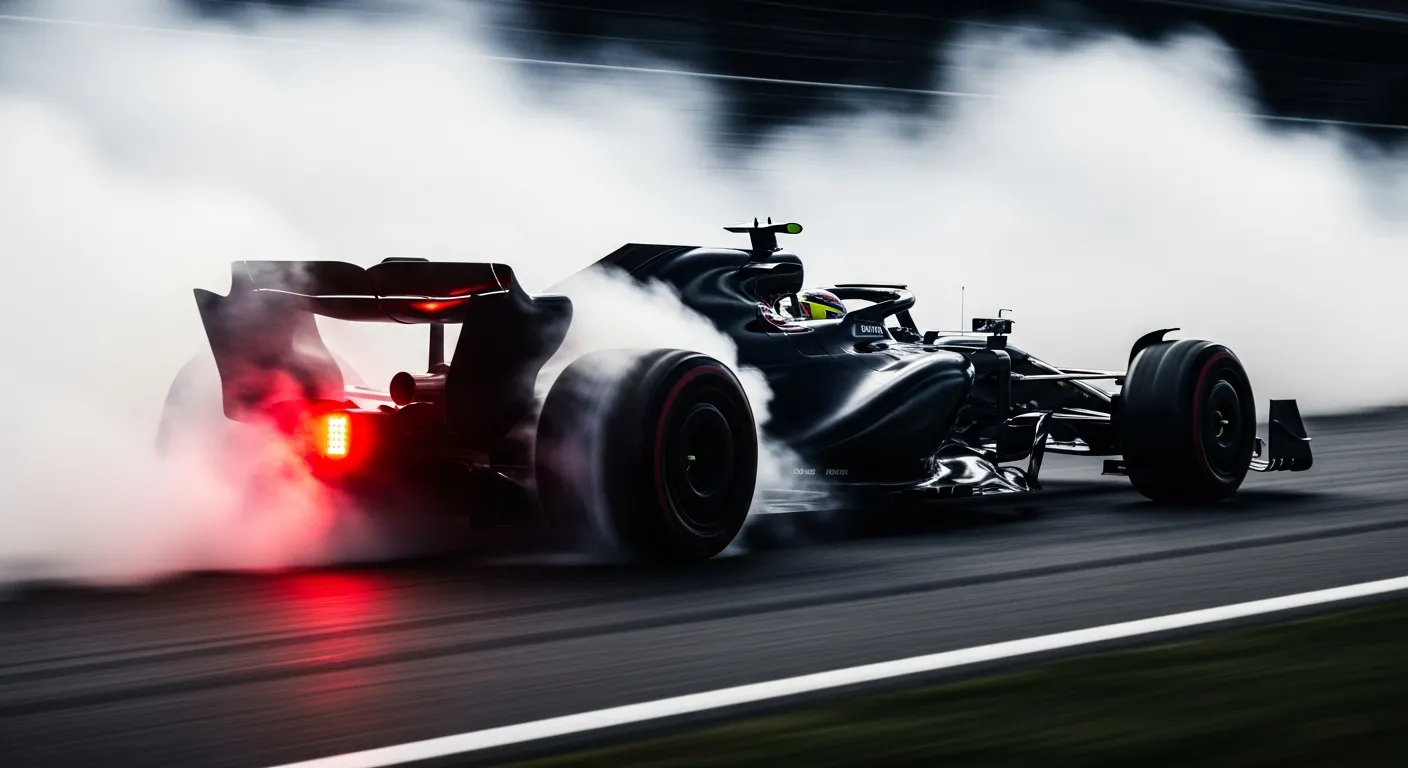
Lewis Hamilton has consistently finished 6th at the Miami Grand Prix across multiple seasons and constructors, yet remains without a podium at this street circuit.
| Year | Team | Grid | Finish | Pts |
|---|---|---|---|---|
| 2022 | Mercedes AMG F1 | P6 |
One email a day, ahead of every session. Race results, paddock signal, and the calls the explainer sites miss.
By subscribing, you agree to receive daily F1 news and updates from The F1 Formula. No spam. Unsubscribe anytime. Privacy Policy
Continue reading
Lewis Hamilton at the 2026 Miami Grand Prix maintained his sixth-place grid position to finish sixth, securing 8 points for Scuderia Ferrari.
Lewis Hamilton navigated the 2024 Miami Grand Prix from an eighth-place grid start to secure a sixth-place finish, adding 8 points to his season tally for Mercedes AMG F1.
| P6 |
| 8 |
| 2023 | Mercedes AMG F1 | P13 | P6 | 8 |
| 2024 | Mercedes AMG F1 | P8 | P6 | 8 |
| 2025 | Scuderia Ferrari | P12 | P8 | 4 |
| 2026 | Scuderia Ferrari | P6 | P6 | 8 |
Lewis Hamilton's record at the Miami Grand Prix presents a unique study in consistency without breakthrough, a pattern that holds even as he transitions to new machinery. Across his 5 starts at the Miami International Autodrome, Hamilton has yet to secure a win or a podium, with his best finish consistently being 6th. This particular result appeared in 2022, 2023, 2024, and again in 2026, even after his move to Scuderia Ferrari in 2025, where he initially saw a slight dip to 8th before returning to his familiar 6th place. This consistency, while respectable, stands in contrast to his broader career achievements and suggests a specific challenge presented by the Miami street circuit's characteristics.
The Miami track, with its blend of high-speed sections and tight chicanes, demands a car that can manage both straight-line speed and precise cornering through its varied asphalt surfaces. Hamilton's Mercedes era at Miami saw him battling a car that often struggled with porpoising and overall balance, particularly in 2022 and 2023. Despite these technical hurdles, his ability to extract performance and secure points, totaling 36 across his appearances, underscores his enduring skill. The 2025 season marked a significant shift, with Hamilton joining Ferrari, a move that brought immediate attention to how he would adapt to a different car philosophy on a circuit where he hadn't yet found a dominant rhythm. His 8th place finish that year, followed by a return to 6th, indicates a period of adjustment but also a baseline performance level he seems to maintain here.
Analyzing his performances, it's clear that qualifying has often been a hurdle for Hamilton in Miami. Starting from 6th in 2022, 13th in 2023, 8th in 2024, and 12th in 2025, he has frequently found himself needing to make progress through the field. This can be particularly challenging on a street circuit where overtaking opportunities, while present, are not as abundant as on more traditional tracks. His race craft, however, has consistently allowed him to gain positions or hold his ground, preventing any DNFs across all his Miami appearances. For a deeper dive into the broader context of Formula 1's evolution and technical regulations, the FIA's official F1 World Championship page offers comprehensive information.
Comparing Hamilton's Miami outings to other drivers on similar street circuits or those facing constructor transitions can offer perspective. For instance, the challenges faced by Lance Stroll at the Qatar Grand Prix highlight the impact of specific track layouts on driver performance, while Pierre Gasly at the Chinese Grand Prix illustrates the complexities of adapting to varying circuit demands. Hamilton's consistent P6 finishes, regardless of the car's ultimate pace, suggest a ceiling he has yet to break through at this particular venue. The nuanced data from seasons like 2026, available via Jolpica/Ergast — 2026 season data, provides granular detail on these trends. His continued pursuit of a podium at Miami, especially with Ferrari, will be a compelling narrative in future seasons, much like the ongoing development stories seen with drivers such as Pierre Gasly at the Bahrain Grand Prix.
Ultimately, Lewis Hamilton's Miami record is a testament to his ability to bring the car home in the points, even when the outright pace for a win or podium isn't there. The circuit's unique demands, coupled with the varying competitiveness of his machinery over the years, have shaped a consistent, if not dominant, performance profile for one of the sport's most decorated drivers. For more general information on the sport's history and structure, Wikipedia: Formula One serves as a valuable resource.