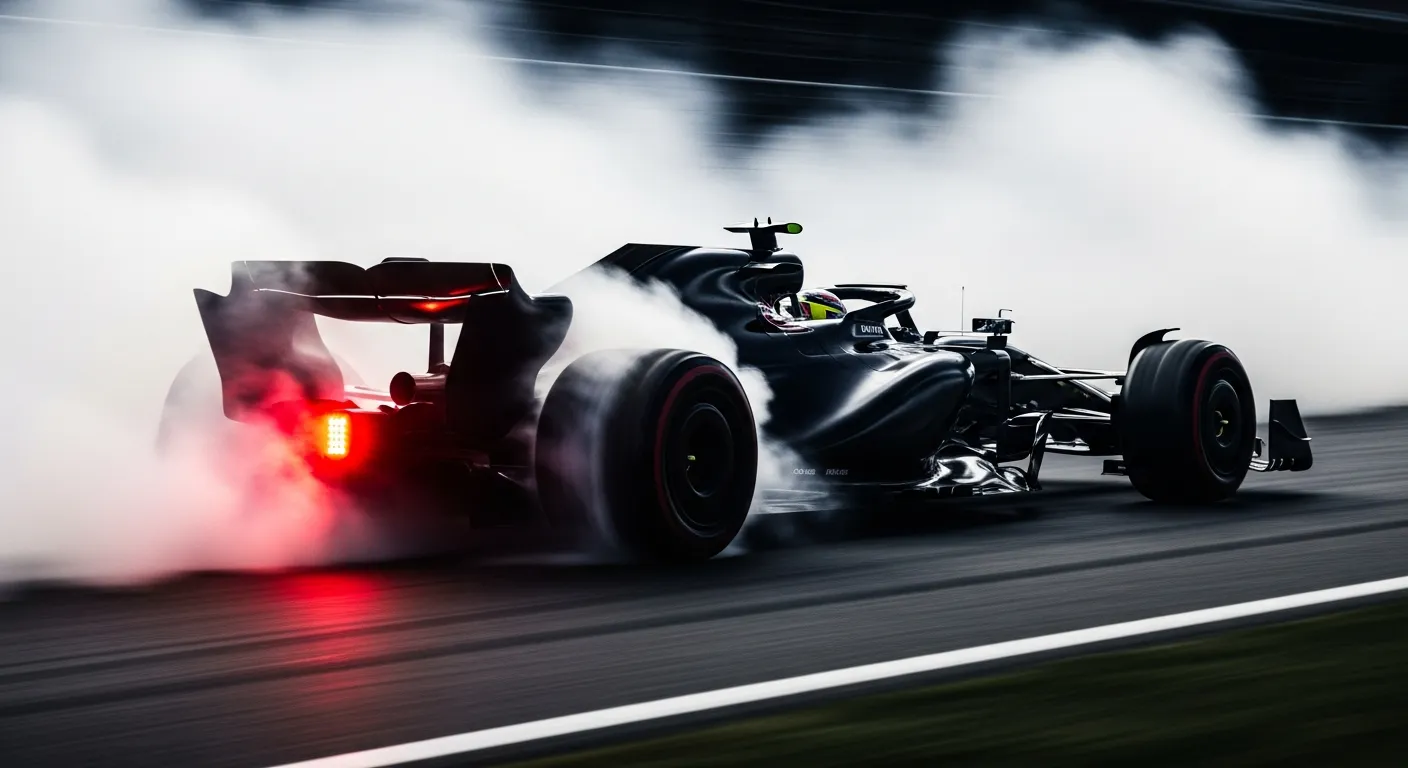
Fernando Alonso's 2016 Australian Grand Prix came to an abrupt and dramatic halt on lap 17, marked by a high-speed collision with Esteban Gutiérrez that underscored the McLaren-Honda partnership's challenging start to the season. Starting from the 11th position on the grid at the Albert Park Grand Prix Circuit, Alonso was navigating the early stages of the race, looking to gain ground for McLaren. The incident occurred as Alonso attempted to overtake Gutiérrez's Haas on the approach to Turn 3. Contact was made, sending Alonso's car into the barrier at significant speed before it barrel-rolled and came to rest upside down. The severity of the crash was a stark reminder of the inherent risks in [Formula 1 racing](https://www.formula1.com/en), though Alonso emerged from the wreckage largely unscathed, a testament to the advancements in [FIA safety standards](https://www.fia.com/events/fia-formula-one-world-championship). Before the collision, Alonso had completed 16 laps, with his fastest lap recorded on lap 14 at 1:32.553, ranking him 11th among all drivers for that metric at the time of his retirement. This early exit meant zero points for the Spanish driver, a frustrating outcome for the season opener.
The McLaren team, still grappling with the performance challenges of their Honda power unit, saw their other driver, Jenson Button, finish the race, albeit in 14th position and a lap down. This contrast highlighted the precarious nature of the McLaren package in the 2016 season. The collision, officially recorded as a "Collision" status, prevented Alonso from demonstrating the full potential of his car on the day, leaving fans to ponder what might have been. The broader context of driver performance and race data is often analyzed using comprehensive [F1 data sources](https://api.jolpi.ca/ergast/f1/2026.json). Alonso's resilience in such incidents is a recurring theme in his career, much like his determined drive at the [2022 Austrian Grand Prix](/results/2022-red-bull-ring-fernando-alonso) despite technical setbacks. The event served as a high-profile moment in the early 2016 season, drawing significant attention to both the McLaren-Honda struggles and the robustness of modern F1 chassis design, as detailed on the [official Formula 1 site](https://www.formula1.com/en). Drivers like [Carlos Sainz at the 2022 Austrian Grand Prix](/results/2022-red-bull-ring-carlos-sainz), a fellow Spaniard, often face similar pressures to perform under challenging circumstances. The incident also brings to mind other notable on-track clashes, such as those involving [Esteban Ocon at the 2022 Austrian Grand Prix](/results/2022-red-bull-ring-esteban-ocon), where racecraft and incident management are critical. The 2016 season was a period of transition for many teams, and early retirements, whether due to mechanical issues or on-track incidents, were a part of the narrative for many competitors, as documented by various [Formula One resources](https://en.wikipedia.org/wiki/Formula_One) and the [FIA's technical regulations](https://www.fia.com/events/fia-formula-one-world-championship).
Verified race record · Ergast
Grid
P11
Finish
Collision
Points
0
Laps
16
Constructor
McLaren Racing
Status
Collision
Teammate that weekend
Jenson Button
Grid P12 · Finish P14 · 0 pts