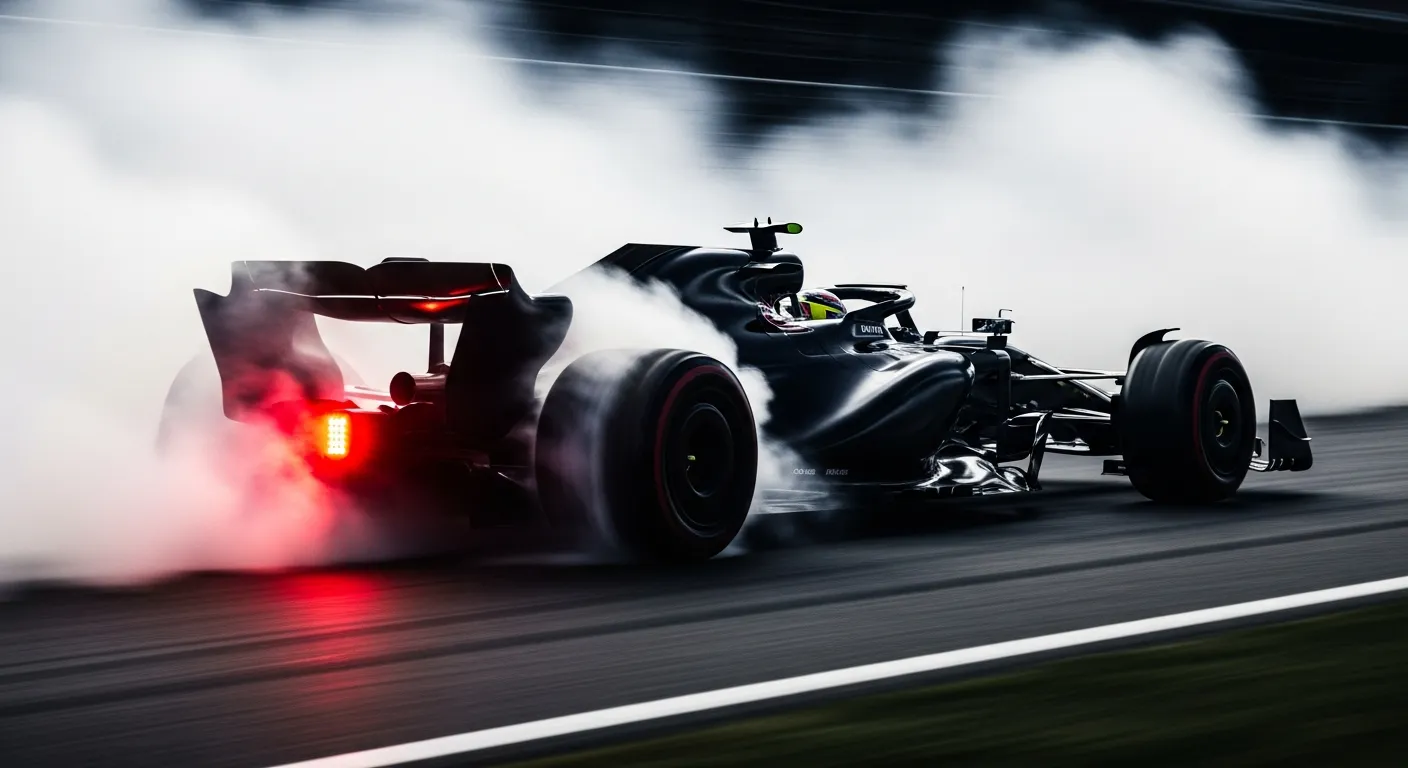
Max Verstappen's 2017 Singapore Grand Prix concluded before he could complete a single racing lap, an abrupt end to a promising weekend that saw him qualify his Red Bull RB13 in second position. The race on September 17, 2017, began under challenging wet conditions on the Marina Bay Street Circuit, setting the stage for an immediate and dramatic turn of events. As the lights went out, Verstappen, starting from P2, found himself caught in a converging squeeze between the pole-sitting Ferrari of Sebastian Vettel and the rapidly launching Ferrari of Kimi Räikkönen, who had started from P4. Räikkönen moved left, while Vettel simultaneously moved right to defend his line, creating an unavoidable contact point for Verstappen's car. The resulting chain reaction saw all three drivers sustain significant damage, forcing Verstappen, Vettel, and Räikkönen into immediate retirement with an "Accident" status, scoring 0 points for each.
This early elimination was a considerable setback, particularly given the Red Bull's strong pace in the wet, as evidenced by his teammate Daniel Ricciardo's ability to navigate the chaos and ultimately secure a second-place finish. Verstappen's inability to complete any laps meant a crucial loss of potential points from a front-row start in a race where the Red Bull package was competitive. The incident was thoroughly investigated by the stewards post-race, who ultimately deemed it a racing incident, a common classification in the high-stakes environment of a [Formula 1 — official site](https://www.formula1.com/en) start. Such chaotic opening laps, while not always leading to triple retirements, are a consistent feature of the sport, echoing the challenges faced by drivers like [Fernando Alonso at the 2018 Australian Grand Prix](/results/2018-albert-park-fernando-alonso) who also encountered early race difficulties. The incident had significant implications for the drivers and their respective championship campaigns, particularly for Sebastian Vettel, who was a key contender. While Verstappen's race ended, Lewis Hamilton, starting P5, capitalized on the chaos to win, a stark contrast to Verstappen's outcome, much like how [Lewis Hamilton at the 2018 Australian Grand Prix](/results/2018-albert-park-lewis-hamilton) navigated his own challenges. The official race data, meticulously recorded for every [FIA — F1 World Championship](https://www.fia.com/events/fia-formula-one-world-championship) event, confirms the unfortunate "Accident" status for Verstappen, a clear entry in the historical record of [Formula One](https://en.wikipedia.org/wiki/Formula_One). These verified results are part of comprehensive [F1 season data archives](https://api.jolpi.ca/ergast/f1/2026.json), providing a factual basis for understanding the sport's dramatic moments. Even a driver like [Esteban Ocon at the 2018 Australian Grand Prix](/results/2018-albert-park-esteban-ocon) can attest to the unpredictable nature of early race proceedings.
Verified race record · Ergast
Grid
P2
Finish
Collision
Points
0
Laps
0
Constructor
Red Bull Racing
Status
Collision
Teammate that weekend
Daniel Ricciardo
Grid P3 · Finish P2 · 18 pts
Championship · before vs after
Before round 14
P668 pts
After round 14
P668 pts