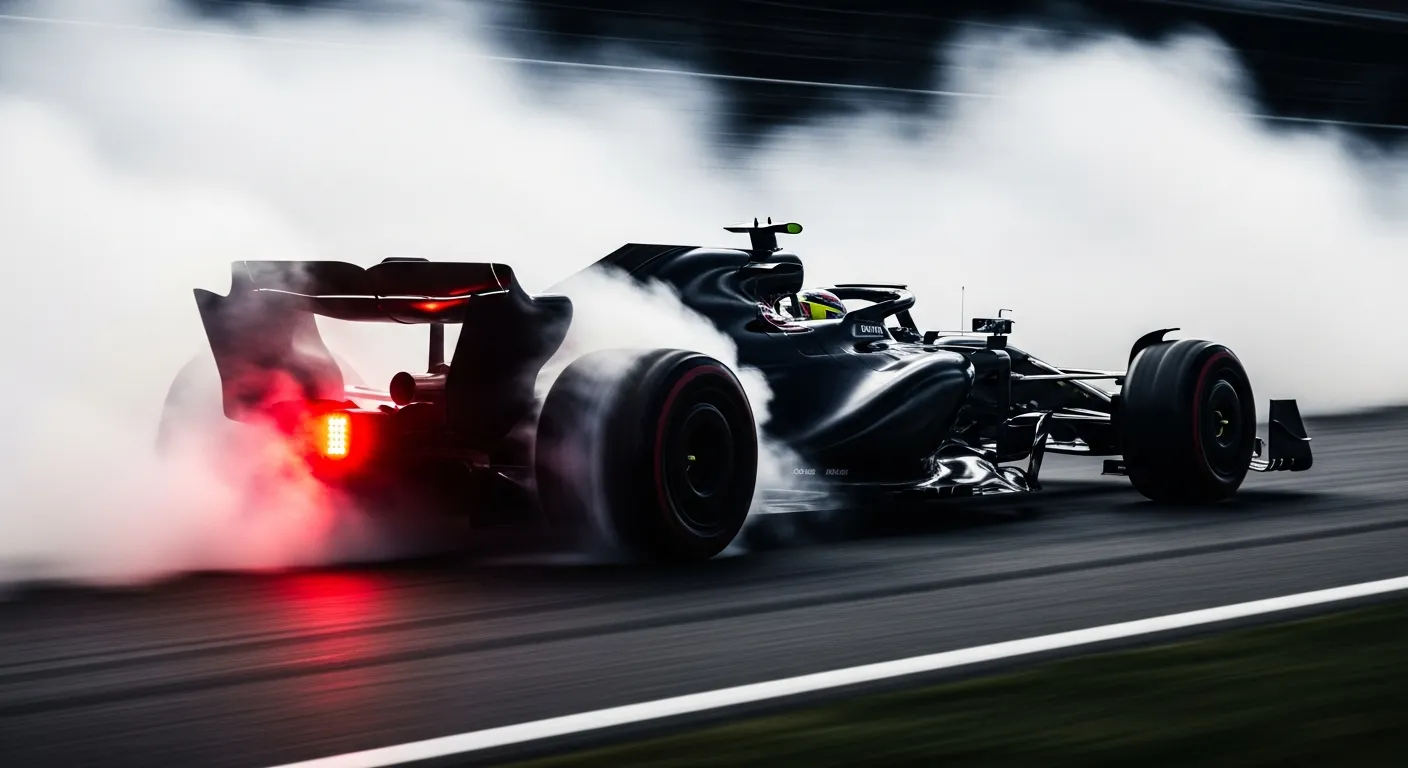
The 2019 Spanish Grand Prix at the Circuit de Barcelona-Catalunya saw Pierre Gasly deliver a measured performance for Red Bull Racing, securing 6th position. Starting from 6th on the grid, Gasly maintained this standing throughout the 66-lap race, crossing the finish line with a total time of 1:36:10.019. This result earned him 8 championship points, a steady contribution to his early season campaign. His fastest lap, a 1:20.536 recorded on lap 57, placed him sixth in the overall fastest lap rankings, indicating a consistent, if not outright challenging, pace against the front-runners. While his teammate, [Max Verstappen at the 2021 British Grand Prix](/results/2021-silverstone-max-verstappen), managed to elevate his Red Bull RB15 to a podium finish in 3rd place, Gasly's drive was characterized by a solid hold on his starting position amidst a tightly contested midfield. The race was ultimately dominated by Mercedes, with [Lewis Hamilton at the 2021 British Grand Prix](/results/2021-silverstone-lewis-hamilton) securing a commanding victory.
Gasly's 6th place finish meant he trailed both Scuderia Ferrari drivers, Sebastian Vettel (4th) and [Charles Leclerc at the 2021 British Grand Prix](/results/2021-silverstone-charles-leclerc) (5th), underscoring the competitive hierarchy at the time. The Circuit de Barcelona-Catalunya, known for its mix of high-speed corners and technical sections, serves as a crucial benchmark for car performance, often highlighted in technical analyses available on the [Formula 1 official site](https://www.formula1.com/en). Navigating its demanding layout for 66 laps without incident, as Gasly did, requires both precise driving and effective car management, a testament to the rigorous standards of the [FIA F1 World Championship](https://www.fia.com/events/fia-formula-one-world-championship). For a deeper dive into the intricacies of Formula 1 car design and aerodynamics, resources like [Wikipedia's Formula One overview](https://en.wikipedia.org/wiki/Formula_One) offer extensive detail. The consistent collection and analysis of race data, including sector times and tire degradation, are vital for team strategy, with comprehensive datasets often found on [motorsport data platforms](https://api.jolpi.ca/ergast/f1/2026.json). This race was a key moment in Gasly's adaptation to the Red Bull environment, a period that saw him striving to unlock the full potential of the car. Further insights into Red Bull Racing's operational strategies and historical performance can be explored through their [official team website](https://www.redbullracing.com/). The detailed race results and statistics for this event are part of the extensive [F1 historical archives](https://www.formula1.com/en/results.html).
Verified race record · Ergast
Grid
P6
Finish
P6
Points
8
Laps
66
Constructor
Red Bull Racing
Status
Finished
Teammate that weekend
Max Verstappen
Grid P4 · Finish P3 · 15 pts
Championship · before vs after
Before round 5
P713 pts
After round 5
P621 pts