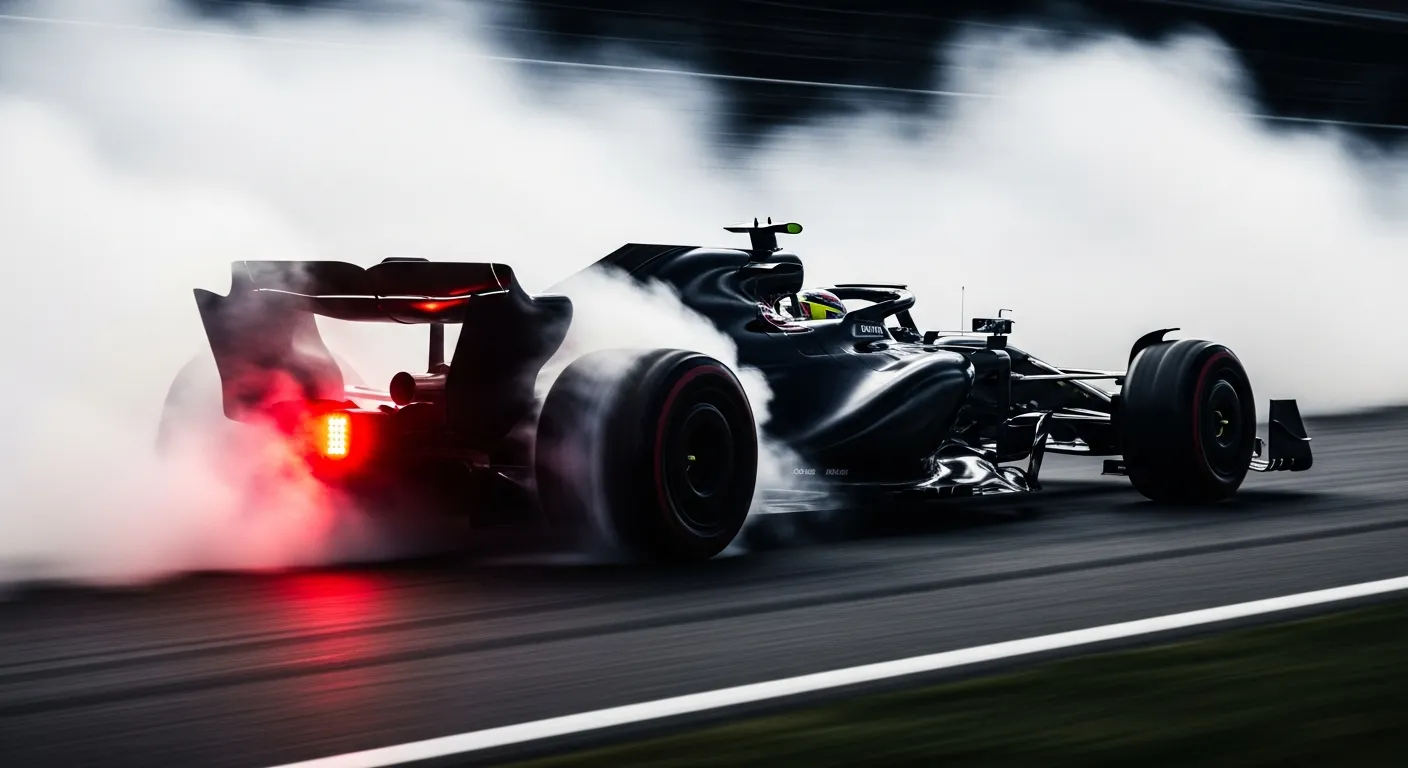
Carlos Sainz's performance at the 2023 Spanish Grand Prix on June 4 presented a nuanced picture for Scuderia Ferrari, as the Spanish driver, starting from second on the grid, concluded the race in fifth position. The Circuit de Barcelona-Catalunya, a venue familiar to Sainz, witnessed a challenging race where the pace of the Red Bull and Mercedes entries proved formidable. Sainz completed all 66 laps with a total race time of 1:28:43.638, contributing 10 points to his championship tally.
The initial promise of a front-row start, a strong qualifying effort for Ferrari, did not translate into a podium finish. Max Verstappen, starting from pole, maintained a dominant lead throughout the race, ultimately winning with a time of 1:27:57.940. Sainz found himself battling a resurgent Mercedes, with Lewis Hamilton securing second and George Russell climbing from twelfth to third. Sergio Pérez also advanced significantly from eleventh on the grid to finish fourth, demonstrating the Red Bull's formidable race pace. Sainz's fastest lap of 1:18.403 on lap 60 placed him eleventh overall in the fastest lap rankings, indicating a struggle to match the ultimate pace of the front-runners. For a broader perspective on driver performances in similar conditions, one might review results such as [Max Verstappen at the 2025 Chinese Grand Prix](/results/2025-shanghai-max-verstappen) or [Lewis Hamilton at the 2025 Chinese Grand Prix](/results/2025-shanghai-lewis-hamilton). The race highlighted the competitive landscape of the 2023 season, where teams like Mercedes demonstrated significant mid-season development, a trend often tracked through the [Formula 1 — official site](https://www.formula1.com/en).
In contrast to Sainz's top-five finish, his teammate Charles Leclerc faced a more challenging weekend, starting from the pit lane after issues in qualifying and ultimately finishing in eleventh place without scoring points. Leclerc's fastest lap was a 1:18.357 on lap 52, slightly quicker than Sainz's, but his starting position proved too significant a hurdle to overcome for a points finish. This disparity in results within the same team can often be a focus for analysis, as seen in discussions around [Charles Leclerc at the 2025 Chinese Grand Prix](/results/2025-shanghai-charles-leclerc). The Spanish Grand Prix is a staple of the [FIA — F1 World Championship](https://www.fia.com/events/fia-formula-one-world-championship) calendar, known for its technical demands on car setup and tire management. The detailed race data, including lap times and positions, is meticulously recorded and available through platforms like [Jolpica/Ergast — 2026 season data](https://api.jolpi.ca/ergast/f1/2026.json), which offers a comprehensive look at historical F1 results. Understanding the nuances of a Grand Prix weekend requires a deep dive into various data points, a principle central to [Wikipedia: Formula One](https://en.wikipedia.org/wiki/Formula_One)'s extensive coverage. The Circuit de Barcelona-Catalunya itself, with its specific track characteristics, frequently influences race strategies and car performance, a topic explored on its dedicated [Wikipedia page for the circuit](https://en.wikipedia.org/wiki/Circuit_de_Barcelona-Catalunya). The full race results and driver statistics for the 2023 season are also available on the official [Formula 1 website for race results](https://www.formula1.com/en/results.html/2023/races/1144/spain/race-result.html).
Verified race record · Ergast
Grid
P2
Finish
P5
Points
10
Laps
66
Constructor
Scuderia Ferrari
Status
Finished
Teammate that weekend
Charles Leclerc
Grid P0 · Finish P11 · 0 pts
Championship · before vs after
Before round 7
P648 pts
After round 7
P658 pts