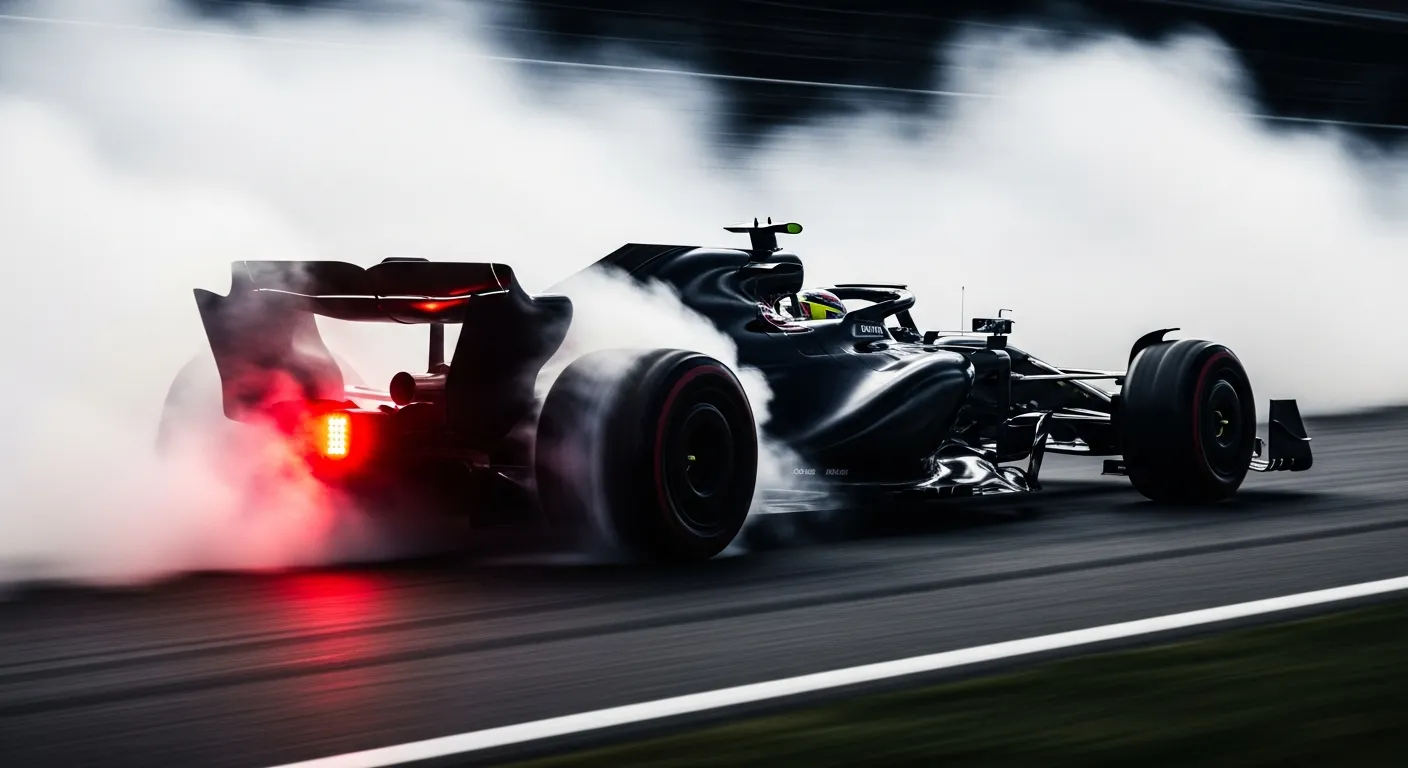
Max Verstappen's campaign at the 2023 Spanish Grand Prix on June 4th was a masterclass in controlled dominance, culminating in a first-place finish from pole position at the Circuit de Barcelona-Catalunya. From the moment the lights went out, Verstappen asserted his authority, maintaining his lead and dictating the pace of the 66-lap race. His Red Bull Racing RB19 demonstrated exceptional balance and speed, allowing him to manage tire degradation effectively across multiple stints.
The Dutchman's race craft was evident as he consistently pulled away from the chasing pack, building a significant advantage. By lap 61, with the race firmly in hand, Verstappen pushed for and secured the fastest lap of the race, a 1:16.330, adding an extra point to his tally and bringing his total for the weekend to 26 points. This strategic move underscored his relentless pursuit of every available advantage, a hallmark of top-tier [Formula 1 — official site](https://www.formula1.com/en) drivers. The final race time of 1:27:57.940 reflected a virtually unchallenged run to the checkered flag.
His teammate, Sergio Pérez, starting from 11th on the grid, navigated the field to finish in 4th position, contributing 12 points to Red Bull Racing's constructor championship efforts. This collective performance highlighted the formidable package the Austrian team had developed for the 2023 season. The Spanish Grand Prix result further cemented Verstappen's position at the apex of the [FIA — F1 World Championship](https://www.fia.com/events/fia-formula-one-world-championship) standings, extending his lead significantly. For a broader understanding of F1's history and regulations, one might consult [Wikipedia: Formula One](https://en.wikipedia.org/wiki/Formula_One).
Reflecting on past performances at this circuit, the Spanish Grand Prix often serves as a barometer for car development, given its blend of high-speed corners and technical sections. While Verstappen's victory here was comprehensive, it's a stark contrast to the more challenging races some drivers faced in earlier seasons. For instance, [Max Verstappen at the 2016 Azerbaijan Grand Prix](/results/2016-baku-max-verstappen) presented a different set of obstacles, demonstrating the varied nature of F1 circuits. Similarly, the strategic nuances observed in Barcelona differ from those seen at Monza, where drivers like [Carlos Sainz at the 2016 Italian Grand Prix](/results/2016-monza-carlos-sainz) had to contend with different track characteristics. The data from past seasons, available through resources like [Jolpica/Ergast — 2026 season data](https://api.jolpi.ca/ergast/f1/2026.json), provides a rich context for such comparisons. The continuous evolution of [Formula 1 technology](https://www.formula1.com/en/latest/technical.html) is a core aspect of modern motorsport.
This level of control is a rare sight, even among champions, and it speaks volumes about the current state of competition. Drivers like [Fernando Alonso at the 2016 Azerbaijan Grand Prix](/results/2016-baku-fernando-alonso) have also demonstrated exceptional race management in their careers, albeit under different circumstances. The consistent execution from Red Bull Racing allowed Verstappen to convert his strong qualifying performance into a dominant race win, reinforcing his championship aspirations. For a deeper dive into historical race results and statistics, external [F1 data archives](https://api.jolpi.ca/ergast/f1/seasons.json) can be invaluable. This race was a clear statement of intent for the remainder of the 2023 season.
Verified race record · Ergast
Grid
P1
Finish
P1
Points
26
Laps
66
Constructor
Red Bull Racing
Status
Finished
Teammate that weekend
Sergio Pérez
Grid P11 · Finish P4 · 12 pts
Championship · before vs after
Before round 7
P1144 pts
After round 7
P1170 pts