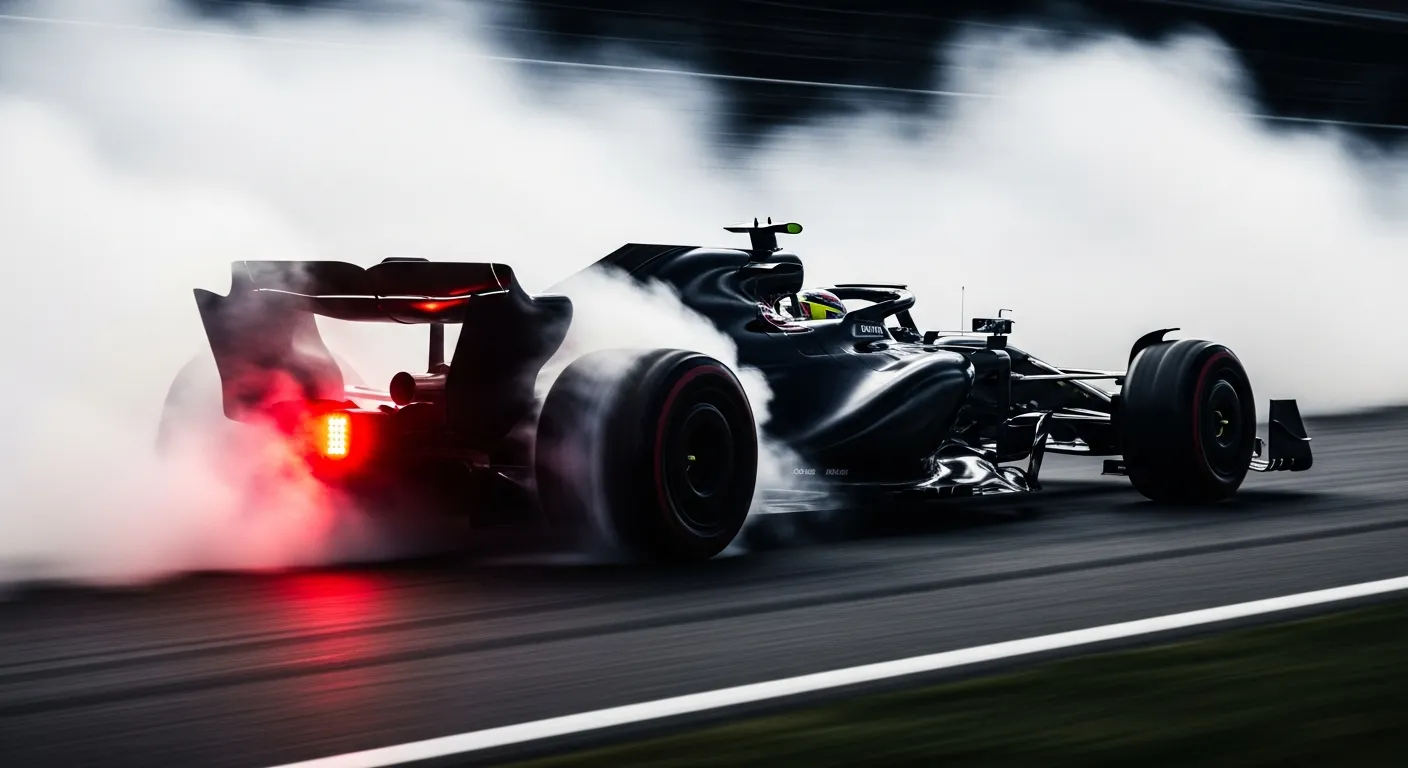
Oscar Piastri's performance at the 2023 Spanish Grand Prix on June 4, 2023, underscored the ongoing developmental phase for McLaren Racing at the Circuit de Barcelona-Catalunya, with the Australian rookie unable to convert a promising qualifying into a points finish. Starting from ninth on the grid, a position that hinted at potential, Piastri ultimately crossed the line in 13th, completing 65 laps, one lap down from the race winner. This outcome, while not yielding championship points, provided further data for the British constructor as they navigated the complexities of the early 2023 season. The race was dominated by Max Verstappen, who secured victory for Red Bull Racing, highlighting the performance delta across the field, a situation not dissimilar to Verstappen's commanding win at the [2021 Emilia Romagna Grand Prix](/results/2021-imola-max-verstappen).
The race presented a challenging strategic landscape, with tyre management and track position proving critical on a circuit known for its demanding corners and high-speed sections. Piastri's fastest lap of 1:18.679, recorded on lap 41, placed him 13th in the overall fastest lap rankings for the event, a full 2.349 seconds slower than Verstappen's best. This differential illustrates the pace deficit McLaren faced, particularly in race trim. His teammate, [Lando Norris](/results/2021-imola-lando-norris), who started significantly higher in third position after a strong qualifying, also faced difficulties, finishing 17th, one lap down. This collective result for McLaren indicated a broader struggle with the MCL60's race pace and degradation characteristics on the Spanish circuit. Such challenges are a common aspect of Formula 1, as teams continually adapt to evolving technical regulations set by the [FIA — F1 World Championship](https://www.fia.com/events/fia-formula-one-world-championship). The team's analysis of data from races like this is crucial for future development, as seen in the continuous evolution of car designs throughout the [Formula 1 — official site](https://www.formula1.com/en) seasons. Understanding the nuances of car performance at specific tracks, such as the Circuit de Barcelona-Catalunya, is a constant engineering endeavor, a topic frequently explored in detailed analyses of [Wikipedia: Formula One](https://en.wikipedia.org/wiki/Formula_One) history and technical advancements. The raw data from such events, including detailed lap times and sector performance, is meticulously cataloged, providing a rich source for historical analysis and future planning, as demonstrated by comprehensive archives like the [Jolpica/Ergast — 2026 season data](https://api.jolpi.ca/ergast/f1/2026.json). McLaren's focus post-Barcelona would undoubtedly be on understanding why their qualifying pace did not translate into stronger race performance, a recurring theme for many teams in the competitive F1 landscape. The demanding nature of the Circuit de Barcelona-Catalunya often exposes car weaknesses, and for Piastri, this event served as another opportunity to gather experience and refine his approach in his debut season. The performance gap to the frontrunners, exemplified by the Mercedes duo finishing second and third, underscored the competitive environment, a scenario that drivers like [Charles Leclerc](/results/2021-imola-charles-leclerc) have also navigated throughout their careers. For more detailed insights into specific race weekends and driver performances, the [official F1 archives](https://www.formula1.com/en/results.html) offer a comprehensive resource, while a broader understanding of circuit design and its impact on racing can be found on [Wikipedia's page for race tracks](https://en.wikipedia.org/wiki/List_of_Formula_One_circuits).
Verified race record · Ergast
Grid
P9
Finish
P13
Points
0
Laps
65
Constructor
McLaren Racing
Status
+1 Lap
Teammate that weekend
Lando Norris
Grid P3 · Finish P17 · 0 pts
Championship · before vs after
Before round 7
P135 pts
After round 7
P135 pts