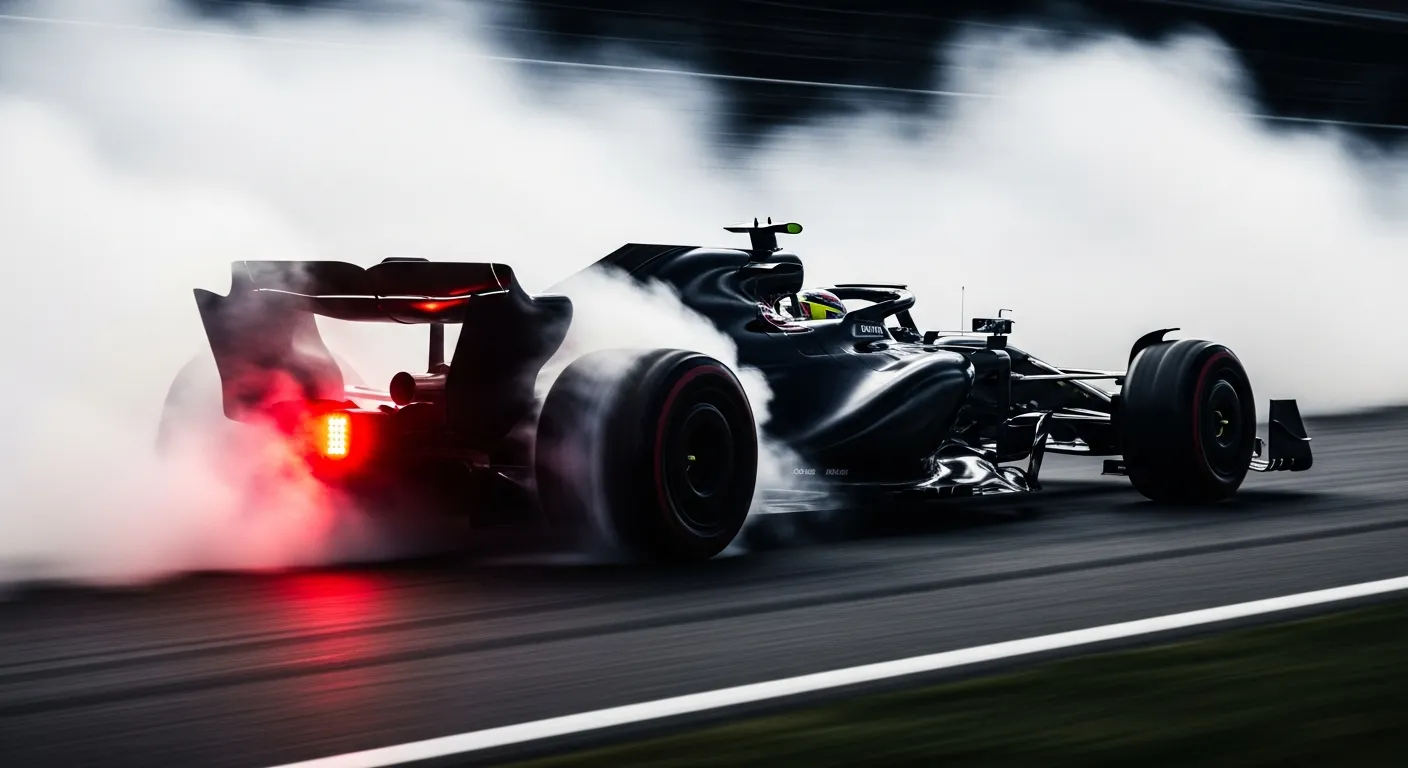
Max Verstappen's campaign at the 2024 Australian Grand Prix in Melbourne was unexpectedly brief, ending after just three laps due to a critical brake failure. Starting from pole position, the Dutch driver initially maintained his lead, a familiar sight for fans of Red Bull Racing. However, early in the race, a right-rear brake issue began to manifest, evident through visible smoke and a reported "Brakes" status, ultimately forcing Verstappen to return to the pit lane and retire from the event. This incident marked a rare mechanical DNF for Verstappen, his first since the 2022 Australian Grand Prix, also held at the [Melbourne Grand Prix Circuit](https://www.formula1.com/en/racing/2024/Australia/Circuit.html). The premature exit meant Verstappen completed only three laps, with his fastest lap recorded on lap 3 at "1:23.115", ranking 19th overall for the race. This sudden end to his weekend meant zero points were added to his championship tally, a significant departure from his dominant performances in the preceding rounds.
The retirement denied Verstappen and Red Bull Racing any points contribution from their lead car in the third round of the [FIA Formula One World Championship](https://www.fia.com/events/fia-formula-one-world-championship). While his teammate, Sergio Pérez, managed to navigate his Red Bull to a fifth-place finish, securing 10 points, the overall constructor's haul was notably impacted. The unexpected outcome at Albert Park opened the door for Carlos Sainz Jr. to claim victory, underscoring the unpredictable nature of [Formula 1](https://en.wikipedia.org/wiki/Formula_One) despite perceived dominance. Such early retirements, particularly from a pole position, are infrequent for a driver of Verstappen's caliber and highlight the inherent reliability challenges even the most meticulously engineered cars face. This race serves as a stark reminder that even with advanced engineering and strategic preparation, unforeseen technical issues can derail a weekend, a scenario also experienced by [Lewis Hamilton at the 2019 Spanish Grand Prix](/results/2019-barcelona-lewis-hamilton) who faced a DNF due to a power unit issue in this very race. The comprehensive [Formula 1 — official site](https://www.formula1.com/en) provides further details on the race weekend and its implications. Understanding these outcomes requires deep dives into [F1 race data](https://api.jolpi.ca/ergast/f1/2026.json), which helps analysts track trends and performance metrics across seasons. For comparison, other drivers like [George Russell at the 2019 Spanish Grand Prix](/results/2019-barcelona-george-russell) also experienced race-ending incidents, albeit under different circumstances, reinforcing the high stakes of every lap. Even drivers like [Fernando Alonso at the 2019 Spanish Grand Prix](/results/2019-barcelona-fernando-alonso), known for their resilience, have faced the vagaries of mechanical issues in their careers. The meticulous data collection for each [F1 Grand Prix](https://www.formula1.com/en/racing/2024.html) helps teams and fans alike understand the intricate details of every race, informing future strategies and car development.
Verified race record · Ergast
Grid
P1
Finish
Brakes
Points
0
Laps
3
Constructor
Red Bull Racing
Status
Brakes
Teammate that weekend
Sergio Pérez
Grid P6 · Finish P5 · 10 pts
Championship · before vs after
Before round 3
P151 pts
After round 3
P151 pts