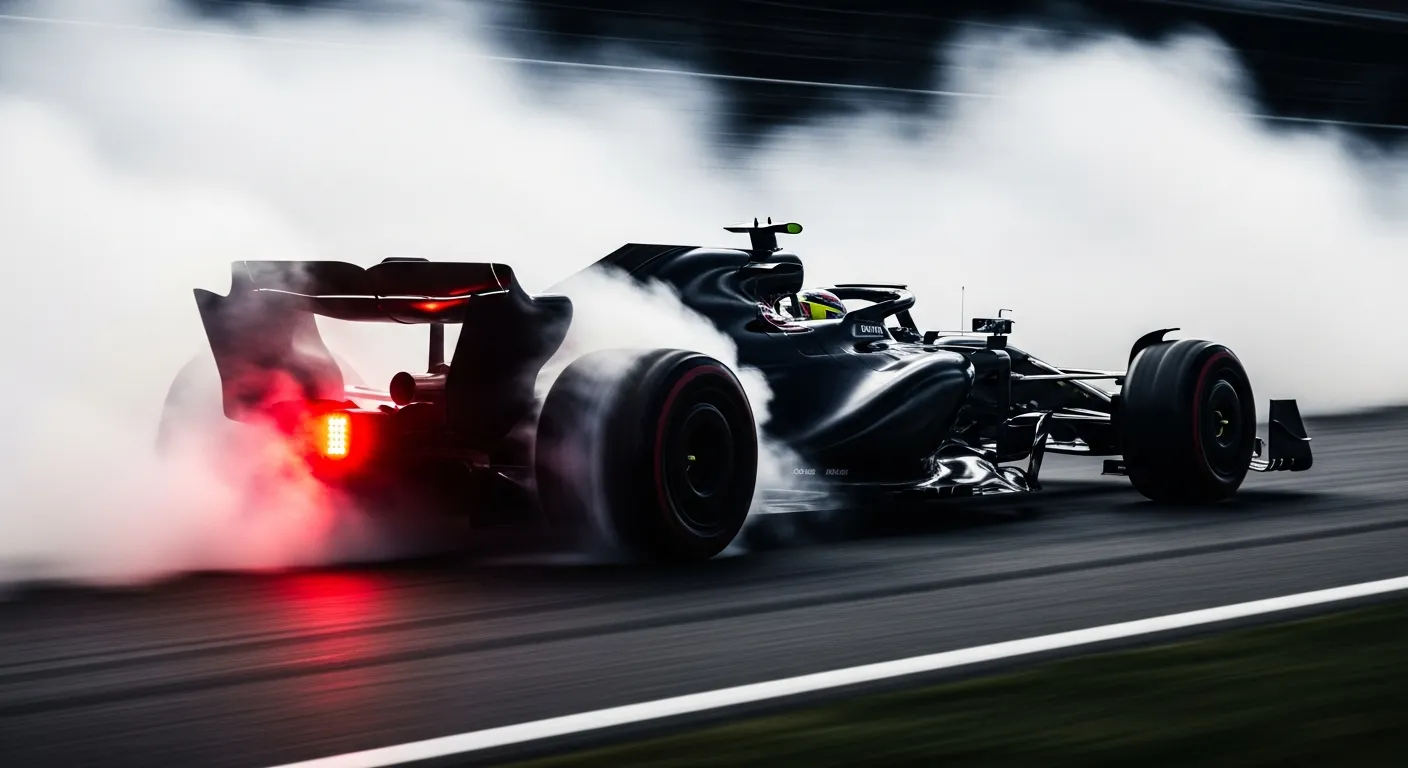
Lance Stroll's outing at the 2024 Spanish Grand Prix on June 23rd saw him maintain his grid position, finishing 14th after starting 14th for Aston Martin. This consistent, albeit non-points-scoring, result at the Circuit de Barcelona-Catalunya reflected a challenging weekend for the British constructor, where outright pace proved elusive against a competitive midfield. Stroll completed 65 laps, one lap down from the race winner, Max Verstappen, who secured 25 points. His fastest lap, a 1:19.318 on lap 50, placed him 15th overall in the field's fastest lap rankings, indicating a mid-pack performance even on individual lap pace. For context, his teammate Fernando Alonso, starting from 10th, finished 12th, also a lap down, and recorded a significantly quicker fastest lap of 1:18.334 on the same lap 50, ranking 8th. This disparity in lap times within the same team suggests varying car performance or setup choices throughout the race stint, a common challenge in the intricate world of [Formula 1](https://www.formula1.com/en).
The Spanish Grand Prix, often considered a true test of a car's aerodynamic efficiency and balance due to its mix of high-speed corners and technical sections, highlighted the areas where Aston Martin needs to improve. While Stroll avoided incidents and brought the car home, the inability to challenge for points from a P14 start indicates a fundamental performance gap that the team is working to close. The race itself saw Stroll navigating the intense midfield battles that characterize the current F1 season, a scenario familiar to drivers like [Yuki Tsunoda at the 2024 Canadian Grand Prix](/results/2024-montreal-yuki-tsunoda) and [Nico Hülkenberg at the 2024 Canadian Grand Prix](/results/2024-montreal-nico-hulkenberg), who often find themselves in similar positions. The Aston Martin AMR24, despite recent upgrades, struggled to find the consistent pace needed to climb through the order on a circuit where track position is paramount. The strategic decisions made by the pit wall, influenced by real-time data and tire degradation, are critical for optimizing race outcomes, as outlined in detailed analyses of [FIA regulations](https://www.fia.com/events/fia-formula-one-world-championship). Understanding the intricacies of car performance and setup is crucial, as detailed in various [Formula 1 technical analyses](https://www.formula1.com/en/latest/technical.html) available on the official site. The data from races like this contributes to the comprehensive [FIA Formula One World Championship](https://www.fia.com/events/fia-formula-one-world-championship) records, providing a granular view of each driver's season. The official [Wikipedia: Formula One](https://en.wikipedia.org/wiki/Formula_One) page offers a broad historical context for the sport's evolution and competitive dynamics. As teams look ahead, the pursuit of performance gains is relentless, with future season data, such as that found on [Jolpica/Ergast — 2026 season data](https://api.jolpi.ca/ergast/f1/2026.json), already being compiled. The dominant performance of drivers like [Max Verstappen at the 2024 Austrian Grand Prix](/results/2024-red-bull-ring-max-verstappen) serves as a constant reminder of the benchmark for consistent front-running pace that all teams aspire to reach.
Verified race record · Ergast
Grid
P14
Finish
P14
Points
0
Laps
65
Constructor
Aston Martin
Status
+1 Lap
Teammate that weekend
Fernando Alonso
Grid P10 · Finish P12 · 0 pts
Championship · before vs after
Before round 10
P1117 pts
After round 10
P1117 pts