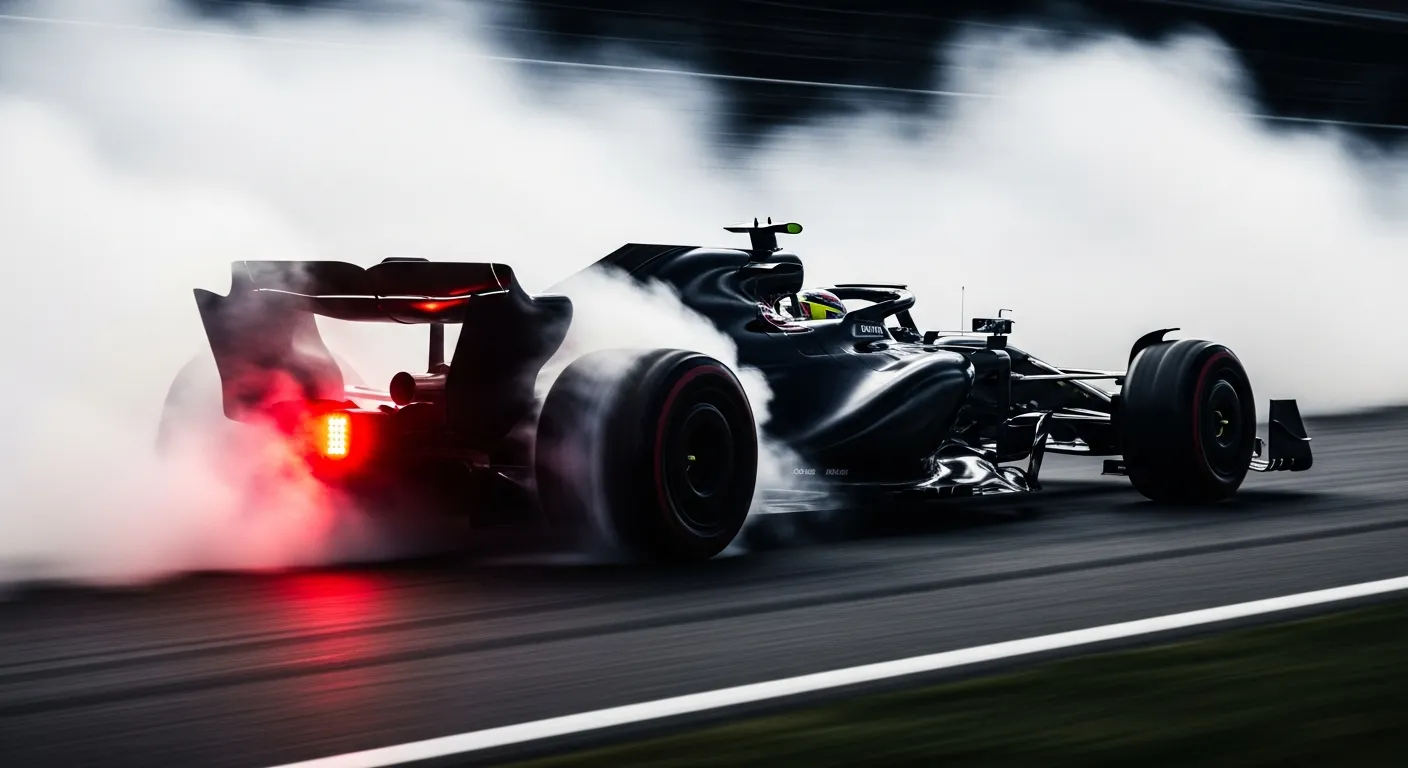
Alexander Albon's 2024 Emilia Romagna Grand Prix was a challenging affair for Williams, culminating in a withdrawal after 51 laps due to a technical issue that had plagued his FW46. Starting from 14th on the grid at the historic Autodromo Internazionale Enzo e Dino Ferrari, Albon aimed to navigate the demanding circuit and capitalize on any opportunities for points, a critical objective for Williams Grand Prix Engineering in the competitive 2024 season. The early phases of the race saw Albon maintain his position, battling in the tight midfield where small gains can significantly impact a team's championship standing, as seen in various races across the [FIA — F1 World Championship](https://www.fia.com/events/fia-formula-one-world-championship) calendar.
Despite the eventual retirement, Albon demonstrated moments of pace, recording his fastest lap of 1:21.274 on lap 48, which ranked 15th overall among all drivers. This performance indicated that even as the car developed issues, there was underlying potential. The decision to withdraw on lap 51, marked simply as "Withdrew" in the official results, meant Albon registered no official finishing position and, consequently, no points. This outcome contrasted with his teammate, Logan Sargeant, who completed 62 laps and finished 17th, one lap down, after starting 19th. The challenges faced by Williams at Imola underscore the continuous development battle in Formula 1, a dynamic often highlighted when reviewing race data from previous seasons, such as the detailed [Jolpica/Ergast — 2026 season data](https://api.jolpi.ca/ergast/f1/2026.json) which provides comprehensive historical race results. For Albon, this race marked another instance where the team's machinery presented significant hurdles, a recurring theme that has occasionally impacted his race outcomes, reminiscent of the strategic challenges faced by drivers like [Alexander Albon at the 2020 Hungarian Grand Prix](/results/2020-hungaroring-alex-albon) where race management was paramount. The nuances of race strategy and car reliability are constant factors in the sport, influencing outcomes from the front of the grid to the midfield battles, a fundamental aspect of [Wikipedia: Formula One](https://en.wikipedia.org/wiki/Formula_One).
The Emilia Romagna Grand Prix, a pivotal event in the European leg of the season, often tests the limits of both car and driver. For Williams, the weekend at Imola was a stark reminder of the development curve they are navigating. While the team continues to push for performance upgrades, the reliability aspect remains a critical area for focus. The broader narrative of the 2024 season for Williams, and indeed for many teams, involves a relentless pursuit of marginal gains, a concept central to modern [Formula 1 — official site](https://www.formula1.com/en) racing. Drivers like [Carlos Sainz at the 2020 Hungarian Grand Prix](/results/2020-hungaroring-carlos-sainz) have demonstrated how consistent performance, even in challenging machinery, can yield results, a benchmark for midfield aspirations. The early withdrawal meant Albon was unable to fully explore the potential of the car in race conditions, leaving the team to analyze the data from his 51 laps to inform future development. This detailed data analysis is crucial for all teams, as evidenced by the comprehensive records maintained by the [FIA — F1 World Championship](https://www.fia.com/events/fia-formula-one-world-championship) and other data providers. The incident at Imola represents a setback in the team's efforts to climb the constructors' standings, reinforcing the importance of reliability alongside outright pace. The pursuit of a competitive package is an ongoing saga in F1, where every race, even those ending in retirement, offers valuable lessons for the future, as explored in various analyses of [Formula 1 — official site](https://www.formula1.com/en) events.
Verified race record · Ergast
Grid
P14
Finish
Withdrew
Points
0
Laps
51
Constructor
Williams Grand Prix Engineering
Status
Withdrew
Teammate that weekend
Logan Sargeant
Grid P19 · Finish P17 · 0 pts
Championship · before vs after
Before round 7
P170 pts
After round 7
P170 pts