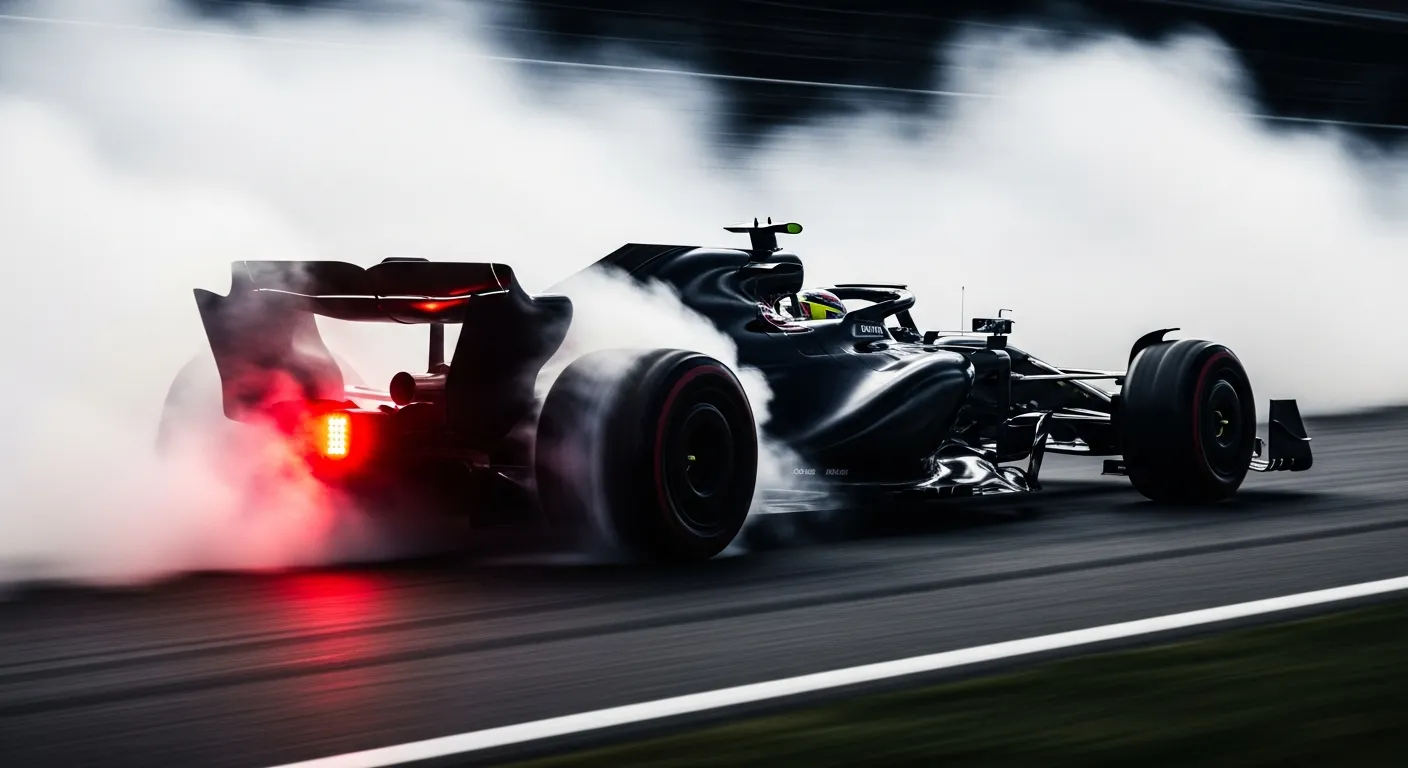
Max Verstappen's performance at the 2024 Qatar Grand Prix on December 1, 2024, underscored his season-long command, as he navigated the Lusail International Circuit to convert a second-place grid start into a decisive victory. From the moment the lights went out, Verstappen demonstrated the precision and raw pace characteristic of his Red Bull Racing machinery, completing all 57 laps in a total race time of 1:31:05.323. This outcome saw him collect 25 points, further solidifying his championship standing. The race itself was not without incident for the wider field, with early collisions impacting drivers like Esteban Ocon and Franco Colapinto, and later retirements for his teammate Sergio Pérez due to a clutch issue after 38 laps, and Nico Hülkenberg after a spin on lap 39. Such events often reshape race dynamics, yet Verstappen maintained his focus, managing his strategy and tire degradation effectively on a circuit known for its demanding conditions. The official [Formula 1 — official site](https://www.formula1.com/en) race report highlighted the strategic nuances at play, emphasizing the consistent execution required to win from the front.
While Verstappen controlled the front, the battle behind him provided its own narrative, with Charles Leclerc and Oscar Piastri completing the podium. Verstappen's fastest lap, a 1:22.905 on lap 55, ranked him second overall, with Lando Norris ultimately claiming the bonus point for the fastest lap of the race with a 1:22.384 on lap 56. This consistent pace, even late in the race, illustrates the operational efficiency of Red Bull Racing and Verstappen's ability to extract performance when needed. The comprehensive nature of his victory at Lusail draws parallels to other dominant drives in recent F1 history, such as [Lewis Hamilton at the 2014 Abu Dhabi Grand Prix](/results/2014-yas-marina-lewis-hamilton), where a strong performance sealed a championship. The ability to manage a race from the front, even when starting from second, is a hallmark of top-tier drivers, a trait also observed in performances like [Fernando Alonso at the 2014 São Paulo Grand Prix](/results/2014-interlagos-fernando-alonso), albeit in different circumstances. Even drivers starting further back, like [Nico Hülkenberg at the 2014 Mexico City Grand Prix](/results/2014-mexico-city-nico-hulkenberg), often demonstrate the racecraft necessary to navigate complex conditions. Understanding the intricacies of such race weekends requires delving into historical [Wikipedia: Formula One](https://en.wikipedia.org/wiki/Formula_One) records and detailed [Jolpica/Ergast — 2026 season data](https://api.jolpi.ca/ergast/f1/2026.json) to analyze trends and driver consistency. This Qatar result further cemented Verstappen's position at the pinnacle of the sport, adding another win to his 2024 campaign.
Verified race record · Ergast
Grid
P2
Finish
P1
Points
25
Laps
57
Constructor
Red Bull Racing
Status
Finished
Teammate that weekend
Sergio Pérez
Grid P9 · Clutch · 0 pts
Championship · before vs after
Before round 23
P1403 pts
After round 23
P1429 pts