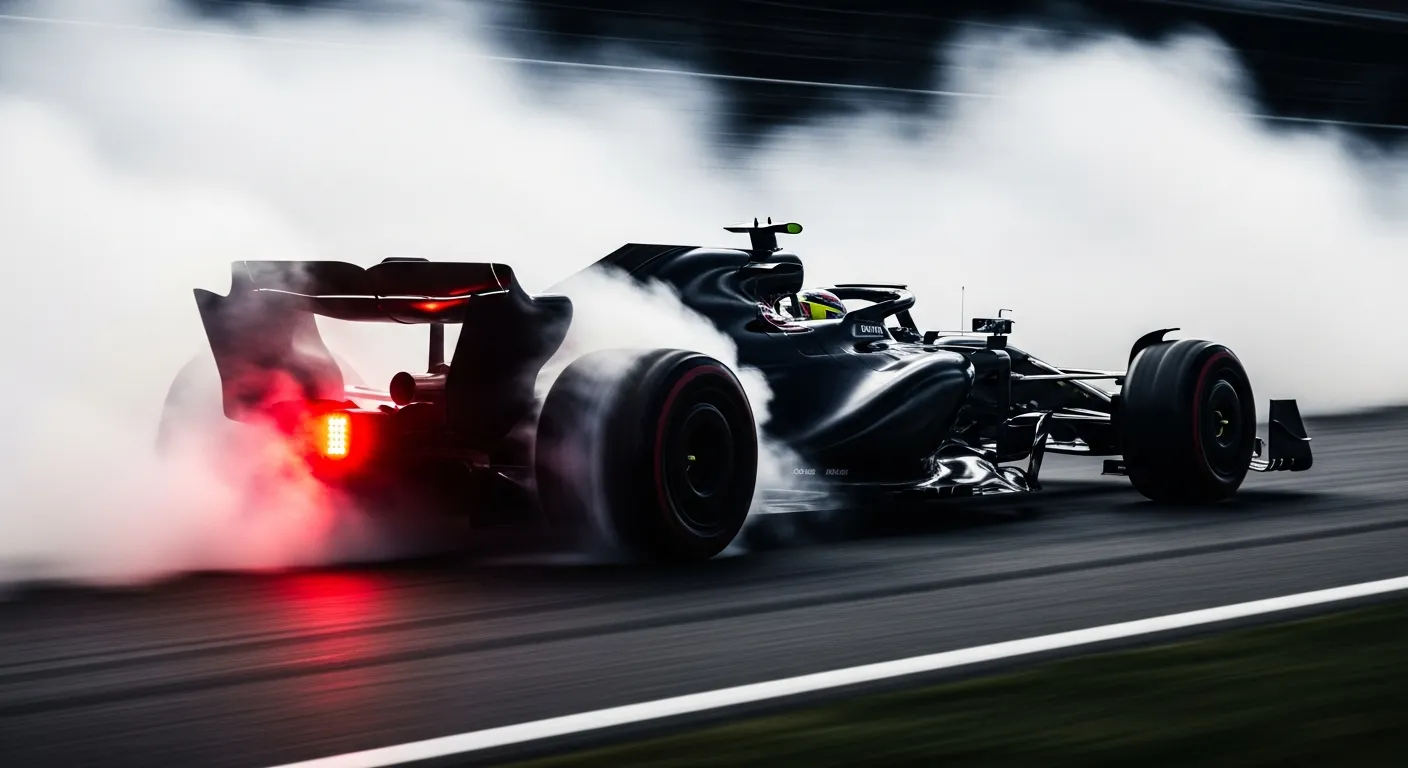
The 2024 Canadian Grand Prix proved to be a stark contrast to recent form for Charles Leclerc, culminating in a DNF after just 40 laps due to a critical engine failure.
Starting from grid position 11, the Monégasque driver faced an uphill battle from the outset at the Circuit Gilles Villeneuve. Early in the race, it became apparent that the Scuderia Ferrari SF-24 was not performing to its expected potential, with Leclerc reporting power unit issues. Despite efforts to manage the situation and a strategic pit stop attempting a reset, the underlying technical problem persisted. His fastest lap, a 1:26.012 on lap 39, was significantly off the pace of the frontrunners, underscoring the performance deficit he was battling. This mechanical setback meant Leclerc would not see the checkered flag, a disappointing outcome for a driver who had shown strong form in previous rounds. Such technical failures are a stark reminder of the intricate engineering challenges in Formula 1, where even a minor component can dictate a race's conclusion, as seen in other challenging races like [Fernando Alonso's engine-related DNF at the 2017 British Grand Prix](/results/2017-silverstone-fernando-alonso). Detailed race reports and analysis can be found on the official [Formula 1 website](https://www.formula1.com/en), offering insights into such events.
The retirement, officially recorded as an "Engine" status, meant Leclerc scored no points from the Montreal event. This marked a rare double non-finish for Scuderia Ferrari, as his teammate Carlos Sainz Jr. also retired after 52 laps due to "Collision damage," further compounding the team's difficult weekend. The unpredictable nature of the Circuit Gilles Villeneuve, often influenced by variable weather and demanding track characteristics, can amplify such technical vulnerabilities. Comprehensive race data, like that available from [Jolpica/Ergast F1 data archives](https://api.jolpi.ca/ergast/f1/2026.json), often highlights these performance anomalies for the [Formula 1 season](https://www.formula1.com/en). The FIA's stringent technical regulations, overseen by the [FIA — F1 World Championship](https://www.fia.com/events/fia-formula-one-world-championship), ensure that all teams adhere to strict performance and safety standards, making a mechanical failure like this a significant concern. Reflecting on the broader context of the season, even top drivers like [Max Verstappen at the 2017 British Grand Prix](/results/2017-silverstone-max-verstappen) have faced unexpected challenges, though often with different outcomes. The complexities of modern F1 power units are well-documented on [Wikipedia: Formula One](https://en.wikipedia.org/wiki/Formula_One), illustrating the fine margins teams operate within. The official [FIA F1 World Championship](https://www.fia.com/events/fia-formula-one-world-championship) portal also provides information on technical directives.
Verified race record · Ergast
Grid
P11
Finish
Engine
Points
0
Laps
40
Constructor
Scuderia Ferrari
Status
Engine
Teammate that weekend
Carlos Sainz Jr.
Grid P12 · Collision damage · 0 pts
Championship · before vs after
Before round 9
P2138 pts
After round 9
P2138 pts