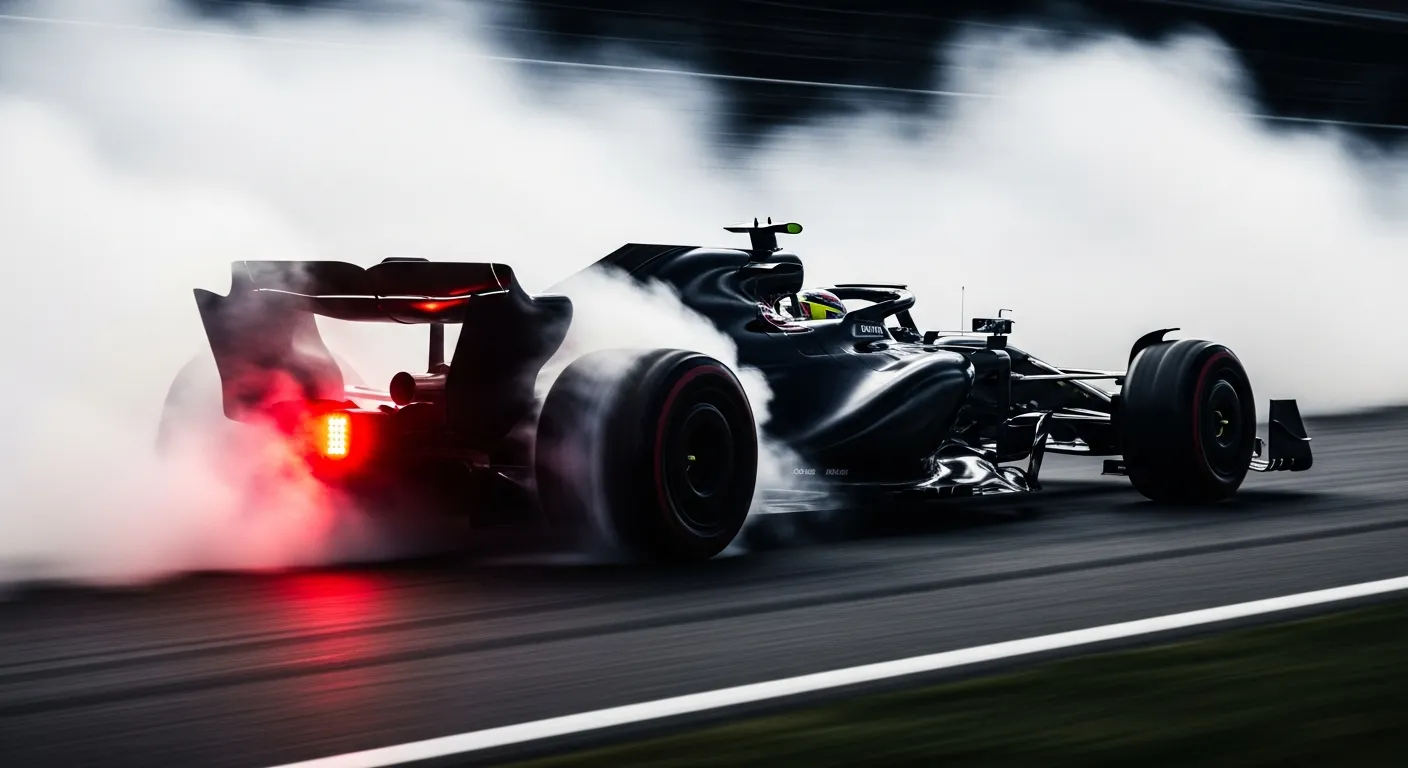
Pierre Gasly's outing at the 2025 United States Grand Prix was a challenging affair for the Alpine F1 Team, culminating in a 19th-place finish, a position five places lower than his 14th-place grid start at the Circuit of the Americas. From the outset, the French driver found himself battling in the lower midfield, unable to make significant inroads on a track known for its demanding sector one and high-speed esses. The Alpine A525, while showing flashes of potential in other rounds, struggled to find a consistent rhythm against stronger competitors, leaving Gasly to manage the car through 55 laps, ultimately crossing the line one lap down from race winner Max Verstappen. This result marked a clear struggle for Alpine to extract competitive pace, a narrative that has unfortunately become familiar for the team in certain phases of the 2025 season, a point often discussed within the broader context of [Formula 1 — official site](https://www.formula1.com/en) analysis.
His fastest lap, a 1:39.270 recorded on lap 30, placed him 19th overall among the field's best efforts, further illustrating the performance deficit faced by the team that weekend. This contrasted sharply with the pace demonstrated by front-runners, including [Charles Leclerc at the 2024 Las Vegas Grand Prix](/results/2024-las-vegas-charles-leclerc), who showed strong form in a different context. The race narrative for Gasly became one of damage limitation rather than point-scoring contention. His teammate, Franco Colapinto, also finished one lap down, in 17th position, underscoring the team's overall performance at this round. Understanding the intricate details of F1 race results requires a deep dive into [season data from sources like Jolpica/Ergast](https://api.jolpi.ca/ergast/f1/2026.json), which provides comprehensive historical records for analysis. The strategic decisions made by teams are often influenced by the [official Formula 1 regulations](https://www.formula1.com/en), which govern everything from car design to race day operations and can significantly impact weekend outcomes. The unique characteristics of the [Circuit of the Americas](https://en.wikipedia.org/wiki/Circuit_of_the_Americas) track, with its elevation changes and diverse corner profiles, often create varied performance outcomes across the grid, demanding a finely balanced car setup. Drivers like [Lando Norris at the 2024 Las Vegas Grand Prix](/results/2024-las-vegas-lando-norris) have leveraged strong qualifying to convert into solid race performances, a stark contrast to Gasly's weekend where the car's inherent pace limited his progression. The broader context of the [FIA Formula One World Championship](https://www.fia.com/events/fia-formula-one-world-championship) highlights the intense competition, where even marginal gains can dramatically alter a driver's fortunes throughout a season. Despite the outcome, Gasly completed the race, unlike Carlos Sainz Jr. who retired due to "Collision damage" after only 5 laps, a stark reminder of the sport's inherent risks and unpredictability. The Alpine team will undoubtedly analyze the telemetry and race data to understand the performance gaps and prepare for future rounds, as every detail matters in the pursuit of championship points, a relentless pursuit exemplified by consistent efforts of drivers like [George Russell at the 2024 Las Vegas Grand Prix](/results/2024-las-vegas-george-russell). For more general information on the sport's history and evolution, [Wikipedia: Formula One](https://en.wikipedia.org/wiki/Formula_One) offers extensive details. This particular Grand Prix offered little in the way of positive momentum for Gasly, adding to a season that has seen its share of ups and downs for the French driver and his constructor.
Verified race record · Ergast
Grid
P14
Finish
P19
Points
0
Laps
55
Constructor
Alpine F1 Team
Status
+1 Lap
Teammate that weekend
Franco Colapinto
Grid P15 · Finish P17 · 0 pts
Championship · before vs after
Before round 19
P1620 pts
After round 19
P1720 pts