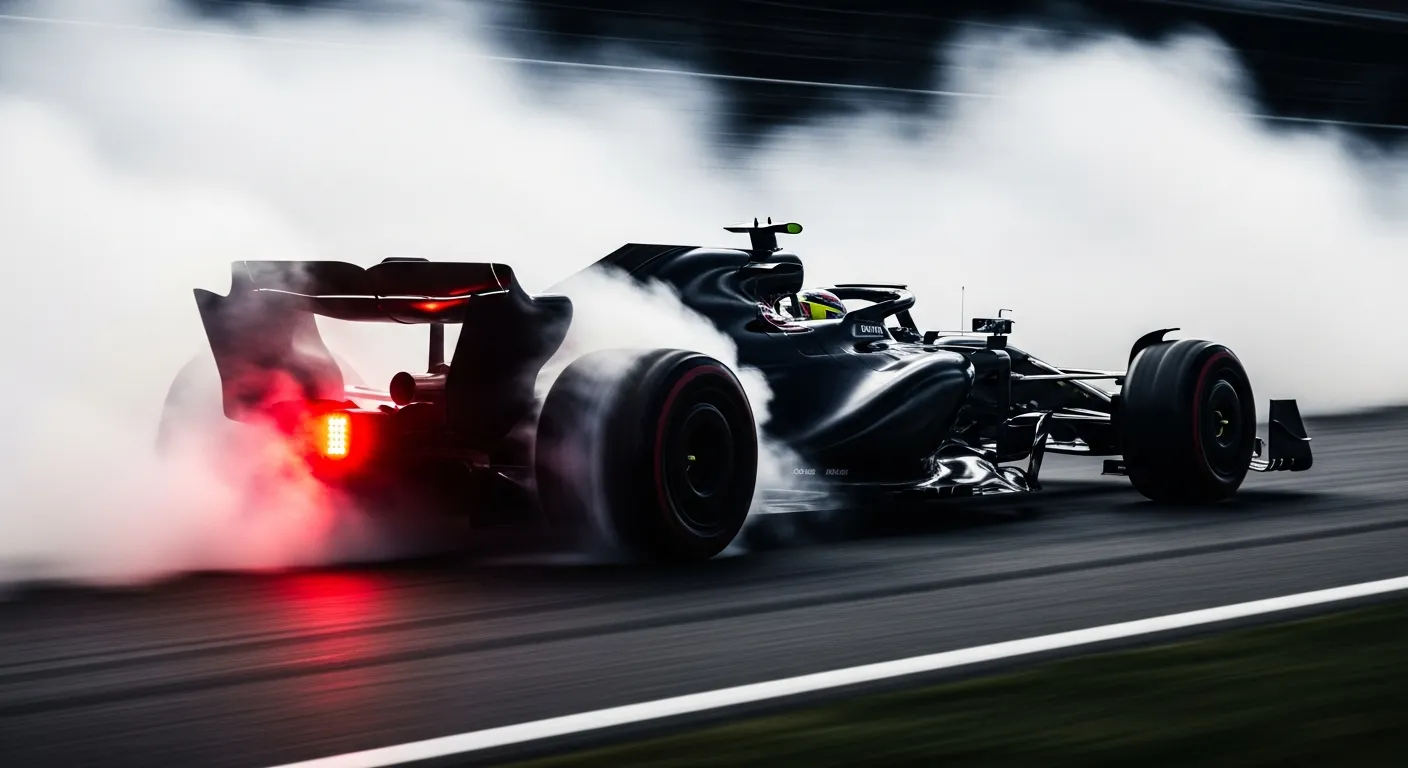
Charles Leclerc's performance at the 2025 Qatar Grand Prix saw him navigate the demanding Lusail International Circuit to an 8th-place finish, a measured drive that added four points to his championship tally for Scuderia Ferrari. Starting from 10th on the grid, Leclerc demonstrated a consistent race pace over the entirety of the 57 laps, successfully improving two positions by the checkered flag. His final race time, recorded at "1:25:35.026", underscored a controlled and disciplined effort in a race ultimately won by Max Verstappen. This result, while not a podium, represented a solid points haul for the Monégasque driver and his iconic Italian team, especially considering the intense competition throughout the field at this late stage of the season. The ability to climb two spots from his qualifying position highlights effective strategy and execution from the Ferrari pit wall and Leclerc himself.
The Scuderia Ferrari effort saw both cars complete the full race distance without incident, a crucial factor in securing championship points. Leclerc's teammate, [Lewis Hamilton at the 2015 United States Grand Prix](/results/2015-cota-lewis-hamilton), also finished the race, securing 12th position after starting further back in 17th. This dual finish ensured that Ferrari maximized their return from a challenging weekend. Leclerc's fastest lap of "1:24.432" was set on lap 56, positioning him 13th overall in the fastest lap rankings for the event. This late-race burst of pace suggests that the car maintained its performance window into the final stages, a critical aspect for endurance and tire degradation on the abrasive Lusail asphalt. The Lusail International Circuit, known for its high-speed sections and demanding corners, often presents a significant challenge for tire management and aerodynamic efficiency, factors that Scuderia Ferrari's engineers would undoubtedly scrutinize in their post-race analysis. For a broader understanding of how such circuits influence car design and race strategy, the [Formula 1 — official site](https://www.formula1.com/en) provides extensive technical insights and circuit guides.
Leclerc's drive was characterized by a series of mid-pack battles, navigating a closely contested field. While he wasn't contending directly with the front-runners like [Max Verstappen at the 2015 Mexico City Grand Prix](/results/2015-mexico-city-max-verstappen) for the win, his consistent progression from a mid-grid start into the points-paying positions is a testament to his race craft and ability to manage the race flow. Other seasoned drivers, such as [Fernando Alonso at the 2015 United States Grand Prix](/results/2015-cota-fernando-alonso), also fought hard for valuable points in what proved to be a physically demanding and strategically intricate race under the Qatari lights. The comprehensive data from events like the Qatar Grand Prix is meticulously recorded and analyzed by teams and fans alike, providing a rich source of information on performance trends and driver comparisons, as demonstrated by platforms like [Jolpica/Ergast — 2026 season data](https://api.jolpi.ca/ergast/f1/2026.json). Understanding the intricate world of Formula 1, from driver performance metrics to the ever-evolving technical regulations, often requires delving into comprehensive resources such as [Wikipedia: Formula One](https://en.wikipedia.org/wiki/Formula_One), which chronicles the sport's history and technical evolution. Leclerc's consistent performance, even when not at the sharp end, remains a crucial element for Scuderia Ferrari's championship aspirations, providing a steady stream of points as the season progresses.
Verified race record · Ergast
Grid
P10
Finish
P8
Points
4
Laps
57
Constructor
Scuderia Ferrari
Status
Finished
Teammate that weekend
Lewis Hamilton
Grid P17 · Finish P12 · 0 pts
Championship · before vs after
Before round 23
P5226 pts
After round 23
P5230 pts