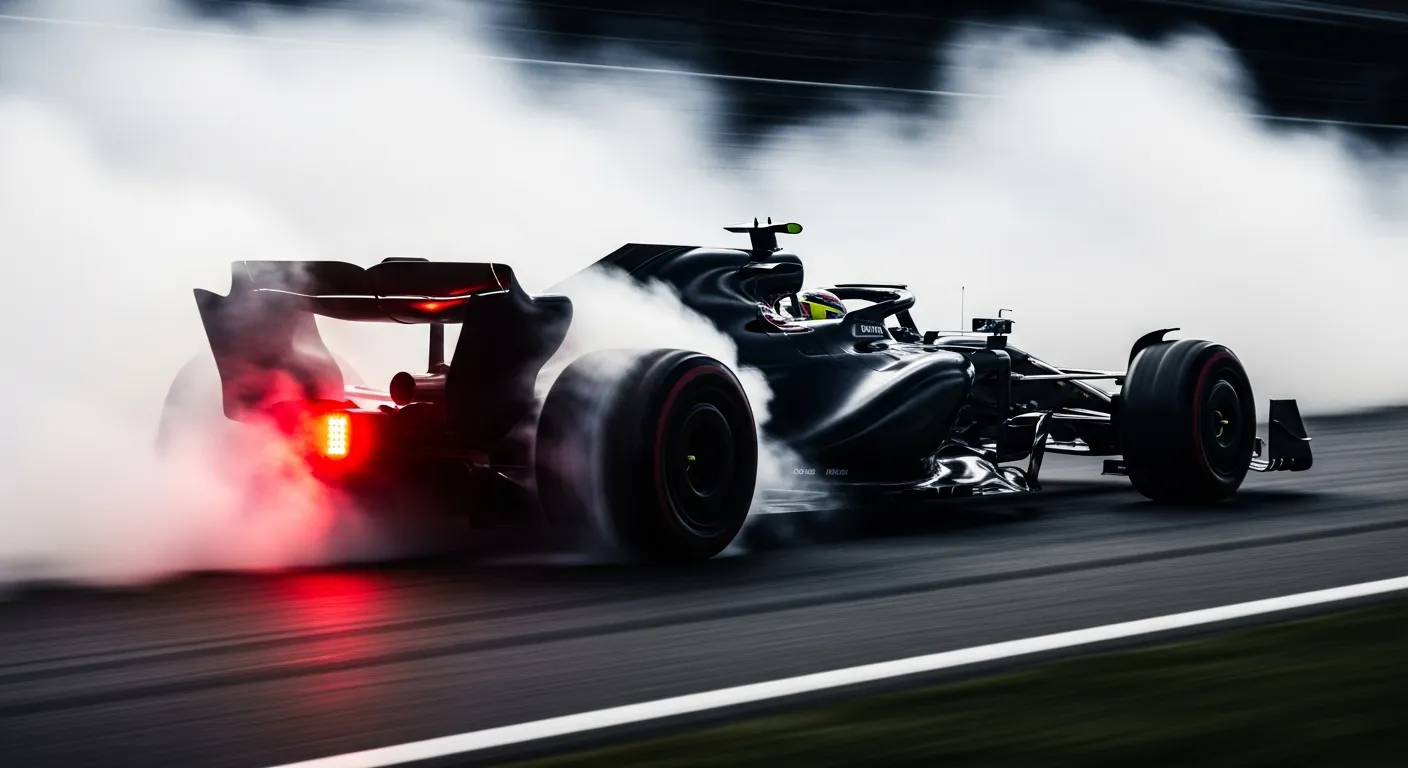
Oliver Bearman's outing at the 2025 Qatar Grand Prix, the twenty-third round of the season, concluded prematurely for the Haas F1 Team driver, marking a challenging end to his weekend at the Lusail International Circuit. Starting from 13th on the grid, Bearman had been navigating the demanding desert track, aiming to convert his qualifying performance into a points-scoring finish. However, his race was cut short on lap 41, attributed to a "Pit stop issue," preventing him from seeing the chequered flag. This incident meant no points were added to his season tally, a frustrating outcome for the British driver and his American team. The nature of a pit stop issue, often a critical element in race strategy, underscores the precision required at every stage of a [Formula 1 — official site](https://www.formula1.com/en) event. Such an operational misstep can unravel an entire race, regardless of a driver's on-track performance, highlighting the collective effort demanded in Grand Prix racing and the fine margins that separate success from retirement. The Lusail circuit, known for its high-speed corners and abrasive surface, adds another layer of complexity, demanding flawless execution from both driver and crew.
Despite the retirement, Bearman demonstrated flashes of pace during his 41 laps, recording his fastest lap of "1:24.930" on lap 34, which ranked 15th overall among all drivers who set a time. This performance metric, even in a truncated race, provides some insight into the VF-25's potential and Bearman's ability to extract performance from the machinery under race conditions. His teammate, [Esteban Ocon at the 2025 Dutch Grand Prix](/results/2025-zandvoort-esteban-ocon), managed to complete 56 laps, finishing 15th, albeit one lap down, showing the varying fortunes within the same garage and the inherent unpredictability of a Grand Prix. The 2025 season has seen intense competition across the grid, with emerging talents like [Andrea Kimi Antonelli at the 2025 Dutch Grand Prix](/results/2025-zandvoort-kimi-antonelli) also navigating the pressures of a demanding calendar, where every point is crucial for championship standings. Understanding the intricacies of race data is crucial for analysts and teams alike, with resources like [Jolpica/Ergast — 2026 season data](https://api.jolpi.ca/ergast/f1/2026.json) providing comprehensive historical results and future season insights. The [FIA — F1 World Championship](https://www.fia.com/events/fia-formula-one-world-championship) regulations emphasize the importance of safe and efficient pit stops, making such an issue particularly impactful on a driver's result and the team's overall performance. The broader context of [Wikipedia: Formula One](https://en.wikipedia.org/wiki/Formula_One) history shows that mechanical failures and operational errors are an inherent part of the sport, even for seasoned teams. For a deeper dive into current F1 events and driver performances, the [official Formula 1 website](https://www.formula1.com/en) remains a primary resource. Drivers like [Fernando Alonso at the 2025 Dutch Grand Prix](/results/2025-zandvoort-fernando-alonso) have experienced similar frustrations throughout their careers, highlighting the unpredictable nature of grand prix racing and the critical role of the pit crew in a successful race weekend under the strictures of the [FIA's F1 World Championship](https://www.fia.com/events/fia-formula-one-world-championship). The incident serves as a reminder that even a well-executed strategy can be undermined by a single operational fault, a common theme across the sport.
Verified race record · Ergast
Grid
P13
Finish
Pit stop issue
Points
0
Laps
41
Constructor
Haas F1 Team
Status
Pit stop issue
Teammate that weekend
Esteban Ocon
Grid P16 · Finish P15 · 0 pts
Championship · before vs after
Before round 23
P1241 pts
After round 23
P1341 pts