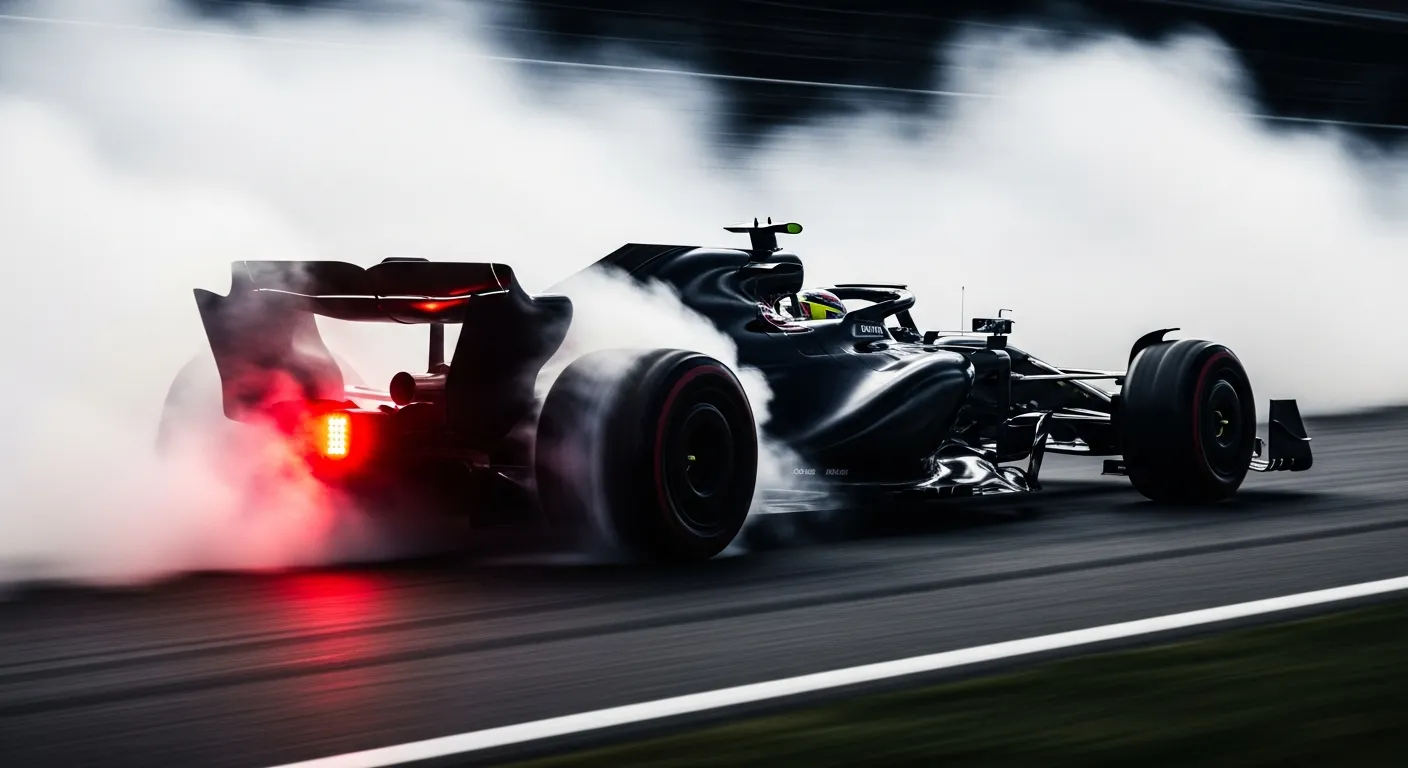
Isack Hadjar's campaign at the 2025 Singapore Grand Prix saw the Racing Bulls driver unable to capitalize on a promising qualifying performance, ultimately finishing outside the points in 11th position. Starting from 8th on the grid at the demanding Marina Bay Street Circuit, Hadjar demonstrated initial pace, navigating the tight confines of the urban track. However, maintaining track position and managing tyre degradation over the full 62-lap race distance proved challenging. His race concluded with 61 laps completed, one lap down from the race winner, a status indicative of the competitive midfield battle and the pace differential to the leading teams. The French driver's fastest lap of "1:36.938" on lap 55, placing him 18th in the speed rankings for the event, underscored the Racing Bulls' struggle to extract ultimate single-lap pace when it mattered most. This outcome resonates with scenarios where drivers, despite strong qualifying efforts, find themselves battling for position without the ultimate race pace, a challenge also observed with [Alexander Albon at the 2020 Dutch Grand Prix](/results/2020-zandvoort-alex-albon) on a different demanding circuit.
The strategic dynamics inherent to street circuits, often influenced by factors such as safety car periods and the precise application of [FIA — F1 World Championship](https://www.fia.com/events/fia-formula-one-world-championship) sporting regulations, were a constant consideration. Hadjar's teammate, Liam Lawson, finished in 15th position, also a lap down, which collectively suggests the Racing Bulls encountered a performance ceiling at the Marina Bay venue during this round. While the team secured no points in Singapore, the comprehensive data gathered from such events is fundamental for ongoing car development and strategic planning, information meticulously tracked and analyzed by resources like [Jolpica/Ergast — 2026 season data](https://api.jolpi.ca/ergast/f1/2026.json). Understanding the multifaceted nature of Formula 1 racing, from the technical intricacies of car setup to the strategic calls made during a race, is crucial for appreciating these results, a broader context often explored in encyclopaedic resources such as [Wikipedia: Formula One](https://en.wikipedia.org/wiki/Formula_One). This particular race, though not yielding championship points, provided the Racing Bulls team with critical insights into their package's performance under the unique conditions of Singapore. The tight margins in the midfield mean that even a marginal strategic miscalculation or a slightly slower pit stop can translate into losing crucial track positions, a reality [Carlos Sainz at the 2020 Dutch Grand Prix](/results/2020-zandvoort-carlos-sainz) also experienced in a competitive field, much like [Esteban Ocon at the 2020 Dutch Grand Prix](/results/2020-zandvoort-esteban-ocon) who similarly fought for every inch of tarmac.
Verified race record · Ergast
Grid
P8
Finish
P11
Points
0
Laps
61
Constructor
Racing Bulls
Status
+1 Lap
Teammate that weekend
Liam Lawson
Grid P12 · Finish P15 · 0 pts
Championship · before vs after
Before round 18
P939 pts
After round 18
P939 pts