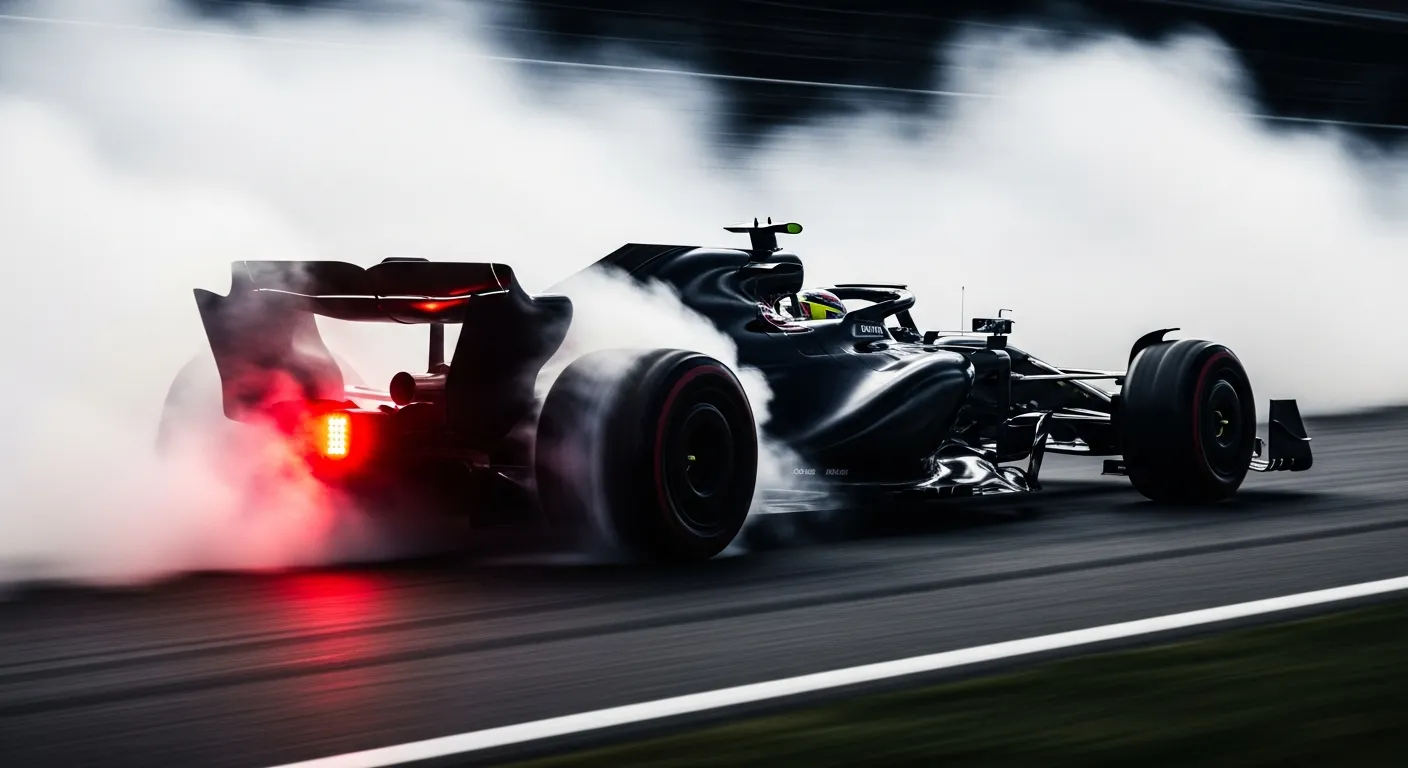
Jack Doohan's outing at the 2025 Japanese Grand Prix on April 6, 2025, saw the Australian driver for Alpine navigate a challenging race at the iconic Suzuka Circuit, ultimately improving his starting position but finishing outside the points. Starting from P19 on the grid, Doohan completed all 53 laps of the race, crossing the finish line in P15 with a total race time of "1:23:28.297". This performance placed him two positions behind his teammate, Pierre Gasly, who started P11 and finished P13, recording a time of "1:23:09.105". The Alpine A525 package, while demonstrating reliability by completing the full race distance, appeared to lack the outright pace needed to consistently challenge for points in this round, a common theme for teams striving for midfield gains as observed in various analyses on the [Formula 1 — official site](https://www.formula1.com/en). The team's strategy, as is standard practice in the [FIA — F1 World Championship](https://www.fia.com/events/fia-formula-one-world-championship), would have been meticulously planned to maximize their potential from a lower grid slot.
Doohan's fastest lap, a "1:32.685" on lap 47, ranked 20th overall among the field, underscoring the inherent pace limitations he faced against the broader grid. For context, the race's fastest lap, a "1:30.965" set by Kimi Antonelli on lap 50, highlights the significant delta to the front-runners. This performance gap is a consistent challenge for many drivers in the midfield, often requiring a strategic approach to race management, much like [Alexander Albon at the 2022 Dutch Grand Prix](/results/2022-zandvoort-alex-albon) demonstrated. Doohan's ability to gain four positions from his P19 grid slot to finish P15 reflects a disciplined drive, effectively managing tire degradation and race strategy on Suzuka's demanding layout, known for its high-speed corners and technical sections. The importance of such strategic execution is a fundamental aspect of the [FIA's regulatory framework for F1](https://www.fia.com/events/fia-formula-one-world-championship), influencing outcomes across the grid. Drivers like [Carlos Sainz at the 2022 Dutch Grand Prix](/results/2022-zandvoort-carlos-sainz) have also navigated complex races from various starting positions, showcasing the variability of race day. The granular data available through platforms like [Jolpica/Ergast — 2026 season data](https://api.jolpi.ca/ergast/f1/2026.json) consistently illustrates the tight margins that define these midfield battles. Despite not scoring points, finishing ahead of drivers such as Nico Hülkenberg and Liam Lawson, who started P16 and P13 respectively, indicates progress through the field during the 53 laps. The strategic elements of a Grand Prix, extensively covered in resources like [Wikipedia: Formula One](https://en.wikipedia.org/wiki/Formula_One) entries, frequently dictate these midfield shifts. The Alpine team will undoubtedly analyze the telemetry from both Doohan and Gasly to identify areas for improvement, aiming to close the performance gap to their rivals in subsequent rounds. This mirrors the ongoing development cycles seen with teams and drivers, including instances like [Yuki Tsunoda at the 2022 Dutch Grand Prix](/results/2022-zandvoort-yuki-tsunoda) striving for optimal car performance on his home circuit. Further insights into driver performance can be found on the [official F1 driver profiles](https://www.formula1.com/en/drivers.html).
Verified race record · Ergast
Grid
P19
Finish
P15
Points
0
Laps
53
Constructor
Alpine F1 Team
Status
Finished
Teammate that weekend
Pierre Gasly
Grid P11 · Finish P13 · 0 pts
Championship · before vs after
Before round 3
P180 pts
After round 3
P190 pts